

Contract Review Software Manage Contracts Faster
Contract review software helps businesses handle complex legal language by extracting key terms, summarizing important clauses, and analysing agreements in a clear and structured way.

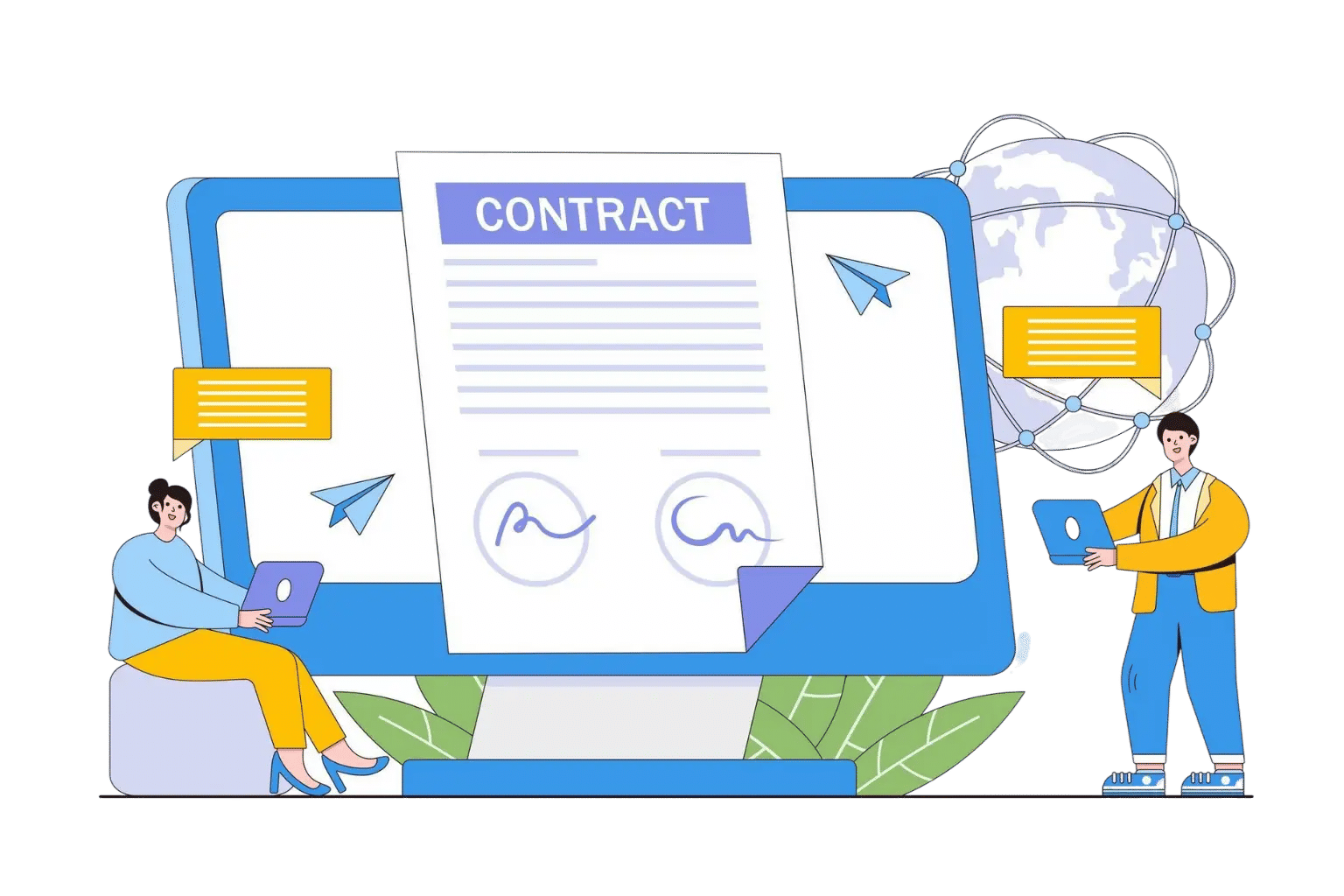
The contract review process is a crucial step where every clause is reviewed and summarized. It assists in determining possible risks and gives a clear picture of what is required prior to a contract being granted.
Indeed, analysts state that the average fortune 2000 organization handles between 20,000 and 40,000 ongoing contracts at a given moment.
Currently, a lot of modern companies are going a step further and implementing AI contract review software. The technology is based on artificial intelligence that assists lawyers and legal teams in the process of reviewing the contract.
What Is Contract Review Software?
Contract review software is an AI-powered tool that helps businesses read, understand, and evaluate contracts faster and more accurately. Instead of manually scanning long legal documents, the software automatically analyses contract language to identify key clauses, obligations, risks, and compliance issues.
Importance of Contract Review Software
Reviewing of contracts manually relies on the speed of human reading, memory and attention. Although legal professionals are a source of judgment and experience, they are also limited by time and burdened by work. Five major reasons why AI contract review process is important in the current legal operations are listed below.
1. Contract Volume Has Grown Beyond Manual Limits
The majority of organizations are not working with a small number of contracts per month. Sales contracts, supplier contracts,employment contracts, service level contracts, and compliance documents are all on the rise every year.
In cases where thousands of contracts are to be reviewed, manual procedures slow down the whole exercise.
AI contract review software summarize contracts in bulk. This assists the legal operations teams to manage the increase without increasing the number of staffs with each increase in workload.
Working with global contracts? Summarize clauses in 10+ languages
2. Faster Review TimewithAI Support
Traditional contract review is time consuming as the lawyers must read each document one line at a time.
The comparison of the human and AI review speed reveals a significant difference. Legal professionals take an average of 92 minutes to go through a single contract depending on the length and complexity of the contract.
In contrast, AI-based systems can process the same contracts in less than 26 seconds when working with standard contracts.
3. Legal Teams Can Focus on High-Value Work
Lawyers spendmore time in their routine review procedures like in checking clauses, missing terms, and document comparison. These are routine tasks that are required.
With AI contract summary this steps becomes easy, It marks risks, indicates and indicates absence of clauses. As a result, legal teams spend more time on strategy and strengthens the role of legal operations.
4. AI Adoption Is Increasing Across Business Functions
Technology teams are no longer the only ones who use artificial intelligence. AI has become a daily work activity in business operations in industries.
Recent studies conducted by McKinsey, indicate that 88% of organizations are applying AI in at least one business activity, which is a consistent increase over the past year.
The AI contract review software is being used by many to assist in contract analysis, compliance checks, and risk identification.
5. Better Control Over Risk and Compliance
The lack of a liability clause or an unfavourable set of terms may result in disputes or losses.
AI contract review software aids in contract risk assessment by scanning contracts with pre-established standards.
It alerts legal departments when clauses are not acceptable. This creates uniformity and less exposure within the departments.
How Does Contract Review Software Work?
Knowing the functionality of the contract review software makes the teams have confidence in the workflow. The process follows a clear and predictable structure that supports legal operations, risk mitigation, and contract governance.
Step 1: Contract Upload
The contracts are uploaded in commonly used formats like Word or PDF. The contract review software can take scanned and electronic contracts and transform them into text. The uploaded contract is then searchable and can be analysed within the portal.
Step 2: Clause Identification
The software reads the contract and breaks it down into clear sections. It identifies out the major contract clauses like payment terms, termination rights, confidentiality and liability. These clauses are compared with a library of clauses which contains approved types of clauses and standard language.
Step 3: Risk and Deviation Detection
The contract review software compares every identified clause with internal legal standards and approved policies. It points out omitted clauses, language that is not accepted by the language, and words that can make the legal or financial risk more complex.
Step 4: Summary and Insights
Contract review software creates a concise overview of significant contractual conditions. This involves major commitments, schedules and possible risk points. The summary assists business users to know the contract without necessarily going through the whole contract.
Step 5: Collaboration and Tracking
Through the system, teams can also review contracts collectively by commenting and making proposed changes. All updates are documented using audit trails that bring about transparency and facilitate compliance. This tracking enables organizations to be accountable within legal, sales and procurement teams.
Features of AI Contract Review Software
Contract review software is used to assist organizations to manage the increasing volumes of contracts in a clear and organized manner. Each feature works together to improve contract accuracy, risk mitigation, and team coordination.
Contract Review
The contract review software automatically reads the contracts and highlights the key sections like contractual obligations, rights, limitations, and responsibilities.
It reads summarizes the contract and identifies the clauses which typically need legal consideration such as commercial and compliance related terms.
This will enable legal operations teams to do less manual reading and more analysis and decision-making.

AI Agent
The AI Agent assists users to learn the complicated contract clauses easily. Upon the user pointing to any clause in the contract, the AI will automatically give a clear explanation in simple non-legal terms.
This enables non legal departments like sales, procurement and finance to know the terms of the contract without having to wait to get legal assistance.
The AI Agent also describes the possible risks, duties, and major results concerning the clause.
Clause Summary
Clause summary converts the long and complicated legal clause into brief and simplified data.
Contract review software identifies the important clauses and clarifies their meaning in simple business terms.
This assists the sales, procurement and finance departments to know the terms of the contract without having to wait to be deciphered by the legal department.
Real-Time Clause Suggestion
When contract language does not match company-approved standards, the contract review software suggests the alternative clauses immediately.
Such recommendations are retrieved from centralized clause library of clauses that is developed based on legal policies and already accepted agreements.
This helps in the uniformity of the contract language and decreases the time of review between the teams.
Obligation Tracking
The recurring responsibilities in contracts include payment dates, renewal dates, and notice.
Contract review software recognizes such obligations and records them in a tabular format that can be easily tracked.
This assists teams to be aware of the duties during the contract life cycle.
Obligation Tracking
Risk management features allow legal departments to locate provisions that can expose them to legal or financial liability.
Contract review software scans the language of contracts and marks un-friendly clause, missing protections, and those that are inconsistent with internal policies or legal requirements.
This assists in mitigating contract risks at an early stage and assists the legal operations teams in solving problems before the contract proceeds to be approved.
Draft Comparison
Draft comparison enables a user to compare differences of various versions of the same contract in a well-organized manner.
The AI contract review software identifies every change, addition, removal, and modification, thus enabling the reviewers to comprehend the changes instantly.
This enables faster approvals and minimizes the chances of overlooking valuable changes in the process of revisions.
Collaborative Approach
Contract review software offers a collaborative working environment where legal, sales, procurement and finance teams can collaborate.
The user can comment, propose contract modification, and directly reply to the contract view without having to change tools.
This maintains the orderliness of communication and its close attachment to the contract language under review.
Benefits of Contract Review Software
Contract review software provides legal departments and companies with a more intelligent approach to contract management. Below are the key benefits explained in simple, practical terms.
1. Faster Reviews
Contract review software saves a lot of time that is required to review agreements.
The AI helps analyse the contracts, find significant clauses, and indicate significant parts of the contract, including obligations, liabilities, and termination conditions. This deals move forward without any unnecessary delays, which assists organizations to keep the momentum in the process of safeguarding the legal interests.
2. Risk Reduction
Early risk detection is one of the largest benefits of contract review software. The system identifies abnormal clauses, omission of protection, and clauses that can put the business in legal or financial risks. Legal teams can correct the situation at the earliest stage by detecting these problems prior to approval. This minimizes the risk of disagreements, failure to comply and expensive renegotiations in future.
3.Clause Consistency
Contract review software provides uniformity in contract language by providing real-time suggestions of clauses and industry-specific clauses.
The legal teams can use pre-approved language to instantly use the language that fits the contract type and compliance requirements. This enhances the quality of contracts, minimizes risk, and saves time to review the contracts.
4.Better Compliance
The contract review software helps in adhering to both internal and external contract compliance. It compares contracts with established regulations, rules and company standards. This is particularly applicable to organizations that are in different regions or industries. This minimizes the human error and compliance of contracts with legal and regulatory expectations.
5. Team Collaboration
Contracts typically involve several teams, including legal, sales, procurement, and finance. Contract review software unites all in one common place and it is easy and clear to collaborate. This makes the conversations systematic, eliminates confusion and makes all people work on the latest version.
6.Cost Savings
Manual contract review involves the use of qualified legal practitioners, and this makes it costly and time consuming. According to World Commerce & Contracting (WorldCC), the average cost of reviewing and processing a negotiated agreement with low complexity is USD 6,900. With AI contract review software, legal teams can prioritize high-value work, which results in reduced total contract processing costs and resource utilization.
7. Audit Readiness
Contract review software captures all activities in form of detailed audit trails, such as edits, comments, approvals, and version changes.
This provides immediate access to contract history by teams, simplifies audit review and makes compliance easy and reliable to prove.
As a result, organizations cut down on audit work, eliminate the last minute work on documentation, and always remain audit ready.
8. Improved Decision-Making
Decision-makers have a clearer view with clear insights on the risks, obligations, and changes of the contract.
The contract review software displays important data in a structured and simplified format.
This assists the leadership to make informed decisions within a short time without having to go through the whole documents manually.
Common Departments That Use Contract Review Software
1. Legal Teams
Contract review software helps legal teams to review agreements more quickly and more accurately. It identifies the important clauses, points out risks and makes sure that the contracts are in accordance with the approved standards. This will enable law professionals to concentrate on complicated negotiations rather than do repetitive reviews.
2. Sales Teams
The system helps sales teams to close deals quicker, and can grasp the terms of the contract fast, manage contract changes and react to approvals without having to wait on lengthy email chains. The ability to see the status of contracts clearly will enable sales teams to keep the momentum and achieve targets.
3. Procurement Teams
It helps procurement teams to handle vendor agreements effectively. The software will assist them in making comparisons of terms, making sure that pricing and obligations are well-defined, and minimizing risks associated with suppliers. This results in improved vendor relations and negotiations.
4. Finance Teams
Finance teams use contract review software to understand payment terms, billing schedules, and financial obligations. Clear contract visibility helps with forecasting, budgeting, and compliance, while reducing the risk of missed payments or unexpected costs. Finance teams use contract review software to understand payment terms, billing schedules, and financial obligations. Clear contract visibility helps with forecasting, budgeting, and compliance, while reducing the risk of missed payments or unexpected costs.
5. Operations Teams
Contract review software helps operations teams to monitor service levels, schedules, and duties. This makes sure that contracts are in line with the objectives of the operation and that the promises given in agreements are met within the set time.
6. Leadership and Management
It enables business leaders to have high-level visibility of contract risks and obligations. Fast access to insights will help in making better decisions and less uncertainty when approving. This clarity helps leaders spot potential legal or financial risks early, before they turn into costly issues.
Best Practices to Implement During the Process
Applying the right best practices during the process helps teams review contracts faster, reduce risks, and avoid costly mistakes.
1. Define Contract Review Objectives Before Configuration
Before implementing the system, it is important to explicitlystate what issues the software is supposed to address. This makes the set up consistent with actual contract processes rather than a template.
- Determine the types of contracts that take the most time to review
- Choose which results are the most important, e.g. quicker approvals, reduced risk or standardization of clauses
- Assign every goal to a quantifiable outcome, such as a decrease in the number of review hours
2. Align Clause LibrariesWith Business
The clause library must be based on the way the business is run and not only on theory. This consistency enhances the adoption and decreases friction.
- Check the current clauses and eliminate the terms that are no longer used in negotiations
- Risk-based, fallback and industry-relevant tag clauses
- Determine when clauses are to be obligatory, optional or conditional
3. Set Clear Review Ownership Early
Clear ownership ensures contracts do not stall during review. Teams should know who reviews, who approves, and who escalates issues.
- Teams must be aware of the reviewer, approver, and escalator
- Delegate the preliminary review and ultimate approval
- Establish the time of legal intervention
4. Make Approval PathsTransparent
The contracts become stagnant or delayed when the contract approval process are unclear during the review. The visibility of the flow of review and approval enhances accountability and keeps the contracts on the move.
- Demonstrate the ownership of every step in the process of contract review and approval
- Ensure review status and actions to be done are easily tracked in real time
- Eliminate confusion by showing the next reviewer or approver
5. Regularly Evaluate Contract Effectiveness
Reviewing how contracts perform over time helps ensure they continue to support business goals. Continuous assessment simplifies the detection of gaps, improving contract performance, and enhancing subsequent contracts.
- Establish success measures in every contract, including delivery performance or policy compliance
- Evaluate contract results periodically to determine whether the results are as expected
- Take lessons out of every review to make future contract terms and negotiations stronger
Why Choose CLM 365 for Contract Review Software
CLM 365 is a reliable contract management platform that is built within Microsoft ecosystem. It is directly linked with SharePoint, Microsoft Teams, Outlook, Microsoft Word, and Microsoft Copilot, and teams can handle contracts without having to switch tools.
CLM 365, being an AI-based automation, assists users to interpret clauses, track contractual requirements, and determine when an update is required.
This reduces the amount of manual work and allows better-informed decisions to be made and has contract work integrated into the systems that the teams use daily.
How to Implement CLM 365s Contract Review Software
- Audit your current contract review process to determine delays, manual labour and repeat risk areas.
- Determine the tools in place today used to draft contracts, approvals, collaboration, and storage to facilitate the seamless integration with CLM 365.
- Activate CLM 365 and integrate it with Microsoft 365 to enable built-in contract review features.
- Combine CLM 365 with Outlook, Microsoft Teams, SharePoint, Microsoft Copilot, and the Word add-in to review and manage contracts in applications already in use.
- Manage contract review policies, approval processes, and role access to regulate contract review and approval.
- Establish automatic notifications of key clauses, risks, obligations, and key milestones of the contract.
- Conduct train teams based on practical examples and guided walkthroughs to make sure that the process of contract review is adopted rapidly.
- Track performance of contract review by monitoring turnaround time, risk identification, and workflow efficiency and optimize processes when necessary.
Trick: CLM 365 AI agent will automatically scan contracts to find important clauses, risks, and obligations, eliminating the necessity to read contracts manually and shortening the review process.
Conclusion
Manual contract reviews slow deals, increase risk, and drain valuable time. Our AI-powered contract review software helps you review faster, spot risks early, and keep everyone aligned without changing how your team’s work.
Turn contract review into a streamlined, confident process that supports better decisions from day one. See how CLM 365 simplifies contract review in minutes.



Frequently Asked Questions
What are the common contract clauses reviewed by AI in contract review software?
The contract review software can review any type clauses, and here are some common clause that is reviewed like clauses related to confidentiality, indemnity, liability, termination, payment terms, renewals, governing law, limitation of liability, and compliance obligations.
What types of contracts are supported by contract review software?
Contract review software is applicable to a broad variety of contracts such as NDAs, master service agreements (MSAs), vendor and supplier agreements, employment contracts, service-level agreements (SLAs), lease agreements, and customer contracts.
How many languages does CLM 365 support during clause summary?
CLM 365 supports clause summaries in 10+ languages, allowing teams to review and understand contracts written in different languages without relying only on manual translation. This helps global teams maintain clarity, consistency, and accuracy throughout the contract review process.
How does contract review software analyze contract clauses?
Contract review software analyses the clauses by removing the relevant parts of the contract, classifying them by type, and contrasting with established clause. It then highlights risks, deviations or omitted clauses to human inspection.
Can AI contract review software analyse clauses in bulk?
Yes, AI contract review software can analyse clauses in bulk by processing a few contracts simultaneously. It is particularly useful with the contract audits, due diligence, and the need to review a lot of legacy contracts in a short period.
Schedule a free personalized 1:1 demo
By proceeding, you accept Cubic Logics’s terms and conditions and privacy policy










Try It Free, No Obligation





Don't leave yet,
get up to 30% special offer
until 31st March 2026
Enter your business email ID and we will send a personalized coupon code straight to your inbox.
Please provide your contact details, we will connect with you soon!
Please provide your contact details, we will connect with you soon!
By proceeding, you accept Cubic Logics Terms and Conditions and Privacy Policy
Schedule a free personalized 1:1 demo
By proceeding, you accept Cubic Logics’s terms and conditions and privacy policy








By proceeding, you accept Cubic Logics Terms and Conditions and Privacy Policy