How SaaS Onboarding Software Strengthens Internal Work Culture
_mVFFaHUZhS.webp)
An effective onboarding process does not only familiarize employees with their jobs, but it also preconditions a good and healthy workplace culture. Studies indicate that organizations with robust processes that are usually driven by efficient employee onboarding software attain a maximum of 82% retention and a 54% increase in new employee productivity.
SaaS onboarding software changes the game by making onboarding a personalized, interactive, and ongoing process. It brings employees closer to each other, makes them aligned to your company values, and creates a real engagement on the first day.
This is not only a way of accelerating the ramp-up time, but it also creates an environment in which teamwork is encouraged, morale is high, and employees feel appreciated.
However, onboarding is still seen by many companies as a checklist, not as a cultural pillar.
Now, we will explore how the implementation of SaaS onboarding software can transform your internal work culture and make new employees loyal and motivated team members who are willing to give their best.
What is SaaS Onboarding Software?
SaaS onboarding software is a cloud-based solution that is used to automate and simplify the process of introducing new employees or customers to the products, services, or workflows of a company.
In contrast to conventional onboarding process, SaaS solutions offer interactive, personalized, and scalable onboarding processes that can be accessed at any time and location. Such platforms may also have such features as progress tracking, automatic reminders, and built-in communication tools to make the onboarding process smooth and engaging.
In the case of internal teams, it implies that new recruits onboarding are introduced to their jobs and the company culture in a consistent and engaging way without being overloaded with paperwork and manual procedures.
The Importance of SaaS Onboarding
The properly designed onboarding process is the foundation of the successful work of employees in the long-term and their general job satisfaction. According to the research conducted by Brandon Hall Group , which effective onboarding can help to raise employee retention rates by 82% and productivity by over 50% Bauer.
When the onboarding process is smooth and culturally oriented, employees feel accepted, appreciated, and prepared to play major roles of a healthy internal work culture. In addition, an effective onboarding program will make new employees know their job descriptions and this will eliminate confusion and enable them to work with confidence.
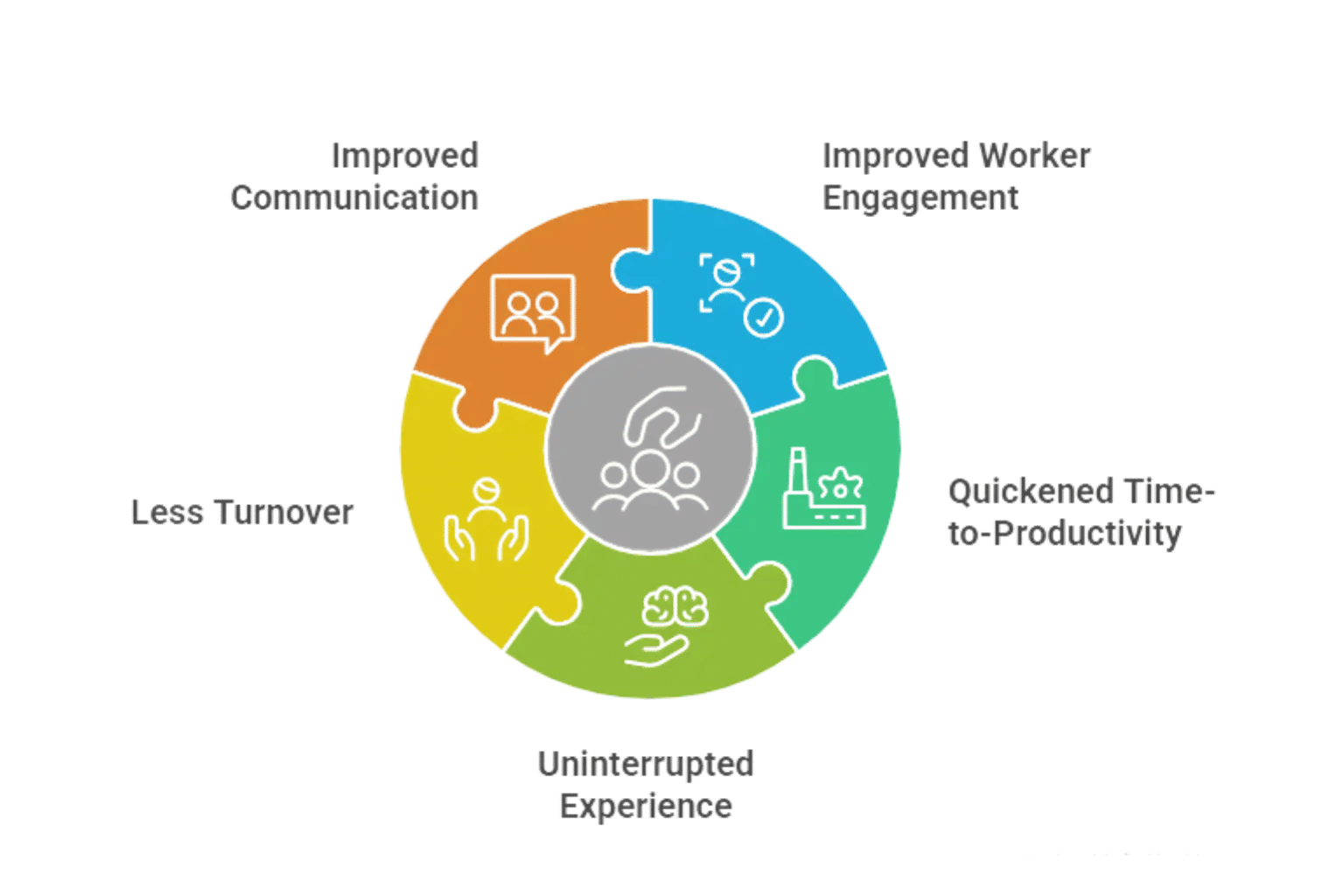
SaaS onboarding is particularly useful with remote and hybrid teams, where no employee feels isolated or left behind in their critical first weeks. The major reasons why SaaS onboarding is important are:
- Improved Worker Engagement: Customized onboarding processes allow new employees to adapt to company values and accept the organizational culture at the very beginning.
- Quickened Time-to-Productivity: Interactive training and automated workflows speed up learning and role preparedness.
- Uninterrupted Experience: All new employees get the same quality onboarding, irrespective of the location or team.
- Less Turnover: Positive onboarding reduces the rate of early attrition through the creation of loyalty and commitment.
- Improved Communication: The integrated tools promote prompt support and cooperation between new employees and managers.
The SaaS Onboarding Software and Its Role in Developing the Work Culture
Onboarding software SaaS is not just a checklist and compliance. It establishes continuous and interactive experiences that introduce new employees to the values, colleagues, and processes of the company at the outset.
The most effective way to use SaaS onboarding software to achieve cultural changes within an organization is as follows:
Efficient Communication and Teamwork
Onboarding tools nowadays combine communication tools and workflows, allowing new employees to get in touch with their colleagues and managers immediately. This dissolves silos and promotes early relationship-building, which is essential to a connected culture.
Onboarding Consistency and Transparency
The SaaS employee onboarding software will ensure that all new employees have a high-quality, uniform onboarding experience regardless of their position or location. Open communication of progress and assigning tasks make everyone on track and responsible, which enhances trust and equity.
Individual and Engaging Learning Processes
These platforms do not provide generic training but provide customized learning paths based on roles and skills. Onboarding is interactive (quizzes, videos, peer feedback, etc.) to ensure that employees feel appreciated and motivated.
Quickened Integration and Productivity
Automation of routine onboarding processes reduces the time spent by new employees on paperwork and increases the time spent learning their jobs and meeting with teams. Faster ramp-up periods result in increased contributions, which increase the overall team morale.
Evidence-Based Intelligence to Support a Culture of Continuous Improvement
Engagement metrics and feedback are monitored by onboarding software, providing the HR and leadership with insights into the experience of employees during onboarding and culture. Such data points enable companies to see the gaps, enhance processes, and foster a healthy working environment.
Major Characteristics That Improve the Work Culture Internally
When choosing SaaS onboarding software to enhance your internal culture, it is crucial to select a platform that will have features that facilitate engagement, communication, and alignment with your company values.
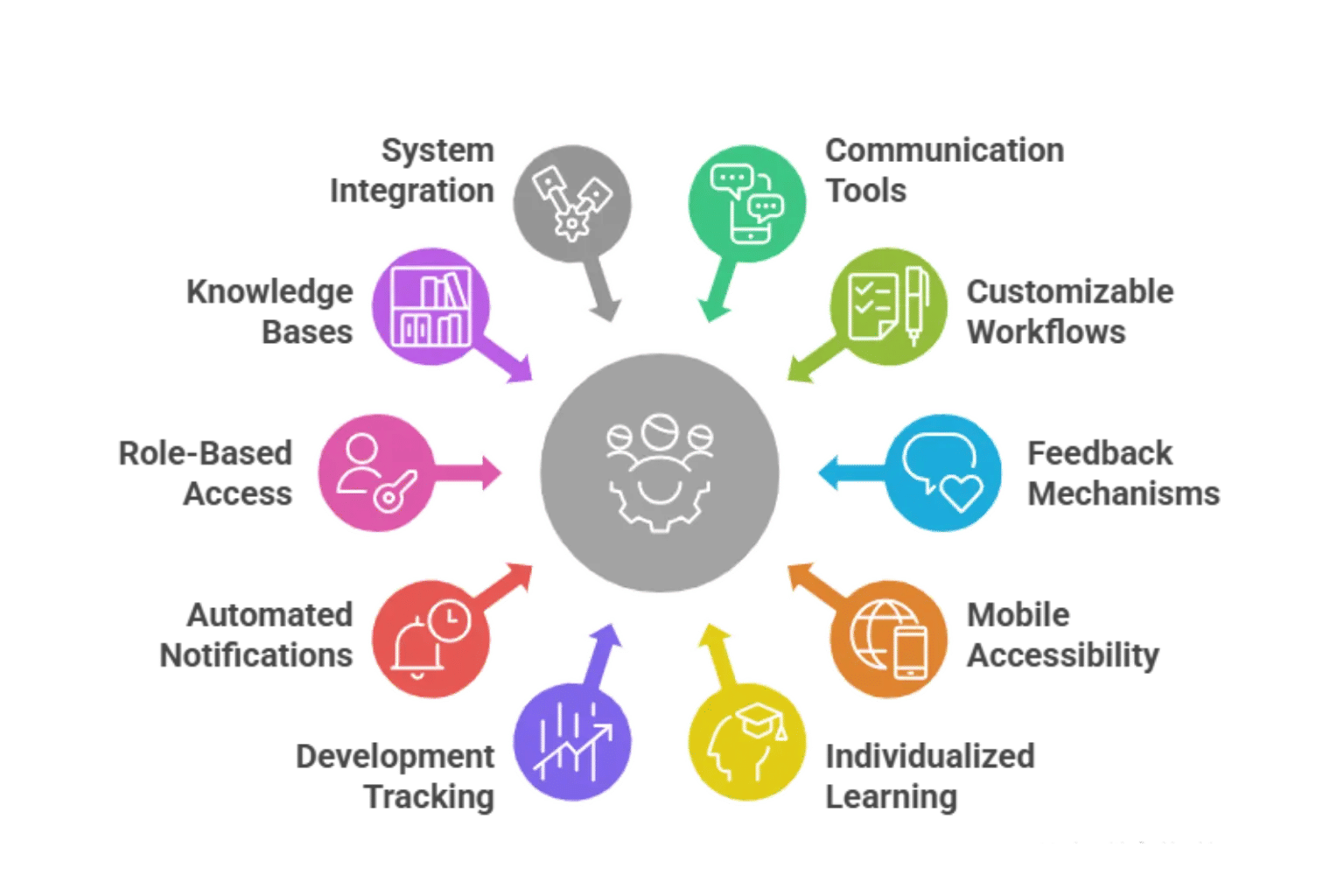
The right features do not only provide an easy onboarding experience but also provide the basis of a good and unified workplace culture. The main characteristics that should be considered are:
Smooth Interconnection with Communication Tools
The uninterrupted connection with such platforms as Slack, Microsoft Teams, Zoom, and email systems will guarantee that new employees can be in immediate contact with colleagues and supervisors. This helps in rapid bonding, reduced confusion and a collaborative atmosphere is established at the very beginning.
Employees do not have to feel that they are using a different system since the processes of onboarding are directly integrated into the daily communication tools. Rather, onboarding is an extension of their daily workflow, and a greater feeling of inclusion is created, and silos are minimized.
Onboarding Workflows That Are Customizable
Onboarding workflows can be customized to enable HR teams to create onboarding steps that align with the mission, values, and culture of the organization. This will make sure that new employees not only get to know about the policies but also get to feel the ethos of the company.
Role-specific learning paths are also guaranteed by tailored workflows, and thus employees do not get overwhelmed with irrelevant information. This will make the onboarding process meaningful and interesting and will eventually enable the employees to relate more with their teams and duties.
Feedback Collection Tools
Inbuilt feedback mechanisms enable new employees to express their opinion about the onboarding process immediately. This does not only give HR teams actionable insights but also makes employees feel that their voices are heard.
Constant feedback builds a culture of openness and enhancement. In the long run, such insights will aid in improving the onboarding strategies, making every group of employees have a more enjoyable and efficient experience than the previous one.
Mobile Accessibility
Remote and hybrid work is the new norm, and mobile accessibility makes it possible to complete onboarding tasks at any time and place. This flexibility minimizes the barriers and enables employees to onboard without being attached to a desk.
Mobile-friendly design also promotes regular interaction, since new employees can access resources fast, send documents or train online modules. This availability makes the globally distributed teams more inclusive.
Individualized Learning Journeys
Individualized learning tracks allow employees to be exposed to role-related and skills-based training instead of generalized information. This makes onboarding personalized to their career path, increasing motivation and retention.
This kind of customization enhances the effectiveness of learning since employees are able to concentrate on what is of most importance to their job. The individualization also indicates that the company appreciates individual growth and professional development even at the very initial stages.
Development Tracking and Open Dashboards
Onboarding progress dashboards give employees and managers a clear view of the tasks done and those still outstanding. This promotes responsibility and maintains order in the process.
In the case of new employees, a feeling of achievement and motivation is created by seeing progress. To the managers, real-time visibility can be used to detect possible bottlenecks and offer timely assistance so that no one is left behind.
Automated Notifications and Reminders
The automated reminders remind the employees of deadlines, document submissions, and scheduled check-ins. This reduces the chances of missed tasks and makes onboarding organized without manual follow-ups.
In the case of HR, automation will decrease the administrative load, but will also provide uniformity within the departments. To employees, it offers a soft hand that makes them never feel lost or confused on what to do next.
Role-Based Access Controls
Role-based access controls are used to secure sensitive information of employees and the company. Organizations ensure compliance and minimize risks by ensuring that only authorized personnel can access some data.
Meanwhile, it gives clarity to new employees, who only get what is pertinent to them. This security and access balance facilitates the establishment of trust between the company and its employees.
Knowledge Bases and Resource Libraries
Resource libraries are centralized and provide employees with immediate access to policies, frequently asked questions and training resources. This will enable them to get solutions without relying on HR.
Knowledge bases promote efficiency and confidence by promoting self-service. Workers get used to self-directed learning and HR departments save a lot of time that would have been wasted in responding to the same questions.
Integration with Performance and HR Systems
The integration of onboarding software with the performance management and employee engagement tools will help to provide a seamless transition between the first onboarding stage and the continuous development. This forms an ongoing experience in which employees are able to monitor growth and match company objectives at the outset.
This integration helps to maintain a consistent communication between onboarding, training, and performance tracking by removing data silos. Not only does this help new hires to adapt faster, but it also helps them to understand how their efforts are directly linked to long-term success in the company.
By selecting SaaS onboarding software that has these capabilities, your organization will be prepared to establish an inclusive, engaging, and productive internal culture in which employees feel supported and encouraged to give their best.
Challenges in SaaS Onboarding Software
Although the benefits of SaaS onboarding software are obvious, organizations usually face a number of challenges that may reduce its efficiency unless they are addressed properly:
Absence of Personalization:
Onboarding experiences that are generic and one-size-fits-all might not be able to engage new hires in a meaningful way. Employees will not be motivated or retained without customized content that directly addresses their roles, skills, or learning styles.
Integration Problems:
SaaS onboarding systems that lack a smooth connection with current HR systems, communication tools, or productivity applications may cause operational friction. Lone data and disjointed processes lead to redundant work, mistakes and frustration on the part of users, which can greatly delay software adoption.
Information Overload:
When new employees are overloaded with information within a short period, they may easily be overwhelmed. A large amount of content or too many tasks may confuse users and slow their progress and knowledge retention. Onboarding should be timely and should be paced well to ensure that new employees are not overwhelmed and burnout is minimized.
Minimal Interaction:
Onboarding experiences that are not interactive (i.e. quizzes, gamification, social learning, or peer collaboration) are likely to be dull and transactional. Poor participation in the onboarding process may result in reduced motivation, poor learning performance, and poor cultural attachment.
Difficulties in Tracking Progress:
In the absence of a strong progress tracking and reporting, HR and managers will find it hard to detect bottlenecks, unfinished tasks or uninterested learners. The lack of complete data restricts the optimization of onboarding processes or timely assistance, which affects the success of the program in general.
Integration Problems:
It is important to deal with such challenges beforehand. Firms need to select onboarding solutions that can facilitate customization, easy integrations, gradual delivery of content, interactive learning styles, and thorough tracking. In such a way, the SaaS onboarding process will not only speed up the process of employee preparation but also enhance the culture of internal work and retention in the long term.
Advantages of SaaS Onboarding Software
SaaS onboarding software has a broad spectrum of benefits that extend beyond the automation of task onboarding, which has a positive influence on internal culture, employee engagement, and the overall effectiveness of the team:
Efficient Communication and Cooperation:
SaaS onboarding software will allow new employees to easily integrate with popular communication tools such as Slack, Microsoft Teams, and email platforms to be able to connect with their colleagues, managers, and mentors as soon as possible. This creates an immediate sense of inclusion, promotes teamwork, and removes obstacles that tend to slow down the conventional onboarding procedures.
Consistency and Transparency:
As all workflows are automated and all onboarding materials are standardized, all new onboarding software will be introduced to the company in the same high-quality manner, irrespective of location or department. Progress tracking dashboards give both the HR and the new hires real-time visibility, which enhances transparency, accountability, and a sense of achievement during the onboarding process.
Custom Learning Journeys:
SaaS onboarding platforms enable the development of specialized training programs that are specific to each position, level of skills, and learning style. This focused learning makes it more relevant, engaging and retains knowledge, enabling new employees to acquire the competencies they require to succeed in the shortest possible time.
More Rapid Productivity:
Repetitive and administrative onboarding processes like document submission, policy acknowledgments, and equipment requests are automated, which releases time to both employees and HR teams. New employees will be able to spend more time learning their jobs, working with peers, and making contributions to projects at a faster rate, reducing time-to-productivity.
Data-Driven Culture Insights:
Advanced analytics and reporting capabilities will give useful insights on the onboarding progress, engagement rates, and employee feedback. Such data points will enable HR and leadership to recognize strengths and weaknesses of the onboarding process, make evidence-based changes, and foster a culture of lifelong learning and development.
Better Employee Retention:
Onboarding experiences should be improved and structured to make new employees feel welcomed, supported, and connected to the company mission. This feeling of belonging minimizes the turnover at the initial stages and creates long-term loyalty, which is particularly important in competitive labor markets.
Scalability to Expanding Teams:
SaaS onboarding software can be easily scaled to meet the needs of expanding teams, new offices, or new departments without compromising the quality or consistency of the experience. This is necessary in the companies that are growing rapidly or have distributed workforces.
Compliance and Risk Reduction:
Automated monitoring of required trainings, certifications and policy acknowledgements will make sure that employees are in compliance with regulatory and organizational requirements. This minimizes legal risks and protects the reputation of the company.
Improved Remote and Hybrid Work Support:
Mobile-friendly and cloud-based onboarding platforms enable employees to do onboarding work anywhere, which supports remote and hybrid work models. This access will enhance inclusion and make sure that every new employee receives a similar onboarding experience regardless of their location.
Constant Feedback and Interaction:
SaaS onboarding platforms in the modern world typically have in-built feedback mechanisms such as surveys, check-ins, and pulse polls. These characteristics enable new employees to discuss their experiences in real-time, and managers and HR can take the initiative to resolve issues. This is a two-way communication that fosters trust and makes employees feel heard since the first day.
Integration with Performance Systems:
The onboarding software of SaaS is compatible with performance management and employee onboarding software. This guarantees seamless onboarding to continued performance tracking, which will provide a continuous and integrated employee experience.
This integration will improve efficiency, accuracy, and ensure that employees can easily understand how their work contributes to the long-term organizational objectives by minimizing manual operations and ensuring that the data is consistent across platforms.
All these advantages make teams happier, more productive and feel aligned to the company values and empowered to give their best on the first day.
Best Practices of SaaS Onboarding Software
In order to make the most of the potential of best SaaS onboarding software and make a long-lasting positive impression on your internal work culture, it is crucial to apply the HR best practices that are based on the engagement, customization, and continuous improvement. These are the main tips to make the most out of onboarding:
Also Read: 10 best HR onboarding best practices in 2026
- Establish Specific Objectives:
Begin by identifying specific, measurable objectives that are consistent with the larger culture and business performance of your organization. It could be speeding up time-to-productivity, improving employee engagement, or compliance, but whatever your onboarding goals are, clear objectives will guide and focus your efforts. Periodically review these objectives to monitor the progress and make changes accordingly. - Engage Leadership:
The effective onboarding programs should be supported by the executives and managers. The presence of leadership is a strong signal of the significance of onboarding and assists in obtaining the required resources. Promote active involvement of leaders by welcoming them, mentoring, and frequent visits to new employees to help them feel connected and responsible. - Focus on User Experience:
Choose SaaS onboarding solutions with easy-to-use interfaces with interactive elements like videos, quizzes, and gamification. Make sure that the platform is available on various devices such as mobile phones and tablets to suit different work styles and places. The ease of use minimizes frustration and maximizes the completion rate. - Use Data Analytics:
The in-built analytics tools can be used to track the key metrics such as user engagement, course completion rates, and time spent on tasks. The analysis of this data assists in determining the bottlenecks, the most popular content, and the areas, in which learners might be weak. Apply these lessons to keep onboarding material constantly updated, customize learning journeys, and enhance the overall performance. - Foster Social Learning:
Foster cooperation and knowledge exchange through the incorporation of social capabilities, including discussion forums, peer reviews, and group assignments, into the onboarding process. Social learning enhances the connection between new employees, a feeling of community, and speeding up the cultural assimilation process. - Offer Continuous Support:
Onboarding is not a one-time process but a process. Provide ongoing resources, refresher training, and check-ins after the first phase. This long-term assistance enables new employees to remain active, build their competencies, and evolve in the company in the long run. - Customize Workflows:
Customize onboarding processes and content to your company values, culture, and team structure. The relevance and personal connection can be achieved through customization, which can be role-specific training, department-specific content, or regionally adjusted policies. Adaptable workflows meet various needs and enhance satisfaction among learners. - Incorporate Feedback Loops:
Proactively seek feedback on the onboarding experience with new employees and managers via surveys or informal check-ins and use it to determine areas of improvement and make onboarding a more dynamic and evolving process that remains in line with employee expectations and business objectives. - Automate Processes:
Take advantage of the automation features of SaaS employee onboarding software to automate repetitive administrative processes like form submissions, policy acknowledgments, and reminders. Automation allows HR and managers to concentrate on individual support and relationship development. - Make sure it is Compliant and Secure:
Integrate compliance training and data privacy into your onboarding processes. Tracking and documentation Automation will ensure compliance with regulations and provide employees with the assurance that their information is processed safely.
Future of Employee Onboarding with AI
The future of SaaS onboarding software is not only leaving the manual process but also intelligent automation that enhances efficiency without losing the human touch.
Modern onboarding is changing:
- Intelligent task automation saves on redundant HR tasks and onboarding time.
- Workflows based on behavior adjust onboarding steps dynamically.
- Active participation triggers make new employees feel that they are not stuck or forgotten.
- Integrated employee experiences bridge the gap between onboarding and learning and performance solutions.
- Onboarding experiences that can be expanded easily with the organization.
With the integration of automation and intelligence, the current onboarding systems generate a more seamless transition, more active engagement, and a more connected internal work culture.
Conclusion
SaaS onboarding software is not merely a tool it is an accelerator of a favourable and connected workplace culture. It makes onboarding a strategic retention and productivity driver by making it consistent, transparent, and engaging.
Companies investing in SaaS onboarding precondition the success and loyalty of employees in the long term. Are you willing to take your culture and onboarding to the next level?
Schedule a demo now and learn how our solution can make your team strong on the first day.
Join Our Creative Community
Frequently Asked Questions
What is the best SaaS onboarding software for my team?
The best SaaS onboarding software depends on your team size, workflows, and budget. Look for features like automation, role-based onboarding, integrations, and progress tracking.
Which employee onboarding tools are ideal for fast onboarding?
Fast onboarding tools provide automated workflows, task checklists, and interactive training modules. These tools help new hires start contributing sooner with less manual HR work.
How do I use SaaS onboarding software?
Most SaaS onboarding software follows a simple setup: create onboarding workflows, assign tasks, integrate communication tools, and track progress. The tutorial usually guides you through setup, automation, and analytics.
What is the best customer onboarding software for SaaS products?
The best customer onboarding software offers in-app guidance, user journey tracking, and automated welcome flows. It helps reduce churn and increases product adoption quickly.
Which customer onboarding solutions work best for scaling teams?
Customer onboarding solutions with automation, templates, and multi-team collaboration features scale easily as your team grows. They keep onboarding consistent and reduce manual workload.


_JiluXJRGNl.svg)