Top 7 Contract Management Software for Small Business In 2026

Being a small business owner implies having to wear several hats and managing contracts should not be one more full-time position.
In this blog, we have curated a carefully selected list of the seven best software solutions that help small businesses manage contracts more effectively. These tools are designed to simplify everyday contract tasks such as drafting, reviewing, approving, storing, and tracking agreements, all while reducing manual effort.
Click here to listen on the go!
It is not uncommon to find many small business owners wasting hours in their email and folders to locate the contracts they require or realize that a crucial contract renewal date has already elapsed.
Would you not find it convenient to have all the things in one place and be reminded on time before the important dates come?
That is where a contract management software for small business comes in, to make sure that you stay on track and keep organized.
Importance of Contract Management Software for Small Business
In the case of small businesses, contracts are at the heart of day-to-day operations, revenues, coordination of vendors and growth. A best software for contract management helps small business to remain focused on relationship building, value protection, and planning on the next level of growth.
1. Keeps Contracts Organized Even with Lean Teams
There is many small businesses that have lean teams where a single individual might be doing sales negotiations, vendor contracts, and financial approvals simultaneously.
Research indicates that a contract may lose as much as 40% of its value through ineffective contract management practices, often because contracts are stored across emails, local folders, or individual systems.
Contract management software for small business has the advantage of storing agreements in a centralized repository where small teams can find the appropriate version and maintain the value negotiated on each contract.
2. Operational Efficiency Through AI and Automation
KPMG study shows that 69% of CEOs are already intending to spend 10-20% of their budgets on AI within the next year, which reflects the technological aspect of becoming an enabler of growth, not a support activity.
In the case of small businesses, AI and automation in contract management software for small business will handle repetitive tasks such as the identification of clauses, reminders, and approvals.
This will release time to leadership and teams to plan, engage with the customer and grow the business rather than working on administration.
3. Prevents Revenue Loss from Missed Renewals
Small businesses tend to be dependent on fewer clients and repeat contracts to have a consistent flow of revenue. The effect of a missed renewal can be apparent on the cash flow.
Contract management software for small business tracks contract renewal and other critical milestones and assists the business to continue with the existing clients.
These gaps also limit the ability to develop systems that allow businesses to predict future revenues as operations expand.
4. Strengthens Vendor Relationships
Vendors are important in sustaining the small business operations and scale. The relationships with vendors must be established on the ground and be consistent and clear in their expectations.
contract management software for small business helps maintain the contractual obligations, terms, and performance information in a well-documented format.
This assists the business to operate better with the vendors and establish partnerships that can facilitate the long-term development.
5. Supports Ongoing Compliance Management
With the growth of small businesses, managing contract compliance also increase, bringing greater responsibility to manage contracts.
Contract management software for small business offers structured access to the clauses, approvals and documentation concerning and internal requirements.
This helps in responsible business practices and enables teams to expand without putting extra operational strain.
Signs that Small Business Needs Software to Handle Contracts
Being a small business owner, it is easy to begin simple when it comes to managing agreements. With time, contracts start taking more focus than anticipated as the number of clients, vendors, and internal teams increases. Below are common signs that show when contract management software for small business a practical support system for handling contracts.
1. Decentralized Process
The contracts are frequently stored in various locations some in email chains, shared in folders and some stored on personal systems.
The distribution of agreements also consumes additional time of teams finding documents and determining which one is in operation.
A best contract management software for small business helps store contracts all in a single working space, so that everyone is on track contracts it efficiently.
2. Slow Contracting Cycles
When contracts pass through approvals, reviews, routing and execution, the process may become slow as every stage requires manual follow-ups.
Agreements can be reviewed by sales, finance and leadership at various times, which introduces waiting periods.
Contract management software for small business facilitates a definite process of contract approvals and execution so that contracts proceed with improved speed and transparency.
3. Manual Process
Several small businesses continue using spreadsheets, email notifications, and personal notes to handle contracts.
This is effective in the initial stages, but more effort is required as the volume of contracts increases.
A best contract management software for small business saves time by doing the tracking, document updates and reminders so that the teams can have more time to make business decisions.
4. Lack of Audit Visibility
When the history of contracts is distributed in folders and inboxes, it is time-consuming to review the past actions.
Questions such as who approved a clause or the time a contract has been modified, there is no clear record of approvals, edits, or decision history.
Contract management software for small business keeps a clear record of actions and hence the ease of reviewing and ensuring business records are well organized.
5. Vendor Misalignment
Vendors are significant in day-to-day activities and contracts outline the functioning of such a relationship.
A lack of clear visibility into terms, timelines, and responsibilities makes coordination increasingly difficult as time passes.
A best contract management software for small business makes vendor agreements available and organized, which helps in enhancing a better communication.
Best 7 Contract Management Software for Small Business
Now, that we have discussed the indicators that show that your requires contract management software for small business, we will discuss the most suitable contract management software for small businesses.
Keywords | Integrations | Free Trial |
CLM 365 | SharePoint, MS Teams, Outlook, Power BI, AdobeSign, DocuSign, Power Automate and Copilot | 14 days |
ContractWorks | Salesforce and Pipedrive | Custom Setup |
Zoho Contracts | Integrates with Zoho apps and Leegality | 15 days |
Concord | Salesforce, HubSpot, and Slack | 30 days |
Ironclad | Salesforce, MS Word, MS Teams, and Slack | 14 days |
Agiloft | Google Workspace, Microsoft Dynamics and Docusign | 14 days |
HyperStart | Salesforce, Pipedrive, Slack and Adobe Acrobat Sign | 14 days |
1. CLM 365
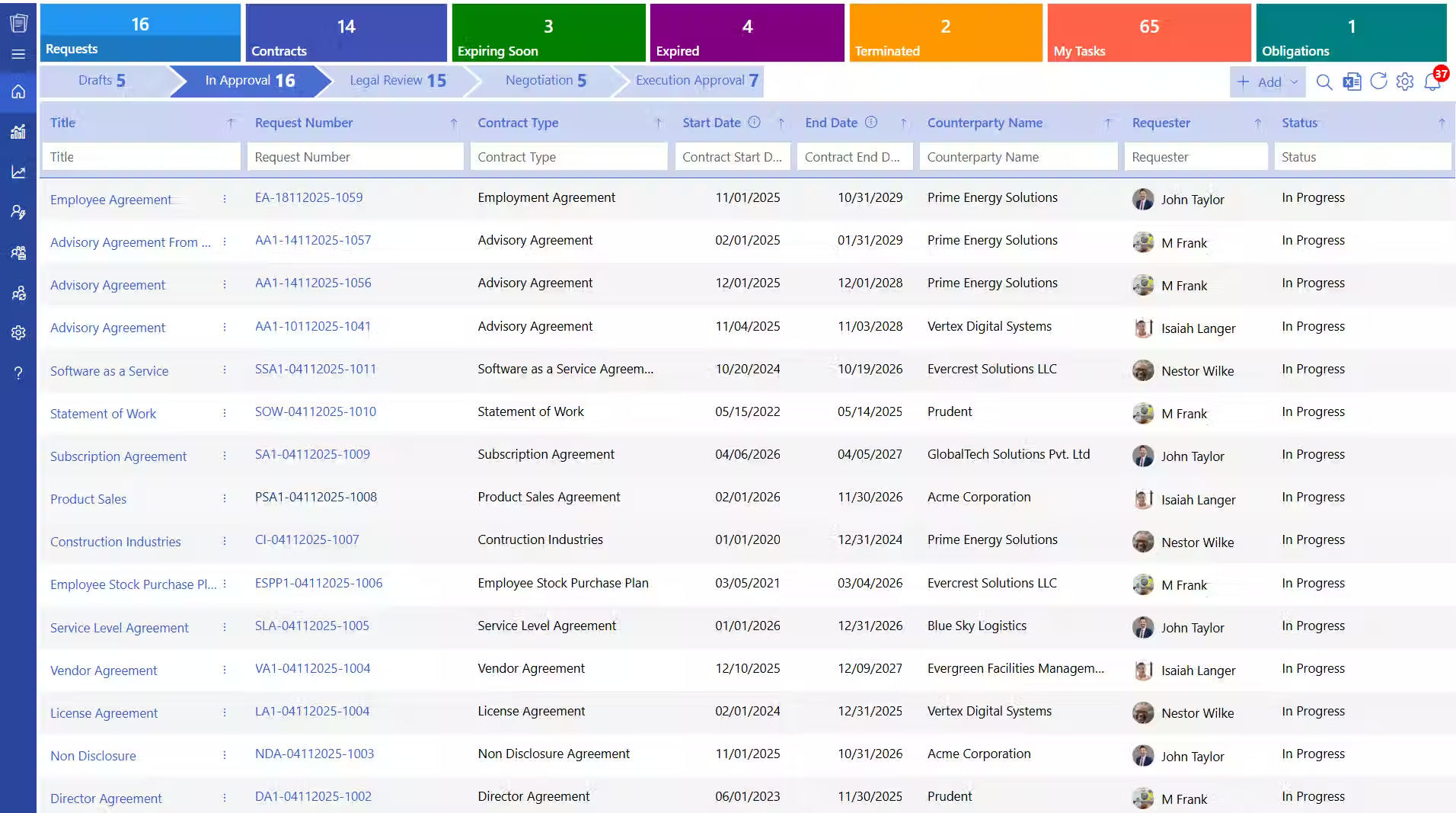
CLM 365 is a best contract management software for small business that is built in Microsoft Ecosystem. It integrates directly with applications such as Outlook so that teams can create and request contracts without having to switch between systems. The contract management suite assists in the whole lifecycle of the contract such as request to renewals and assists the teams to spend less time on the routine contract work. Users have shared positive feedback about CLM 365, highlighting its efficiency and ease of use on platforms like G2.
Key Features
- Microsoft 365 and SharePoint integration
- Central contract repository
- Contract search and filtering
- AI-powered contract review
- Draft comparison
- Version history and audit records
- Multi-level approval process
- Approval workflows with visibility
- Role-based access control
- Obligation and milestone tracking
- Automated reminders for deadlines
- Advanced reporting & analytics
Pricing: $29.99 per month, billed yearly
Ratings
G2 Review: 4.9/5
Microsoft AppSource: 4.9 (79 reviews)
Best Known for: CLM 365 is tailored to small businesses that do not need any complexities in their contract workflows. The platform is user-friendly, and the teams can handle agreements with familiar Microsoft 365 tools. All contract information is stored in your Microsoft environment that provides more control to businesses.
2. ContractWorks
ContractWorks is a good small businesses contract software that prefer to have an easy way to organize agreements. The contract management solution provides a safe central repository of the contract where one can find the documents when required. Inbuilt notifications remind the teams of the renewal and expiry dates, and this helps users to manage legal workflow with help contract automation.
Features
- Keep all contracts in a secure centralized location
- Get notification in time regarding renewal and expiration dates
- Permission to view or edit contracts Role-based permission settings
- Intelligent search features allow finding contracts or clauses in a short time
- E-sign contracts with safe, inbuilt eSignature features
- Track all activities of contracts with logs of activities and create personal reports
- Easy, user-friendly interface that does not require technical training of small businesses
Ratings
- G2: 4.8
- Capterra: 4.8
Best Known For: This platform has been known to have a flexible functionality and easy adoption. It enhances visibility in contract activities, and it assists teams to accomplish contract related tasks with minimum effort and within a short duration.
3. Zoho Contracts
Zoho Contracts is a reliable contract management software for small business and it offers flexible templates, automatic approval processes that makes the process smooth. The platform is compatible with other Zoho applications, which assist in the collaborative contract management and maintaining data in a well-organized manner.
Features
- Create contracts faster using customizable, ready-made templates
- Approve & move contracts by automated workflow rules
- Sign documents using inbuilt digital signature software
- Manage contract, renewals and extensions
- Record all the changes with an elaborate version history and activity logs
- Draft contracts effectively based on a library of approved clauses
- Track the progress of contracts with the help of tailored dashboards
Ratings
- G2: 4.5
- Capterra: 4.4
Best Known For: The Zoho Contracts is appreciated due to its rapid onboarding, automation-based capabilities, and high level of compatibility with the Zoho ecosystem, which makes the process of contract management more feasible and efficient to use in the daily business.
4. Concord
Concord is a best contract management software for small business that provides a simple and straightforward approach to the legal process. Customers can draft, edit and enables contract signing in a single platform, eliminating the use of lengthy emails. There are in-built reminders to emphasize important dates, and version tracking to make teams work with the most up-to-date document.
Features
- Sign contracts using unlimited digital signatures
- Check and enhance contract procedures with the help of AI-based insights
- Unlimited cloud storage of documents
- Work together with in-built editing and bargaining features
- Automatic notifications of key dates and milestones
Ratings
- G2: 4.3
- Capterra: 4.6
Best Known For: Concord is known assist small companies in handling contracts in a clear manner. Its templates are organized and consistent, and security controls ensure that documents are not accessed by unauthorized people.
5. Ironclad
Ironclad offers a secure contract management software for small businesses as it takes care of all the phases within a single secure system. It saves manual work by automating the routine contract work and storing all the agreements in a centralized cloud store. Businesses can efficiently handle contracts without the need of having a huge legal department with AI-driven insights and in-built collaboration tools.
Features
- Manage contract creation, reviews, and approvals through automated workflows
- Use AI-based insights to support smarter contract decisions
- Access all contracts securely through centralized cloud storage
- Work together in real time with integrated collaboration tools
- Maintain consistency across documents using flexible templates
- Complete approvals faster with built-in electronic signature support
Ratings
- G2: 4.5
Best Known For
Ironclad is recognized for its adaptable workflows, searchable contract repository, and secure access controls, helping teams manage agreements efficiently while keeping data protected.
6. Agiloft
Agiloft is a highly flexible contract management software for small businesses and can be customized to suit specific operational requirements. It is AI-driven and is used to assist in drafting, approvals, summarize contract, and tracking and minimize human participation. Being a data-driven agreement platform, Agiloft enhances team-based collaboration and accelerates the process of contract-related tasks.
Features
- Customize workflows, templates and processes to match business needs
- Detects risky clauses and key information to enhance compliance
- Automate contract management through drafting, negotiation and renewal
- Assign role-based access privileges to keep confidential contract information
- Maintain audit trails that have real time tracking, version history and reports
- Get automatic deadline, renewal and compliance reminders
Ratings
- G2: 4.6
- Capterra: 4.8
Best Known For
Agiloft is unique due to its flexible platform and user-friendly solution, which enables companies to customize workflows, data models, and reporting according to the needs of a particular operation.
7. HyperStart
HyperStart is reliable contract management software for small business and suited to the growing teams. It applies artificial intelligence to assist in contract drafting, reviews, and tracking and assists in eliminating manual work and frequent errors. Contracts can be easily managed by teams with simple workflows and real-time insights, without the need to have a full legal department.
Features
- Draft contracts with the help of pre-written templates
- Review and approve contracts using real-time collaboration tools
- Track the progress of the contract in real-time and get renewal notifications
- Get more visibility with detailed analytics and custom reports
- Design processes that are consistent with business processes and goals
Best Known For
HyperStart is known for its AI-driven contract management approach that supports every stage of the contract lifecycle, from creation and negotiation to execution and monitoring. It minimizes repetitive work while delivering actionable insights for better contract oversight.
Common Contract Management Mistakes Small Businesses Should Avoid
With the availability of some of the best software in managing small business contracts, there are still numerous organizations that must deal with avoidable problems because of gaps in the process and bad practices. The following are some of the mistakes to avoid.
- Storing Contracts Across Multiple Locations
Storing contracts in email inboxes, shared drives, or personal folders is a long-term issue. Teams lose time in searching documents, and most of the time, they open old contract version without knowing. Critical clauses, duties or termination conditions are more difficult to access when documents are not kept in a single place. - Missing Renewal and Expiry Dates
Several small businesses use calendars or manual reminders to manage the timelines of contracts. The result of this strategy is either missed renewal dates or unnoticed expirations. This makes contracts automatically renew on terms that are not favourable or expire without prior notice. - Allowing Unrestricted Editing Access
When multiple team members have unrestricted editing rights, contract integrity declines. Significant clauses can be changed without inspection or endorsed language can be overwritten. Meanwhile, leadership does not have a clear perspective of who changed what. In the absence of access level, accountability is hard to achieve, particularly as the business expands. - Managing Approvals Through Manual Processes
The process of approvals using emails or spreadsheets slows down the contract. The reason why review cycles are longer is that there is no clear record of what is awaiting to be done or what has been approved. Manual methods also make it harder to verify whether the right stakeholders reviewed the contract before execution.
- Lacking Version History and Activity Records
Without proper version tracking, teams have limited visibility into contract changes. It is difficult to find new clauses, check previous drafts or verify the time schedules of approvals. The lack of activity logs leaves it unclear in case of disputes or contract audit. In the long run, this undermines governance and exposes it to legal or operational problems.
What Small Businesses Should Evaluate Before Choosing Contract Management Software
Selecting contract management software for small business is a decision that is long term. As the business expands, small businesses ought to consider the way the system secures data and helps in daily activities. All the areas listed below have a direct impact on the effectiveness of the management of contracts in the long run.
1. Security Standards
Contracts contain sensitive business, financial and legal details. Poor security measures put business at risk of information leakage and unauthorized access. The contract management application must be secure agreements at every lifecycle.
- Check on the storage and protection of contracts when accessing them
- Establish presence of audit trails which document all actions
- Confirm compliance with accepted data protection models
2. Ease of Use
A complicated system slows down adoption and takes the teams back to manual practices. The contract management software for small business must enable fast learning within the departments.
- Test common activities like uploading, approving and reviewing of contracts
- Evaluate the clarity of navigation between dashboards and contract views
- Evaluate non-legal and non-technical usability
3. Access Management
The level of control over contracts should not be the same to all members of the team. Formatted access assists in accuracy maintenance and facilitates interdepartmental cooperation.
- Grant access according to job description and not the user
- Restrict editing privileges of important parts of the contract
- Permission of viewing where cooperation is necessary without edits
4. Renewal Monitoring
Missed renewal dates have implications on budgets, vendor relationships and continuity of services. Effective tracking assists teams to keep track of the contract schedules early.
- Set renewal, expiry and milestone alerts
- View future deadlines on all contracts in progress
- Review of the plans prior to renewal windows
5. Approval Transparency
Delays in approval are usually caused by lack of clarity in ownership or hidden processes. Clear approval process make teams know the position of contracts at any given time.
- Track approval stages and responsible reviewers
- Check time stamps of submitted, approved or rejected actions
- Determine approvals that are stalled easily by status indicators
6. System Integrations
Contract work is not very common in solitude. The contract management software for small business must be integrated into the tools that are already in place to facilitate adoption and minimize duplication of effort.
- Link contracts to email and document editing software
- Reduce manual uploads via synced platforms
- Maintain consistent by operating within what one knows
Recommended Reading: How Microsoft Teams Contract Management Helps Business
7. Reporting Capabilities
Clarity in reporting promotes oversight, reviews and internal planning. Analysing contacts becomes hard to measure in the absence of available data.
- Create reports based on contract status, type or department
- Check future obligations and renewals on a single screen
- Apply reports when conducting audits or internal assessment
Conclusion
Contract management has been instrumental in the management of risk, obligations, and transparency in the agreements of small businesses. Unhealthy practices cause deadlines to be missed, lack of supervision and slowdowns.
Selecting the appropriate contract management software for small business assists businesses to be organized, visible, and have control over the full contract lifecycle.
Under the good contract management software for small business, the teams will be able to concentrate more on the business priorities and maintain agreements that are organized, available, and managed.
Join Our Creative Community
Frequently Asked Questions
What are the best contract libraries for small business use?
Contract library assists small businesses in keeping and re-using contracts at a single location. CLM 365, Zoho Contracts, and Ironclad offer repositories that are centralized, searchable, track version history, and organize contracts.
How small teams manage contracts efficiently
Small teams manage contracts efficiently by focusing on clarity, ownership, and visibility across the contract lifecycle.
- Store all contracts in a single system to avoid scattered files
- Assign clear roles for viewing, editing, and approving contracts
- Track renewals and obligations using automated alerts
- Maintain version history to review changes over time
- Use dashboards to monitor contract status and key dates
How simple is it to get started with contract management software for small business?
It is easy to start with contract management software for small business. Application like CLM 365, users can start working on contracts in a few minutes with well-known interfaces and step-by-step set-up instructions.
Do I need technical skills to use contract management software for small business?
No advanced technical skills are required to use contract management software for small business. Solutions like CLM 365 are developed with straightforward layouts and easy navigation and can be used by any individual with simple digital experience.
What features matter most in contract management software for small business?
The key features to consider are secure storage of contracts, role-based access, approval workflow, renewal notifications, version tracking, reporting features, and integration with other existing business applications.
Can contract management software for small business be used across industries?
Yes, small business contract management software is built to serve diverse industries, such as legal, healthcare, professional services, manufacturing, IT consulting, oil & gas by adapting to different contract types and workflows.
Table of Contents

Trusted by the Best

_JiluXJRGNl.svg)