
How Best Asset Tracking App Improve Inventory Management and Efficiency

Every business, regardless of its size or industry, depends on assets to operate. From equipment and tools to IT hardware and perishable stock, what you own directly shapes what you can deliver. Yet for many organizations, keeping track of those assets is still a messy, manual, error-prone process. Spreadsheets get outdated. Stock goes missing. Teams waste hours searching for items that should already be accounted for.
Asset tracking apps improve inventory management by providing real-time visibility into asset locations, status, and usage, using technologies like barcode scanning and GPS. This reduces errors and ensures accurate records, making it easier to monitor inventory levels and prevent asset loss.
These apps also enhance efficiency by automating tasks like audits and maintenance scheduling. With alerts and reports, businesses can avoid downtime, save time, and reduce costs, streamlining operations and improving overall productivity.
This is exactly where sharepoint asset tracking apps step in. Modern asset tracking software gives businesses a centralized, real-time view of every resource they own, from the moment it is purchased to the day it is retired. In this blog, we break down exactly how asset tracking apps work, the specific ways they improve inventory management, and why making the switch is one of the smartest decisions a growing business can make in 2026.
What is Asset Tracking Software?
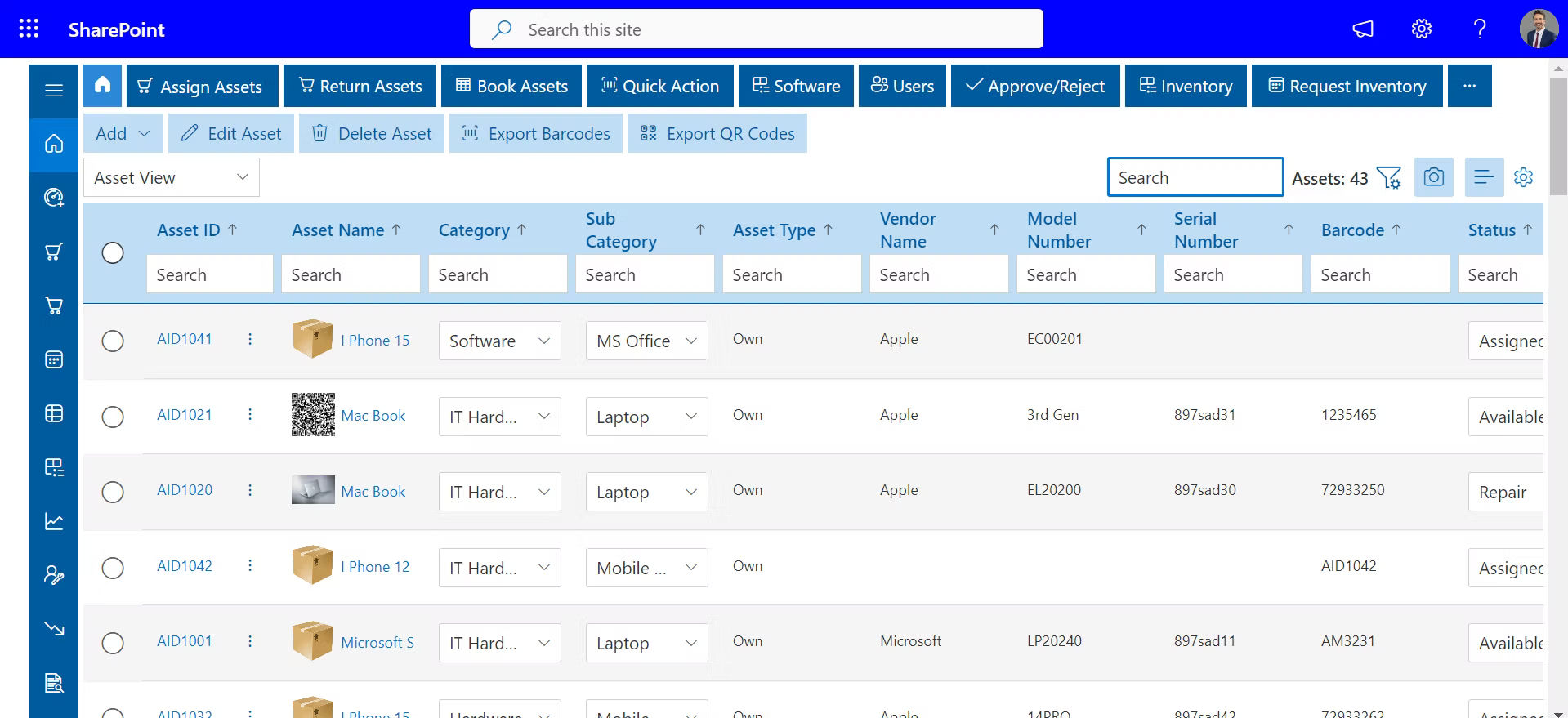
Asset tracking software is a cloud-based system that helps businesses monitor, manage, and optimize assets in real time. It works by assigning each asset a unique identifier (barcode, QR code, RFID), allowing teams to:
- Track location and usage instantly
- Monitor asset lifecycle (purchase → disposal)
- Automate audits and maintenance
- Access data from mobile devices
Modern businesses are shifting to real-time asset tracking systems to eliminate guesswork and improve decision-making.
The Problem with Traditional Inventory Management
Before investing in an asset tracking solution, it is important to understand the core problems:
- Manual Errors: Human data entry leads to inaccurate records and stock mismatches.
- Phantom Inventory: Systems show items available, but they are missing.
- Over-Purchasing: Without visibility, businesses reorder items they already have.
- Missed Maintenance: No tracking = unexpected breakdowns and downtime.
This is why companies are actively searching for inventory tracking software solutions that automate everything.
7 Ways Asset Tracking Software Improves Inventory Management
1. Real-Time Visibility Across the Entire Inventory
- One of the most transformative features of asset tracking software is real-time visibility. Instead of waiting for a weekly stocktake or end-of-month report, managers can see the exact location, condition, and availability of every asset at any moment.
- For field teams, this means a technician can confirm in seconds that the right part is on the truck before heading to a job site. For warehouse managers, it means knowing exactly how many units are on the shelf, in transit, or out for maintenance, without needing to walk the floor. Real-time inventory tracking eliminates the guesswork that leads to stockouts, project delays, and frustrated customers.
2. Automated Tracking Reduces Human Error
- Manual inventory management is only as reliable as the people doing the data entry, and people make mistakes. Asset tracking apps automate the most repetitive, error-prone parts of the process. Barcode scanning allow assets to be logged instantly and accurately without a single keystroke. QR codes on equipment let any team member check an item in or out using just a smartphone.
- Automation also reduces the administrative burden on staff. Rather than spending hours each week reconciling stock data, employees can focus on higher-value work while the software handles the counting, updating, and reporting in the background. This shift from manual upkeep to automated tracking is one of the most direct paths to operational efficiency.
.avif)
3. Smarter Procurement and Cost Control
- Over-purchasing is a silent budget killer in many organizations. When you do not have accurate data on what you already own, it is easy to order more than you need. Asset tracking app solve this by providing utilization reports that show which assets are being actively used and which are sitting idle.
- With this data, procurement becomes demand-driven rather than assumption-driven. Businesses can reallocate underused equipment instead of buying new, extend the life of existing assets through timely maintenance, and negotiate better with vendors by having accurate inventory counts at hand. The result is leaner spending, reduced capital waste, and a procurement cycle that is grounded in real operational data rather than gut feeling.
4. Asset Lifecycle Management from Purchase to Disposal
- Every asset has a lifespan, and getting the most out of that lifespan requires visibility at every stage. Asset tracking software supports complete asset lifecycle management by logging every event an asset goes through, from the initial purchase order to scheduled maintenance, repair history, and eventual decommissioning.
- This lifecycle data is invaluable for financial planning. It helps teams predict when equipment will need replacing, plan maintenance budgets proactively, and avoid the costly downtime that comes with unexpected breakdowns. Rather than running equipment until it fails, organizations can make informed, timely decisions about repairs and replacements based on real asset performance data.
5. Preventive Maintenance Scheduling
- Unplanned equipment downtime is one of the most disruptive and expensive problems in operations-heavy industries. Asset tracking app combat this through preventive maintenance scheduling. The software monitors usage hours, flags upcoming service intervals, and automatically generates work orders so nothing slips through the cracks.
- When maintenance is proactive rather than reactive, businesses see fewer emergency repairs, longer asset lifespans, and more predictable operational costs. Teams move from a break-fix mindset to a planned maintenance culture, which pays dividends across every department that depends on functioning equipment.
6. Loss Prevention and Accountability
- Asset loss and theft are persistent problems across industries, particularly in construction, healthcare, and field services. Asset tracking apps provide a clear chain of custody for every item by logging who checked out what, when, and from which location.
- GPS-enabled tracking takes this a step further, allowing high-value equipment to be monitored in real time across multiple sites. When every asset has a transaction history and a visible location, accountability increases naturally. Employees are less likely to misplace tools when the system logs every movement, and managers can quickly identify when and where an asset went missing if it does.
7. Streamlined Audits and Compliance Reporting
- For businesses in regulated industries, audits are a recurring reality. Preparing for one manually is exhausting. Asset tracking software makes audit preparation dramatically faster by maintaining an always-current digital record of every asset, including its status, location, assigned user, and maintenance history.
- Most platforms also offer configurable reports that can be exported for compliance purposes at the push of a button. Whether you are managing software license compliance, equipment certification records, or inventory valuations for financial reporting, the data is already organized and ready to go. This reduces both the time and the stress associated with regulatory reviews.
Industries That Benefit Most from Asset Tracking Software
While virtually every organization with physical or digital assets stands to benefit, certain industries see particularly strong returns from asset tracking implementation.
- Manufacturing: Tracking tools, machinery and raw materials helps streamline production cycles, reduce waste and prevent costly downtime on the shop floor.
- Construction: With equipment spread across multiple job sites, real-time tracking reduces theft, prevents project delays, and ensures the right tools are where they need to be.
- Healthcare: Hospitals and clinics use asset tracking to manage medical devices, ensure compliance, and locate critical equipment quickly when patient care depends on it.
- Retail and Logistics: From warehouse shelves to delivery vehicles, asset tracking provides end-to-end inventory visibility that improves order fulfillment and customer satisfaction.
- IT and Technology: Managing hardware, software licenses and device assignments across distributed teams becomes far simpler with an automated asset inventory system.
What to Look for in an Asset Tracking App
Must-Have Features:
- Real-time tracking
- Mobile accessibility
- Barcode/RFID support
- Automated alerts
Advanced Capabilities:
- Asset lifecycle management
- Custom reporting & analytics
- Integration with ERP/ITSM tools
- Cloud-based scalability
Buyer Considerations:
- Pricing model (subscription vs license)
- Ease of implementation
- Customization flexibility
The ROI of Implementing Asset Tracking Software
- One of the most common hesitations around adopting new software is the upfront investment. But when it comes to asset tracking, the return typically far outweighs the cost, and it comes faster than most businesses expect.
- The financial benefits come from multiple directions simultaneously. Reduced asset loss and theft cuts write-offs. Smarter procurement eliminates redundant purchases. Preventive maintenance lowers emergency repair costs and extends asset lifespans. Less time spent on manual tracking and audits frees up staff hours for higher-value activities. And fewer errors in inventory data means fewer costly mistakes downstream.
- Businesses that implement asset tracking software consistently report measurable improvements in operational efficiency, with many seeing significant reductions in inventory-related downtime within the first year of deployment.
- When the platform also connects to your broader operational workflows, such as maintenance management, HR provisioning, and financial reporting, the compounding benefits become even more significant.
How to Get Started
1.Audit Your Assets:
2.Choose the Right Software:
- Look for scalability and integrations
3.Implement Tracking System:
- Add barcodes/QR codes to assets
4.Automate Workflows:
- Set alerts for maintenance and stock levels
5.Train Your Team:
- Enable mobile-first adoption
Conclusion
Asset tracking apps are now essential for businesses of all sizes, offering real-time visibility, automation, and actionable insights. Whether managing tools on a construction site, IT assets for remote teams, or warehouse stock, the right asset tracking software brings clarity and control to your operations. Investing in smart asset management today with Asset Management 365 allows businesses to scale efficiently, reduce costs, and operate with greater precision. The real question is how much longer you can afford to operate without one.
Looking for the best asset tracking software for your business?
Start your journey with Asset Management 365 and transform how you manage inventory today.
Frequently Asked Questions
What is an asset tracking app and why is it important for my business?
An asset tracking app helps businesses manage and monitor their physical assets in real-time, improving efficiency by automating tracking and reducing errors.
How does an asset tracking app improve inventory management?
By providing real-time visibility and automating inventory processes, an asset tracking app ensures accurate stock levels, reducing manual errors and preventing overstocking.
Can an asset tracking app save my business money?
Yes, it saves money by reducing asset loss, minimizing downtime, and improving asset utilization, leading to cost savings and more efficient operations.
How does real-time visibility in an asset tracking app enhance operations?
Real-time updates on asset location, status, and condition help businesses make data-driven decisions, optimize workflows, and reduce inefficiencies.
What features should I look for in an asset tracking app?
Look for features like real-time tracking, barcode/RFID scanning, GPS integration, and robust reporting to ensure maximum efficiency and data accuracy in your asset management.


_JiluXJRGNl.svg)