
Contract Amendment Explained: Key Elements & Best Practices

However, business circumstances change and the initial conditions might not be applicable to the full extent. A contract amendment enables parties to revise certain clauses or promises in a contract formally without necessarily re-writing the entire contract.
Businesses do not have to write a new agreement but can revise certain clauses, terms or conditions and retain the original contract.
What is a Contract Amendment?
A contract amendment is an official method of modifying some of the terms of an agreement. Rather than developing an entirely new contract, it enables you to modify contract terms like cost, schedules, scope of work or roles, and the other aspects of the contract are kept unchanged.
The amendment is legally valid as soon as all the parties involved sign it. This will ensure that all people consent to the changes as well as the fact that the new terms are enforceable in a court of law.
Why Contract Amendments Are Important?
Relationships in business change with time. The contracts can be changed, pricing can be adjusted, the schedule can be prolonged, the services can be increased, or the conditions of delivery can be optimized to meet the new demands and evolving conditions.
In cases where such updates are done informally in emails, phone calls or verbal communication, they may at times cause unnecessary difficulties, which include:
- In the absence of a written document, various parties can have a different understanding of the agreed changes
- Audit and review teams might struggle to verify terms which are not in written form
- Finance departments can have a problem when invoices are not as per the terms of the contract
- Teams might not know what version of the agreement is in force and is enforceable
- Stakeholders might not be aware of the changes that were formally examined and adopted
- Teams can go sluggish as they seek to understand new roles, schedules, or deliverables
- Constant uncertainty may cause unwarranted stress and decrease the trust between spouses
An well prepared contract amendment assists in dealing with these issues. It provides an organized and professional method of recording agreed changes, keeping things straight, and ensuring a hassle-free cooperation among all parties.
Types of Contract Amendments for In-House Legal Teams
In the process of contract management, in-house legal departments might encounter various types of amendments based on the type of change. The most common forms of contract amendments are listed below.
- Digital or Email-Based Amendments
Modifications done using digital contract management are common because of convenience and time saving. These updates are documented in written form and can have digital approvals or signatures. This is more traceable and clearer compared to verbal changes. - One-Sided Amendments on a Limited Terms
In other contracts, one party can be permitted to make certain changes without the consent of the other party. This is not a common amendment and has to be explicitly allowed in the original contract. Examples can be pre-established rights to change fees or policies at notice. - Amendments Triggered by Regulatory
These amendments are done in cases where external rules, laws or internal company policies are altered. When this happens, contracts might require monitoring to keep in line with new demands. These amendments are generally made in parts of the agreement and might need written notice and recognition on the part of the other party. - Written and Signed Amendments
These amendments are discussed and accepted through spoken communication. They are sometimes used for small or time-sensitive changes. However, without written records, differing recollections may arise, making these changes difficult to rely on or validate later. - Verbal Agreements Informally
These amendments are negotiated and passed on by word of mouth. They are also applied to minor or urgent modifications. Nonetheless, in the absence of written documents, the recollections of different individuals can be different, and hence these modifications can be hard to depend on or confirm in the future.
Difference Between Contract Amendment vs Contract Addendum
It is necessary to know the distinction between a contract amendment and a contract addendum, which is applied to a particular purpose when it is necessary to update or expand an existing agreement.
| Aspect | Contract Amendment | Contract Addendum |
| Purpose | Used to change or update existing terms in a contract | Used to add new terms or information to a contract |
| Effect on Original Terms | Modifies or replaces specific clauses in the original agreement | Leaves existing terms unchanged |
| When to Use | When pricing, timelines, scope, or responsibilities need revision | When additional clauses or details need to be included |
| Impact on Contract | Legally alters the original contract terms | Legally extends the contract without altering current clauses |
| Content Type | Updates or corrects already agreed terms | Introduces new information not previously covered |
| Example Use Case | Changing payment terms or extending a deadline | Adding a confidentiality clause or new service details |
| Legal Role | Becomes part of the original contract and overrides old terms | Becomes an attachment that supplements the original contract |
When Is It Appropriate to Amend a Contract?
Contracts are developed in accordance with the existing expectations, but the reality tends to alter. A contract amendment will assist in keeping everything on track and well documented when agreed terms are no longer representative of how the work is being done.
- Timeline or Delivery Updates
The schedules of projects may change due to numerous reasons, including the change of priorities, approval delays, or unpredictable external circumstances. The deliverables in certain instances might have to be amended to suit the business requirements. Revising the contract will make sure that the new deadlines, milestones, and contractual obligations are well defined and agreed upon by both parties. - Payment or Pricing Revisions
Financial arrangements tend to change with the growth or change of scope of projects. This can be changing due to the price, or updating the billing terms. An contract amendment offers a formal means of documenting such changes so that transparency is maintained, and finance teams can pay their dues without any hitch. - Role or Responsibility Changes
With the advancement of projects, the roles can change because of a change in the team or availability of resources or new demands. Tasks can be re-allocated, increased or decreased. Modifying the contract is useful in clarifying the new roles and making everyone manage contract obligation. - Changes in Contracting Parties
Organizations can be restructured, merged or changed in ownership. When this happens, an alternative party or a person might have to be introduced or substituted in the contract. An amendment of the contract makes sure that the right parties are legally identified and that the responsibilities are handed over. - Responding to Business or Market Changes
The market conditions, customer requirements or regulatory requirements may vary with time. Such changes can be in terms of pricing, delivery terms or compliance requirements. Modifying the contract enables business to make changes without having to develop a new contract, and all the changes are duly documented.
Key Elements of a Contract Amendment
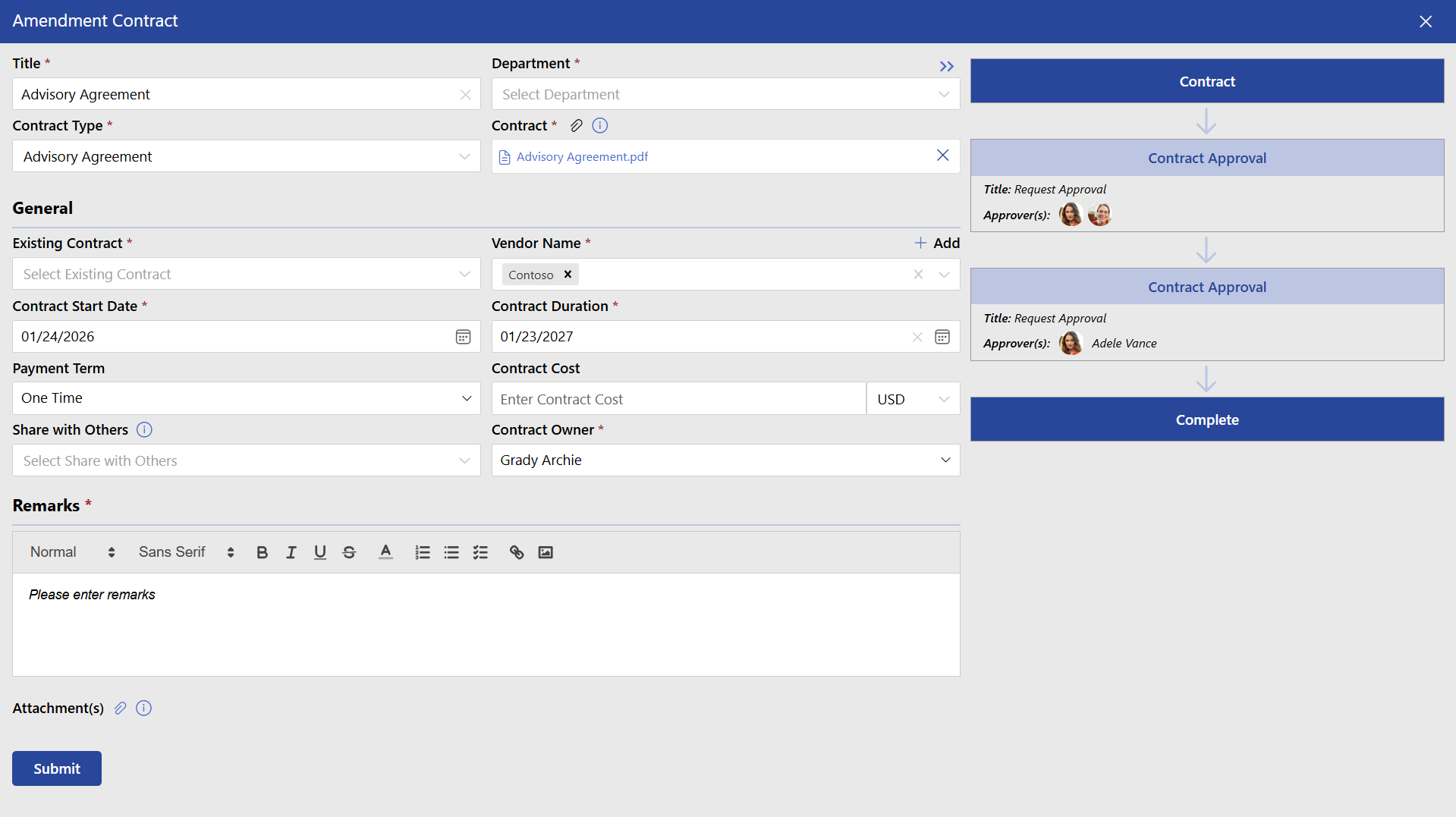
An amendment of a contract modifies an existing contract in case of a need to change the terms. It is very clear on the revisions, makes the contract valid and both parties consent to the new terms.
1) Clear Title and Link to the Original Contract
Any update of the contract must begin with a clear heading indicating that it is an official change to an existing agreement. This assists the readers to grasp its purpose at once.
The document should also point clearly to the original contract by including:
- The entire name of the agreement under change
- The date of signing of the original contract
- Name of all the parties involved
This information is enough to understand which agreement is being revised and avoid confusion with other contracts.
2) Details of What Is Being Changed
One should clarify the areas of the contract that are undergoing revision. The only sections that need to be addressed are the relevant ones and not the whole agreement.
A properly written amendment typically contains :
- The initial provision or section
- The new expression which substitutes it
- A note that all other sections of the contract are still in existence
A contract add-on can be a more suitable choice in case new terms are to be added rather than to amend the old ones. This enables the introduction of new points without altering the original terms.
3) Start Date of the Updated Terms
The new terms must be clearly stated with regards to the time of application in every amendment. In the absence of this information, it might be not clear what version of the contract should be adhered to. Others amendment process that become effective later so that one can prepare in advance.
4) Agreement and Signatures from All Parties
The amendment should be reviewed and signed by all parties to be valid. In some instances, additional verification may also be signed by a witness or notary. This can be useful in most cases when having agreements that require big payments, long term or legal obligations. Approval emails or meeting notes are also another common type of supporting records that many businesses maintain to demonstrate that the decision was negotiated and agreed upon by all parties.
5) Alignment with the Existing Contract
New terms must be made in line with the framework of the existing contract unless the parties are willing to make broader modifications. As an example, in case of payment terms revision, it should be in line with other financial sections which are not changed. In case of redistribution of duties, the contract terms must show how such changes are incorporated into the general contract.
6) Simple and Direct Language
The revised terms are easy to read and comprehend due to the use of clear wording. The updates of the contract should not be unclear or too technical.
Extra care should be taken when updating:
- Prices and times of payment
- Project schedules or dates of delivery
- Roles and responsibilities
The use of simple language will make all the stakeholders to be aware of the changes. Short explanations may be included where necessary to explain complicated points.
7) Follow Legal and Industry Rules
Any update of the contract must be in accordance with the existing laws and industry standards. Amendments ensure that agreements remain valid and current since regulations may vary with time. In the case of significant or complicated changes, it may be beneficial to consult a legal expert to ensure that the new terms comply with all the legal regulations.
Common Challenges Faced in Contract Amendment
Contracts may require revision due to changes in the business requirements, but such revision should be done with caution. Even minor gaps in the contract amendment process may cause bigger problems in the long run unless they are solved in a wise way.
1) Vague Language in Revised Clauses
When new terms are drafted in a general or vaguely defined manner, one side can interpret the meaning in a different manner. A clause that seems clear in the drafting process can be questioned in the execution process, audit or in the dispute process. Unclear language may create some assumptions that can influence duties, schedules, or remunerations.
2) Missed Links to Existing Terms
Modifying a single aspect of a contract usually has an impact on other related areas. In case the associated clauses still refer to previous terms, the agreement can seem to be inconsistent or unfinished. The overall review of the document assists in ensuring that the updated parts remain in line with the original framework of the contract.
3) Incomplete Approvals
An amendment can only be legally binding when contract is approved by all the parties that are required to accept it. The verbal agreement or informal recognition might not be adequate in case of any questions in the future. The amendment is legitimate since it is well documented that all the stakeholders have accepted it.
4) Overlooking Current Legal Standards
Regulations and laws are dynamic and old contracts might not be relevant to the prevailing needs. In case of updating without referring to relevant legal norms, the new terms can no longer be in line with the regulations. Revision of relevant rules in the amendments assists in keeping the compliance and validity of the law.
5) Limited Records of Changes Made
Failure to document the rationale of the change in the contract can bring about confusion in the future. In the absence of a written evidence of talks or agreement, it may be hard to justify why some decisions were made. Maintaining a record of the transactions in form of written confirmation or meeting notes gives transparency.
Best Practices for an Effective Contract Amendment Process
Updating a contract works best when the process is structured, transparent, and easy to follow. Clear practices help teams manage changes without misunderstandings, delays, or legal risks. Below are key best practices that support well-managed and reliable contract amendments.
1. Documentation and Organization
Having amendment-related information in a proper order will ensure that the teams are able to keep track of the changes and know the cause of the update. Consistency is supported by proper documentation and clarity is offered during the contract lifecycle.
- Keep all amendment files in one and reachable place
- Keep version history to trace the changes with time
- Note down the reason and the date of every amendment
2. Clear and Precise Language
The simplicity and directness of words decrease the possibility of various interpretations. The use of clear language also makes all the parties know their roles and responsibilities when the amendment is implemented.
- Use simple and clear legal terminologies as much as possible
- Apply the same words in the contract and amendments
- Make revised obligations, timelines or conditions clear
3. Targeted and Descriptive Accounts of Alterations
It is evident that what has been changed should be explained to avoid misunderstandings. Detailed descriptions enable the readers to find the updates within a short time without going through the whole contract.
- Name the specific clauses/sections undergoing changes
- Distinctly differentiate between outdated terms and modern terms
- Do not make general statements, outline each change
4. Making All Parties Completely aware of the Amendments
The more effective amendments are made when all the parties are aware of the changes. Effective communication will minimize any disagreement in the future and facilitate the implementation process.
- Share the amendment among the relevant stakeholders
- Explain complex changes where necessary
- Give time to review and clarification and then approve
5. Categorical Track of Contract Tracking
Monitoring changes in the amendments over time assists teams in tracking the changes in the contract. An explicit tracking procedure helps in accountability and ease of review or audit in future.
- Give version numbers to every amendment
- Record a history of modifications of the contract
- Amendments to the original contract are linked to make them easy to refer to
Conclusion
Keeping contracts current is key to maintaining transparency, compliance, and productive working relationships. When updates are communicated clearly, documented properly, and approved by all parties, businesses can avoid misunderstandings and reduce legal risk.
Now is the time to act review your existing agreements, record necessary changes, and ensure everyone is aligned before finalizing. Your contracts should always reflect your current business needs and commitments.
Ready to manage contract updates with confidence and avoid legal issues? Start your 14-day free trial with CLM 365 and experience simpler, smarter contract management.
Join Our Creative Community
Frequently Asked Questions
How to amend contracts?
It is best to put amendments in writing, and in many cases, it is legally required. Most contracts include a clause stating that any changes must be documented in writing.
What is the best way to amend a contract?
The best way of amending contracts is always written down the amendment and ensure both parties sign and date it. Mention the contract’s title (if it has one), the original parties, and the signing date. Attach the amendment to the original contract for clarity.
What is an amendment of contractual terms?
A contract amendment is a written change to an existing contract. It updates specific terms like price, delivery date, or scope of work without replacing the original contract.
Can you amend an expired contract?
No, an expired contract cannot be amended. Once a contract expires, it is no longer legally valid. Instead, the parties must create a new contract.
Who can amend a contract?
All parties involved in the original contract must agree to and sign the amendment for it to be legally valid.
Table of Contents

Trusted by the Best

_JiluXJRGNl.svg)