How Revenue Cycle Software Simplifies Subscription Management

Managing subscription-based services becomes increasingly complicated as businesses grow and diversify their offerings.
In this blog, we will explore how Revenue cycle software helps businesses simplify subscription management, streamline billing processes, and handle complex pricing models with ease. We will also look at how it improves accuracy, reduces manual effort, and gives better financial visibility for smarter decision-making.
From monitoring renewal cycles to managing multiple pricing structures and maintaining billing accuracy, subscription models come with their own set of operational challenges.
What Is Revenue Cycle Software?
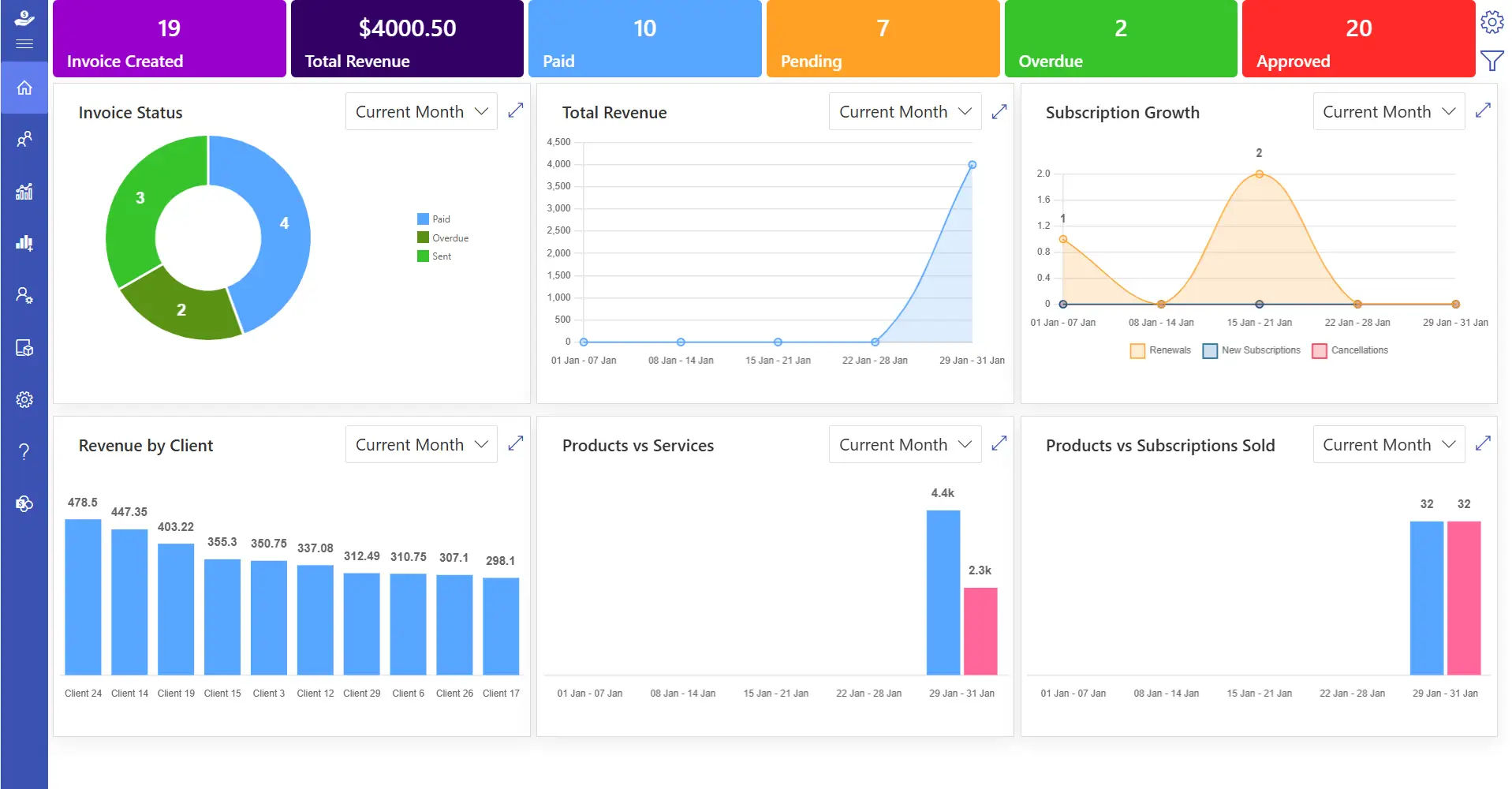
Revenue cycle software is a digital solution that helps businesses manage the entire financial lifecycle of a customer from initial billing and invoicing to payment collection and revenue tracking. It automates complex processes like subscription billing, renewals, and payment reconciliation, ensuring accuracy and efficiency.
- Creates a unified view of financial data for better revenue tracking
- Enhances efficiency by reducing manual effort and saving valuable time
- Strengthens cash flow visibility with clear and actionable revenue insights
Why Managing Revenue Cycle Is Important for Subscription Businesses?
In today’s subscription-driven business environment, maintaining a smooth and efficient financial process is essential for sustainable growth. This is where Revenue cycle software helps businesses streamline processes, improve accuracy, and maintain better control.
1. Optimizing Costs and Budget Allocation
Effectively managing subscriptions allows businesses to track all active services in one place and identify unused or underutilized tools. With the support of a structured system like revenue cycle management tools, companies can reduce unnecessary spending. This ensures better allocation of resources and improved return on investment over time.
2. Preventing Unnecessary Renewals
Without proper tracking, businesses often face automatic renewals for services they no longer need. Using revenue cycle system helps monitor subscription renewal dates and subscription usage, enabling businesses to take timely action. This reduces avoidable expenses and ensures that only valuable and necessary tools remain active.
3. Maximizing Software Utilization
Many businesses fail to fully utilize the features of the tools they subscribe to. By leveraging insights from revenue cycle management systems, companies can analyse subscription patterns and ensure every tool delivers maximum value. This not only improves efficiency but also enhances overall operational performance.
4. Managing Multiple Software Tools Effectively
As organizations grow, handling multiple subscriptions across teams can become complex. A well-implemented revenue cycle software solution centralizes all subscription-related information, including pricing, renewal timelines, and features. This makes it easier to stay organized, reduce confusion, and focus on the tools that truly contribute to business success.
5. Boosting Productivity and Efficiency
When businesses have clear visibility into their tools and financial processes, teams can work more efficiently. Revenue cycle platforms help align the right tools with business needs, ensuring smoother workflows and better productivity. As a result, employees can focus on high-priority tasks while the system handles the complexity of subscription and revenue management.
How Does Revenue Cycle Software Work?
Revenue cycle software simplifies and automates the entire financial process, helping businesses manage everything from billing to revenue tracking with greater accuracy and efficiency. Here’s how it works step by step:
Step 1: Capture Customer and Subscription Data
The process begins by collecting customer details, subscription plans, pricing models, and billing cycles in one centralized system. This creates a strong foundation for accurate revenue tracking.
Step 2: Automate Billing and Invoicing
The software automatically generates invoices based on subscription terms, usage, or predefined billing schedules, ensuring timely and error-free billing.
Step 3: Manage Payments Efficiently
It supports multiple payment methods and securely processes transactions, making it easier for businesses to collect payments without delays.
Step 4: Track Renewals and Subscriptions
Revenue cycle software keeps track of subscription timelines and renewal dates, sending alerts or automating renewals to avoid interruptions in service.
Step 5: Monitor Revenue and Financial Data
All financial transactions are recorded and organized, giving businesses real-time visibility into revenue, outstanding payments, and overall financial health.
Step 6: Generate Reports and Insights
The system provides detailed reports and analytics, helping businesses understand performance, identify trends, and make informed financial decisions.
Step 7: Ensure Compliance and Accuracy
By reducing manual intervention, the software minimizes errors and helps maintain compliance with financial regulations and billing standards.
Core Features of Revenue Cycle Software
To effectively accelerate financial operations and reduce delays in revenue collection, businesses depend on advanced capabilities offered by revenue cycle software. Here’s a deeper look at the key features:
1. Automated Billing and Invoicing
One of the most essential features of revenue cycle software is its ability to automate billing and invoicing. The digital system generates accurate billing instantly based on subscription plans, usage, or custom pricing models. This eliminates manual errors, reduces billing delays, and ensures customers are billed on time, ultimately speeding up the revenue cycle.
2. Real-Time Payment Processing
With integrated payment gateways, revenue cycle software enables businesses to accept payments through multiple methods such as cards, online banking, and digital wallets. Faster and secure transactions help reduce payment delays, improve customer experience, and maintain a consistent cash flow.
3. Smart Renewal Management
Managing renewals manually can lead to missed opportunities and revenue loss. Revenue cycle software tracks subscription timelines, sends alerts, and automates renewals to ensure uninterrupted service. This helps businesses maintain recurring revenue streams without gaps or disruptions.
4. Revenue Tracking and Visibility
A major advantage of revenue cycle software is real-time financial visibility. It provides clear insights into recurring revenue, outstanding payments, and overall financial performance. This allows businesses to monitor cash flow closely, identify bottlenecks, and take quick actions to optimize revenue collection.
5. Subscription and Plan Management
Handling multiple pricing models, upgrades, and downgrades can be complex without the right system. Revenue cycle software simplifies this by allowing businesses to manage all subscription plans in one tool. This flexibility ensures smooth transitions for customers and reduces friction in the billing process.
6. Seamless Integration with Business Tools
Modern revenue cycle software integrates easily with accounting systems, CRM platforms, and other business tools. This ensures a seamless flow of data across departments, eliminates duplicate entries, and improves operational efficiency, allowing teams to focus on more strategic tasks.
7. Advanced Reporting and Analytics
Data-driven decision-making is crucial for growth. Revenue cycle software provides detailed reports and analytics on revenue trends, payment patterns, and operational performance. These insights help businesses identify inefficiencies, optimize processes, and continuously improve the overall revenue cycle.
Advantages of Revenue Cycle Software
Adopting revenue cycle software empowers businesses to take full control of their financial operations while creating a faster, smoother, and more reliable revenue flow. Here are seven powerful, benefit-driven advantages.
1. Faster and More Predictable Revenue Collection
With Revenue cycle software, businesses can automate invoicing, billing schedules, and payment workflows across the entire revenue cycle. This ensures invoices are generated and delivered on time, while payments are collected faster. As a result, businesses experience a steady and predictable cash flow, making financial planning and forecasting much more reliable.
2. Greater Accuracy and Confidence in Financial Data
Manual errors can disrupt the revenue cycle and lead to financial inconsistencies. A revenue management software eliminates these risks by automating calculations, billing, and reconciliation processes. This ensures every transaction is accurate, builds trust in financial data, and strengthens control over the entire revenue cycle.
3. Complete Financial Visibility in Real Time
A clear view of every stage in the revenue cycle is essential for growth. provides real-time insights into revenue generation, pending payments, and financial performance. This visibility helps businesses identify delays, track progress, and make faster, data-driven decisions to keep the revenue cycle running smoothly.
4. Increased Efficiency Across Teams
By automating subscription billing tasks within the revenue cycle, revenue management application allows teams to operate more efficiently. Finance and operations teams can focus on strategic activities instead of manual billing or tracking, leading to improved productivity and a more streamlined revenue cycle process.
5. Smooth and Flexible Subscription Management
Subscription changes such as upgrades, downgrades, and renewals are critical parts of the revenue cycle. Revenue cycle software manages these transitions seamlessly, ensuring accurate billing and uninterrupted service. This reduces friction, enhances customer experience, and maintains a consistent flow of revenue.
6. Scalable Growth Without Added Complexity
As the volume of customers and transactions increases, managing the revenue cycle manually becomes challenging. Revenue cycle software scales effortlessly with business growth, handling higher transaction volumes and complex pricing models while keeping the revenue cycle organized and efficient.
7. Smarter, Data-Driven Revenue Optimization
Optimizing the revenue cycle requires actionable insights. Revenue management application offers advanced analytics and reporting that highlight revenue trends, payment behaviours,
Best Practices to Implement While Managing Yearly Revenue Cycle
Effectively managing the annual financial cycle requires a structured approach, consistent monitoring, and the right systems in place. Here are some key best practices to follow.
- Define clear yearly revenue targets and break them into monthly or quarterly goals to keep your revenue cycle focused and measurable
- Maintain consistent billing and payment processes to ensure smooth transactions and avoid delays across the revenue cycle
- Track cash flow regularly to identify gaps early and keep the revenue cycle stable throughout the year
- Plan subscription renewals in advance to ensure continuous revenue flow and avoid unexpected drops
- Use revenue cycle software to automate billing, tracking, and reporting for better efficiency and accuracy
- Regularly review financial data and performance to identify areas of improvement in the revenue cycle
- Align your pricing, subscriptions, and payment terms with business goals to maximize revenue potential
- Continuously optimize processes based on insights and trends to keep the revenue cycle efficient and growth-driven
Why Choose Revenue 365 for Effective Revenue Cycle Management?
Revenue 365 is a comprehensive revenue cycle software designed to help businesses efficiently manage their entire revenue lifecycle, especially those operating on a subscription-based model. It simplifies complex processes such as recurring billing, payment tracking, renewals, and plan modifications all from a single, centralized platform.
Built with practicality in mind, Revenue 365 enables both growing businesses and large enterprises to streamline their revenue cycle operations without relying on heavy manual effort. By automating key financial workflows, it improves billing accuracy, reduces processing time, and ensures a smoother flow of revenue across every stage of the cycle.
Powered by the Microsoft ecosystem, Revenue 365 seamlessly integrates with tools like Microsoft Teams, Microsoft Outlook, Microsoft SharePoint, and Microsoft Azure. It offers a centralized dashboard that provides real-time visibility into revenue performance, subscription data, and financial metrics helping teams stay aligned to make informed decisions.
Conclusion
Managing the revenue cycle efficiently is essential for any business looking to maintain steady cash flow, reduce errors, and scale with confidence. With the right Revenue cycle software, businesses can simplify complex financial processes, gain real-time visibility, and ensure every stage of the revenue lifecycle runs smoothly.
Revenue 365 brings all these capabilities into one platform helping you automate billing, manage subscriptions, and optimize your revenue operations without the usual complexity.
Start your 14-day free trial today, no credit details card required and experience a smarter way to manage your revenue cycle.
Frequently Asked Questions
Does revenue cycle software automate invoicing?
Yes, Revenue cycle software automates invoicing by generating and sending invoices based on subscription terms and billing schedules. This ensures accurate and timely billing, reduces manual effort, and minimizes errors across the revenue cycle.
Can a revenue management application integrate with other business tools?
Yes, most Revenue cycle software integrates seamlessly with business tools like Microsoft Teams, Microsoft Outlook, and Microsoft SharePoint. This creates a connected ecosystem, improves collaboration, and ensures a smooth experience for teams and customers.
Does Revenue 365 manage subscription renewals?
Yes, Revenue 365 efficiently manages subscription renewals by tracking renewal dates, sending timely reminders, and automating the renewal process. This helps reduce churn and ensures a consistent and predictable revenue flow.
Is revenue cycle software suitable for growing businesses?
Yes, Revenue cycle software is designed to scale with your business. It supports increasing transaction volumes, multiple pricing models, and expanding customer bases without adding operational complexity.
Does revenue cycle software provide reporting and insights?
Yes, it offers detailed reports and real-time analytics on revenue performance, payment trends, and financial health. These insights help businesses make informed decisions and continuously optimize their revenue cycle.


_JiluXJRGNl.svg)