
Expense Management Platform: A Complete Guide for Modern Businesses

Managing business expenses is a daily operational responsibility for finance teams, managers, and employees.
Since capturing receipts to the validation of claims and the creation of reports, expense management and general understanding of how the business spends money.
Looking for an effective way to manage expenses? This blog walks through the key aspects of expense management, including why it matters, how it works, best practices to follow, and how it can be implemented within your existing business workflow.
An expense management platform provides a structured system to document, examine, endorse, and examine staff costs in a uniform way.
According to study by Fortune Business Insights, the global expense management systems market is expected to grow from $7.64 billion in 2024 to $16.48 billion by 2032, at a compound annual growth rate of 10.1%.
This growth underscores the fact that expense management software is being increasingly depended on to monitor, control and report employee expenses better.
What Is Expense Management?
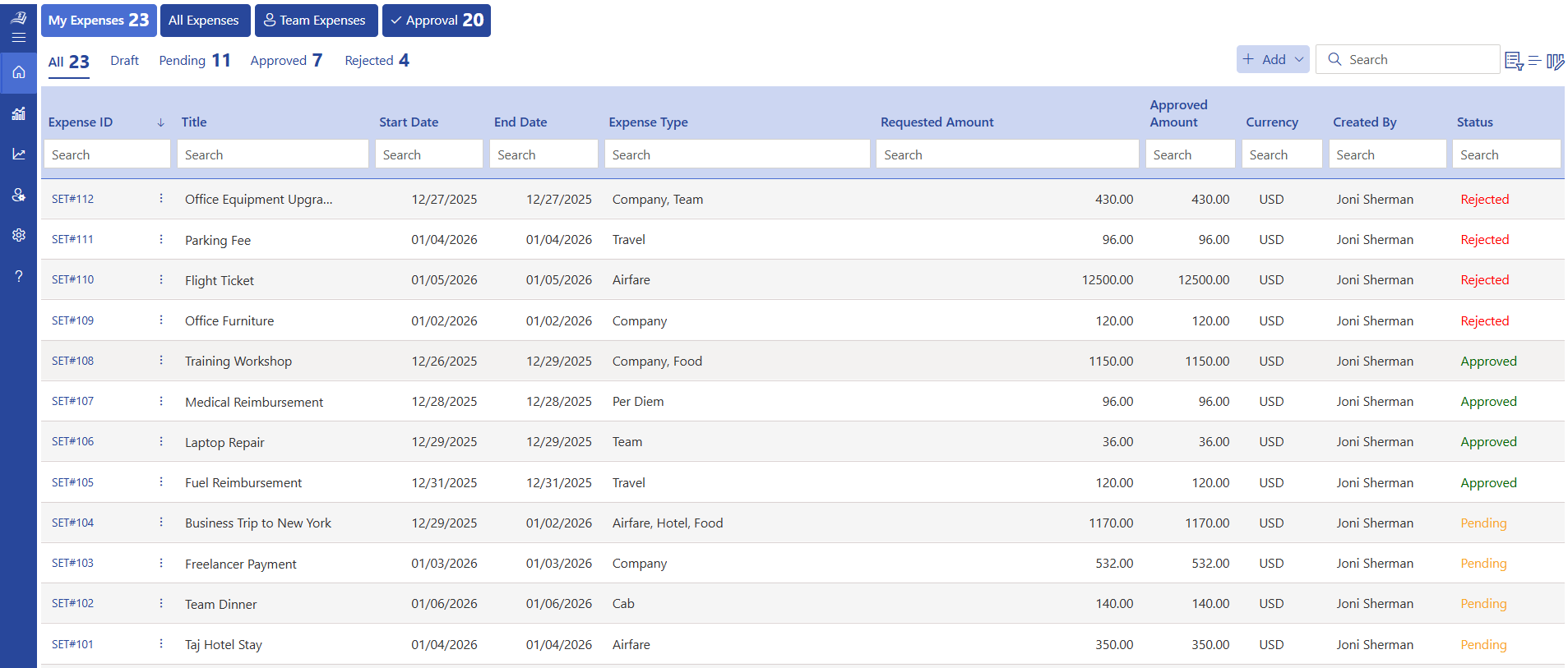
Expense management refers to a process of monitoring, reviewing, approving, reimbursing and reporting expenses incurred by employees during business. Such expenses can be travel, meals, accommodation, office supplies, subscriptions or client-related expenses.
In the absence of a trusted expense management platform, companies tend to have poor visibility of expenses, slow approvals, and non-compliant policies. These challenges escalate as companies expand in terms of teams, projects, and regions.
Importance of an Expense Management Platform
The following is the reason why an expense management platform is significant, it centralizes expense submissions, enforces policies, has approvals, keeps records, and provides transparent spending visibility.
1. Centralized Expense Control
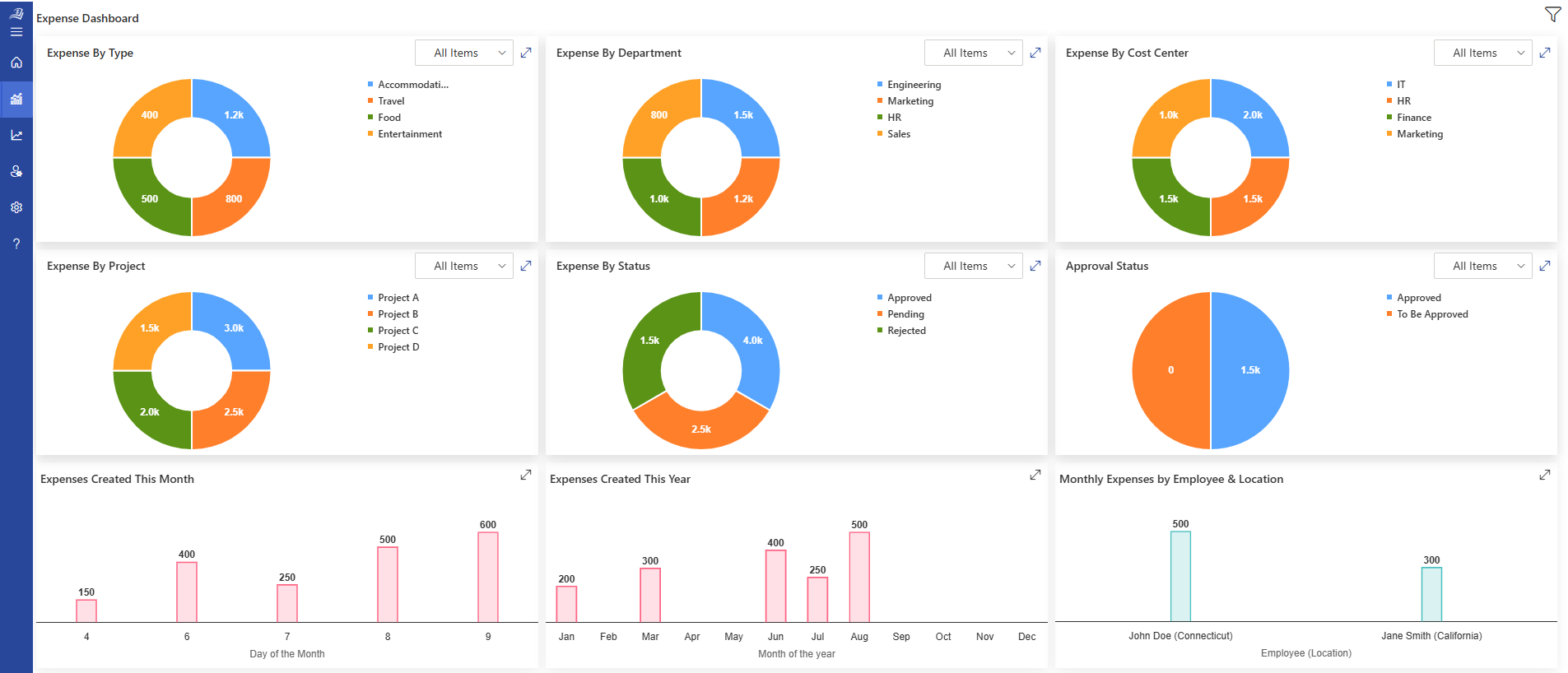
Expense data in most organizations is usually shared in emails, spreadsheets, and unrelated tools. When documentation is kept in more than one place, there is a tendency to have disjointed oversight, and inconsistencies will be more prevalent.
In the absence of one system of record, it will become even harder to track expenses accurately, particularly when the volume of transactions increases.
In the long term, the lack of centralized control may turn the expense reviews into time-consuming.
2. Operational Scalability Needs
With growing businesses, the volume of expenses that finance teams must deal with is likely to increase without corresponding increase in resources.
It has been reported that 8% of CFOs say improving finance operations is a major focus of their tech spending, which reflects the pressure placed on existing systems as organizations scale.
Under such situations, the absence of a formal expense platform may limit the capacity to respond to the growing operation needs.
3. Financial Governance Structure
Expense controls and audit readiness are directly related to expense-related decisions. With informal handling of approvals, documentation and records, it is difficult to have a stable system of governance.
Gaps in documentation and inconsistent reviews can be revealed during audits, and more work needs to be done to address them.
A good expense management platform helps on how expenses are managed is usually necessary to facilitate compliance expectations and financial accountability.
4. Policy Enforcement Consistency
Expense policies are generally put in place to help control how employees spend their money but can be ignored in case.
Inconsistent application of policies may occur due to oversight, time constraints, or lack of visibility.
In the long run, this inconsistency may result in policy deviations that are not noticed and therefore, corrective actions become more difficult to implement across teams.
5. Organizational Spending Visibility
When expenses data is delayed or incomplete, it is often difficult to have a clear view of the spending within an organization. It may be hard to determine the spending patterns or the risks emerging without the timely access to the consolidated information.
As a result, financial information can be obtained later than necessary, which impacts planning and review processes.
This is usually experienced in organizations that are based on a fragmented expense reporting processes. With a centralized expense management dashboard, all the activities can be easily viewed.
How Does Expense Management Platform Works?
The following is the process by which an expense management platform operates, business expenses are submitted, reviewed, approved, recorded and reported in a structured system that is consistent with the company policies and finance processes.
Stage 1: Expense Creation and Submission
The business expenses are recorded by employees through a standardized form containing key details and supporting documents, which are taken at the time of submission.
Stage 2: Expense Categorization and Policy Alignment
Expenses submitted are categorized into pre-determined classification and verified against company regulations to help in orderly scrutiny and visibility of expenditure.
Stage 3: Approval Routing and Review
The expenses are carried along role-based approval routes where managers and finance departments can examine full records in one interface.
Stage 4: Manager and Finance Review
Every cost is analysed in terms of business relevance, documentation, and policy alignment and has a detailed history of activities.
Stage 5: Reimbursement Processing
Approved expenses are handled using the choice of payment methods and transparent status updates are made to the employees.
Stage 6: Expense Recording and Accounting Integration
Finalized expenses are allocated to accounting systems and reconciled with the financial systems to maintain proper records.
Stage 7: Reporting and Spend Analysis
The expense data is transformed into organized reports that reveal the patterns of spending by teams, categories, and periods.
Features of an Expense Management Platform
An expense management platform helps companies to manage the expenditure of employees in a transparent and organized way. These are some of the features to consider.
1. AI Receipt Scanning
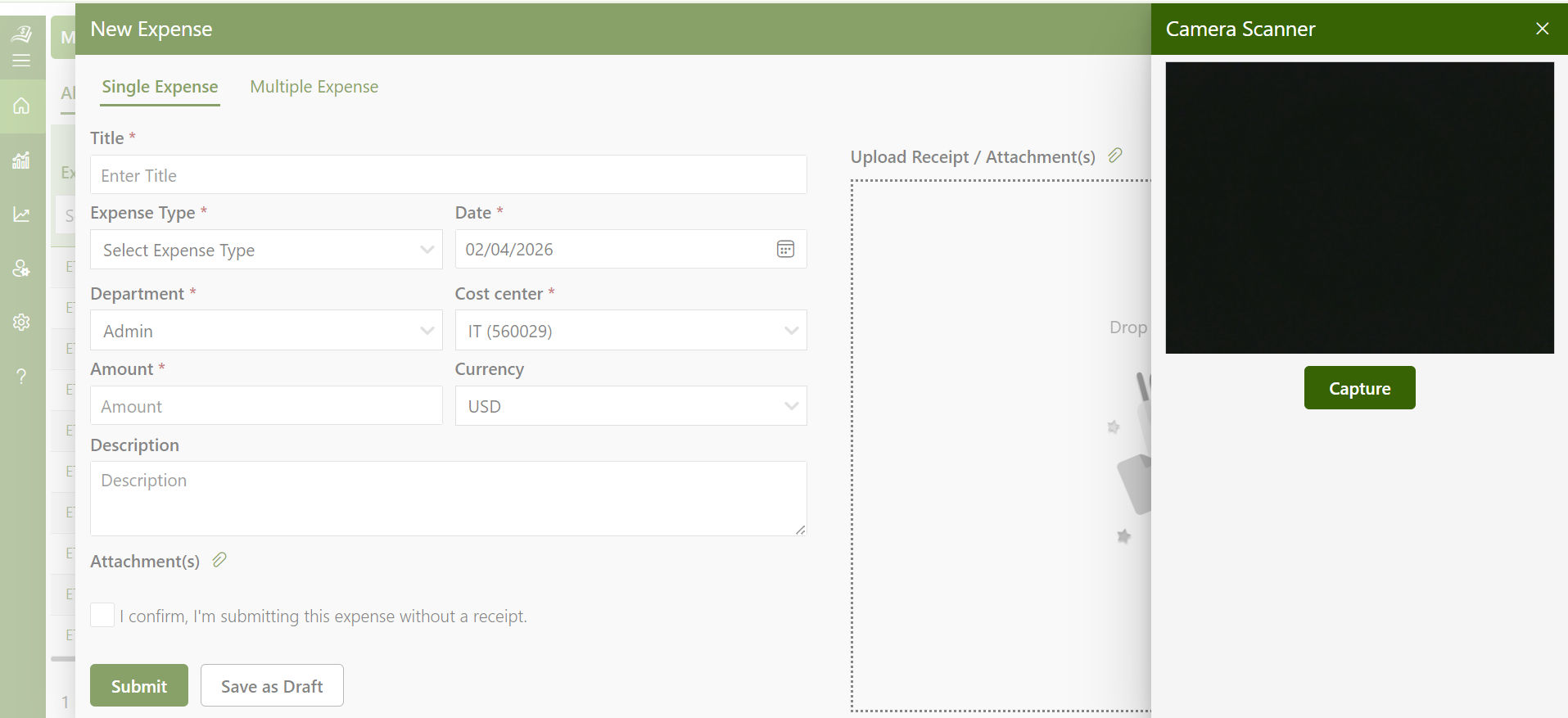
The AI expense management solution will enable users to add physical or electronic receipts and this is analysed using the intelligent recognition technology.
The system records important information like merchant name, date of transaction, tax amount, mode of payment and amount spent.
This minimizes the workload of employees in an expense management platform and maintains consistency of expense entries across teams, which aids in maintaining accurate records early on.
2. Integration with Existing Systems
The expense management system is compatible with the existing system like, SharePoint, MS Teams, Outlook, QuickBooks and Xero that are already available.
The flow of expense information is among interconnected systems, which enable finance teams to have similar financial records within departments.
This integration facilitates proper reconciliation, minimizes duplications, and assists teams to access expense data as part of their current workflows.
3. SSL Encryption
Any financial information and user data in the platform is encrypted with the help of the protocols of the use of the SSL.
This consists of receipts, approval actions, card transactions, employee details and generated reports.
Encryption is used at all levels of expense management, which promotes access control and safe storage of confidential business data.
4. Automated Expense Management
An expense management platform uses pre-established company policies to all expenses submitted.
Categories, spending limits and validation rules are automatically implemented upon submission, eliminating the repeated manual check.
A recent study by Global Business Travel Association found that companies using automated T&E solutions experienced a 40–60% reduction in processing time compared to manual methods.
A expense management automation will enable the finance departments to scrutinize the costs with criteria and maintain the internal rules.
5. Per Diem Management
Per diem allowances may be established depending on the location of travel, time, position of employee or business unit.
Employees report the per diem expenses within the allowed limits, and the finance teams can view the usage based on the itemized records and summarized views.
This helps in the uniform management of the travel costs within the organization.
6. Corporate Card Management
The transactions of the corporate card are recorded and captured in a centralized system.
The expense management system connects card transactions to receipts and expense records, which give finance departments a full picture of corporate card management.
This visibility enhances proper monitoring of business costs and eases the examination of transactions.
7. Expense Reporting
The expense management platform has a flexible expense reporting functionality that can be used to sort expenses by employee, department, project, category or time frame.
It is possible to create reports on monthly reviews, budget checks, or compliance checks.
Searchable and organized data views aid in enhanced financial management and audit preparation.
8. Smooth Approval Process
The approval workflows may be established according to the expense value, reporting hierarchy or internal approval rules.
Managers can see expenses information, see receipts that are attached and take action directly in the platform.
This maintains approvals in order and helps in reviewing them in time without interfering with the day-to-day operations.
9. Receipt Tracking
Receipts are all digitized and connected to their corresponding expense entries.
This generates an entire expense history that is available when required to audit, review, or perform financial checks.
Systematic storage of receipts scanning facilitates traceability and enables the maintenance of records of expenses that are easy to control with time.
10. Multiple Currency Support
The expense management platform is designed to support expense submissions in multiple currencies.
Automatic conversion of currency applies the current exchange rates to show the correct values in reports.
This assists in international travel, cross border transactions and consolidated financial reporting.
Best Practices to Implement While Handling Company Expenses
Having discussed the features of Expense Tracker 365, the following best practices can be used to bring clarity and structure to your current expense workflows.
1. Establish Expense Policies
Expense policies are best suited when they indicate the way the employees spend when conducting business. Excessively strict or imprecise policies tend to vague policies between the expectations and implementation.
- Establish the expense categories according to the typical business situations
- Elaborate exceptions and edge cases to prevent unclarity
- Periodically review policies because of changes in roles and work patterns
2. Create a Consistent Expense Submission Structure
Poor submissions usually lead to missing information and late reviews. A specified framework assists expense information to be comparable and traceable.
- Require necessary information like purpose, date and category
- Make sure that you attach supporting documents with submission
- Keep the same format of departments
3. Assign Clear Review and Approval Ownership
Expense reviews is likely to slow down where ownership is unclear. Specific roles assist in keeping accountability without adding strain. Leveraging the expense approval in the system.
- Designate approvers according to department or cost responsibility
- Explain approval limits and escalation
- Approve reference and audit records
4. Preserve Accurate and Accessible Documentation
Expense records are frequently used in a variety of other purposes other than reimbursement such as audits and financial reviews. Follow-ups and compliance risks can be avoided through poor documentation.
- Centralize store receipts and records
- Maintain clear descriptions for each expense entry
- Store records as required by the regulations and internal requirements
5. Review Expense Data for Patterns
Checks on expenses are usually restricted to validation checks, whereas larger spending patterns are not detected. Periodic analysis facilitates sound financial decision making.
- Analyse periodical costs
- Determine policy exceptions that are common
- Compare team or functional spending patterns
6. Align Expense Handling with Financial Planning
Expenses influence forecasts, budgets and cash flow planning. When the expense information does not relate to the planning cycles, the adjustments are likely to occur late.
- Organize costs according to budgets
- Compare the actual expenditure with the planned expenditure
- Make use of past data to make future planning assumptions
7. Maintain Open Communication
The delays that occur in expenses are usually caused by lack of clarity and not breach of policy. Constant communication will minimize misunderstanding.
- Communication of share updates in case of policy or process changes
- Give good instructions on typical cost situations
- Have a clear avenue of querying expenses
How Expense Management Platform Benefits Your Business?
Expense management platform facilitates the management of business expenses using a well-organized system that enables accuracy, consistency, and financial control.
1. Improved Spending Visibility
A expense management platform gives a transparent picture of how the employees spend money in departments, categories, projects, and time.
As financial oversight becomes more critical, 78% of CFOs say improving finance operations is a major focus of their tech spending, highlighting the need for accurate and timely expense data.
At this visibility, finance teams can analyze how the expense is being spent, compare the spending with budgets and better identify trends.
2. Faster Reimburse Cycles
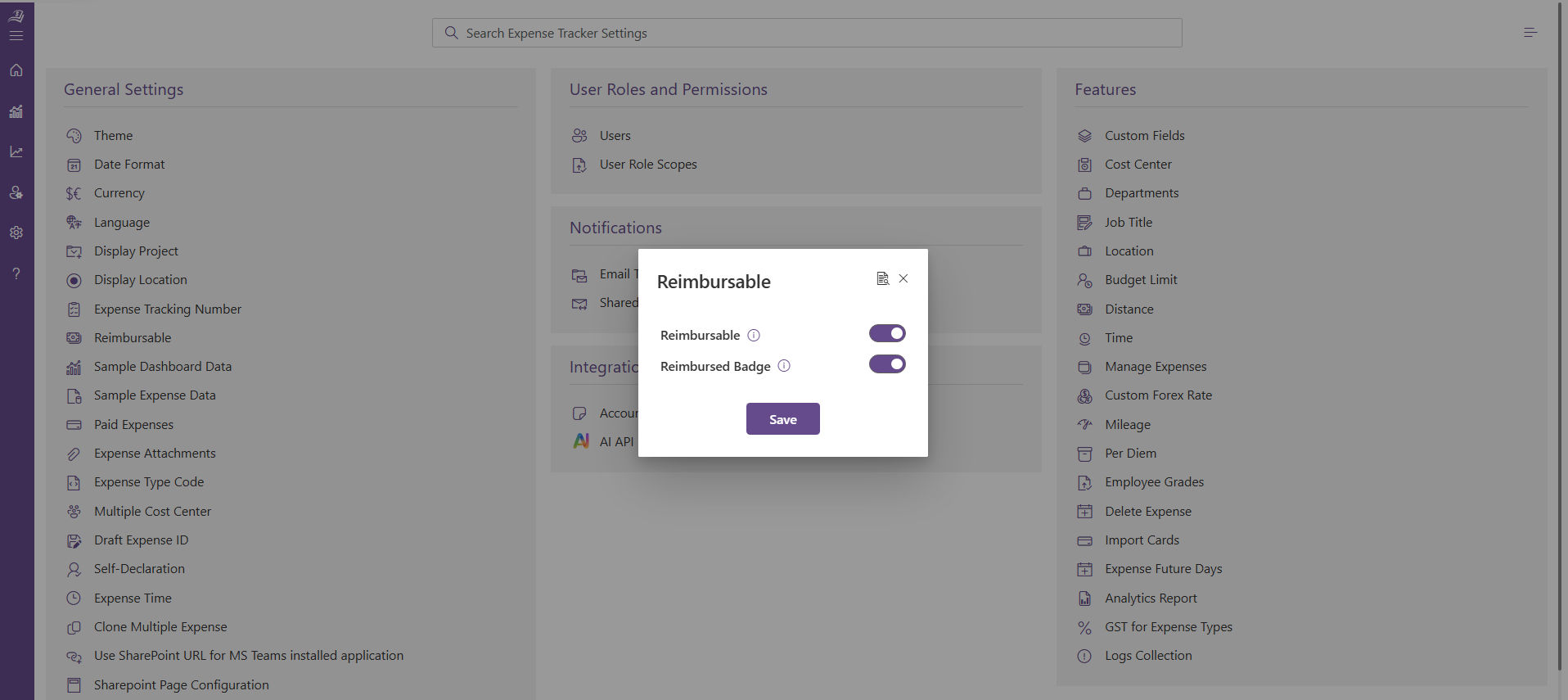
A research from Perk, shows 83% of employees struggle to reconcile trip expenses.
Digital submission and approval workflows allow expenses to move efficiently from entry to reimbursement.
Employees can make expense claims immediately they are incurred, managers can review and act on requests without waiting for paperwork, it is done and finance teams can make payouts on a regular basis.
This saves time in waiting, enhances team coordination and assists in timely expense reimbursements to the employees.
3. Consistent Policy Application
The expense policies are used uniformly in all expense submissions, irrespective of the department, position, or geographic location.
Rules of categories, expenditure limits, and approval standards are consistent with the company guidelines, which aid in the equitable and consistent treatment.
Expense management platform assists organizations to have discipline in their spending and minimizes the difference in the implementation of policies.
4. Accurate Financial Records
An expense management platform gathers expense information in a systematic and organized manner since the time of entry.
This helps in ensuring accurate accounting entries, enhances consistency of data and reduces discrepancies between expense claims and financial records.
Easy to verify and manage receipt data can be used to prepare financial statements, reviews, and audit reports by finance teams.
5. Reduced Administrative Effort
Routine expense-related tasks such as categorization, policy checks, approvals, and record storage are handled automatically within the system.
Finance teams spend less time tracking submissions, responding to status queries, or managing documentation.
A expense management tool allows teams to focus more on financial oversight, reporting, and planning activities.
6. Better Employee Experience
The whole expense process can be done through one expense management app, where employees can submit expenses, see the progress of approval, and reimbursements.
The ability to see the status of expenses and access past submissions easily makes the process easier to comprehend and follow.
It also reduces uncertainty and the need for repeated follow-ups with finance teams.
7. Audit Readiness and Traceability
All the expense process stages such as submissions, receipts, reviews, approvals, and policy checks are registered and stored at a single location.
A expense management platform has a full audit trail which can be easily accessed when auditing or conducting an internal review.
It assists companies in maintaining records in order and easily retrieved when the need arises.
Why Choose Expense 365 for Tracking Expense?
Expense 365 , also known as Expense Tracker 365 helps organizations manage employee expenses in a clear and organized way. The platform includes a mobile application that allows employees to capture receipts and submit expense reports from anywhere, making the reporting process easier and faster.
It works well with Microsoft applications such as Microsoft Teams, Microsoft Outlook, and Microsoft SharePoint, which makes it a practical choice for organizations already using the Microsoft environment.
Expense data can be exported in CSV format, allowing businesses to use it with their existing accounting systems and financial processes. With a structured system for recording and reviewing expenses, companies can maintain clear records and better visibility over their spending.
Expense 365 supports transparency in expense management while allowing businesses to continue using their current financial workflows.
How to Deploy an Expense Tracker 365 in Your Existing Workflow
In this section, it explains the process of integrating Expense Tracker 365 into the existing workflows so that it fits into the current expense process and team organization.
- Start with the current process of submitting, approving, and reimbursing expenses across teams to determine the delays in the process.
- Before configuration, align existing expense categories, policies and approval responsibilities to ensure that current financial rules are not altered.
- To ensure accountability and visibility, assign user roles and access according to existing finance and reporting structures.
- Set up expense fields to record the necessary information without interfering with the day-to-day operations or making employees work harder to complete the submission.
- Establish approval processes that reflect the current cost ownership and reporting lines to prevent confusion in the review.
- Store or maintain records of historical expenses in which continuity is needed in reporting, audits or reference.
- Explain the new costing procedure to the staff and approvers to facilitate easy training.
- Monitor early use and optimize processes to ensure consistency, accuracy, and sustained use.
Types of Expenses That Can Be Managed with Expense Management Platform
Here are some common types of expenses that can be managed using an expense management platform, covering both employee-related and operational business spending.
1. Work-Related Reimbursable Expenses
Work reimbursable expenses are those expenses incurred by employees in the process of performing the duties assigned to them or assisting in the running of the business. These costs are normally paid upfront and then reimbursed.
2. Training and Learning Costs
The expenses of training and learning includes the investments in the development of employees and their skills. This can be in the form of certifications, workshops, seminars, online courses or even internal training programs.
3. Office Supplies and Equipment
The expenses of office supplies and equipment involves the purchases that are necessary to facilitate the daily work activities. This category can include stationery, peripherals, ergonomic equipment or role-specific equipment.
4. Business Subscriptions and Memberships
Business subscriptions and memberships include recurring charges for software tools, digital platforms, and professional or industry associations. Tracking these costs assists in keeping track of renewals, consumption and long term obligations, and aids in cost consciousness within teams.
5. Business Meals and Entertainment
Business meals and entertainment costs are incurred when interacting with clients, holding business meetings or when a team is involved. These costs are normally captured together with contextual information like purpose and participants so as to be consistent with internal policies and reporting standards.
6. Travel and Transportation Expenses
Travel and transportation costs encompass business travel costs, which are airfare, local transportation, hotel, and other travel incidental costs. These costs should be well tracked to facilitate reimbursement and travel expense policy.
7. Communication Costs
The communication expenses involve the use of business-related phones, internet services, and other communication tools that are needed at work. Expenses recorded are useful in differentiating between professional use and personal expenditure.
8. Vendor and Service Provider Payments
Vendor and service provider payments include the cost of external consultants, service providers or suppliers hired to do business. Recording such payments assists in keeping proper records, managing the vendors, and consistency in financial reporting.
9. Mileage and Fuel Reimbursements
Mileage and fuel reimbursement is applicable to business travel in personal or company vehicles. These costs are captured with the help of mileage tracker terms of distance covered or fuel consumption and they are adjusted to the reasonable rates of reimbursement.
Conclusion
An expense management platforms offers a systematic, open method of handling business expenditures between the time of submission and reporting. By covering each stage of the expense lifecycle within a single system, businesses gain clarity, control, and reliable financial data.
See how a smarter expense management platform can bring clarity and control to your financial operations. Start your 14-day free trial with Expense 365!
Join Our Creative Community
Frequently Asked Questions
What happens if an approver is unavailable or inactive?
An expense management platform helps in continuity by enabling alternate approvers or escalation policies to be established. If an assigned approver is unavailable or inactive, expenses can be automatically rerouted to a backup approver or escalated to the next level.
How are mileage expenses calculated and approved?
- Predefined grades and rates are used to compute mileage expenses
- In the user module, every user is allocated a grade.
- Each grade in the mileage panel has a corresponding rate.
- When an expense is created the system automatically applies the rate based on the grade of the user
- The total mileage cost is computed with the distance entered
- Mileage tracking is switched on in general settings
- The mileage option is activated, and it is displayed in the master navbar.
- Expenses are channelled to be approved only when the approver has adequate budget limits
Does an expense management platform support multi-user access?
Yes. An expense management platform is designed to support multiple users, allowing employees to submit expenses while enabling managers and finance teams to monitor, review, and manage spending with appropriate access controls.
Can an expense management platform route approvals based on department or expense value?
Yes. An expense management platform can route approvals based on department, cost center, or expense amount, with higher-value expenses escalated automatically when required.
What happens if an expense is submitted without a receipt in an expense management platform?
Expenses submitted without receipts in an expense management platform are usually flagged and may require justification, manual review, or supporting documents before processing.


_JiluXJRGNl.svg)