10 Best Enterprise HR Software for Businesses: Expert Guide

Great businesses are built on people and when those people are supported with the right tools, they thrive. Today’s HR teams have the opportunity to shape not just processes, but entire workplace experiences.
Selecting the right enterprise HR software, like HRMS, streamlines HR tasks such as recruitment, performance tracking, and employee engagement. These platforms automate processes, provide real-time insights, and help HR teams focus on strategic initiatives rather than routine tasks.
HRMS helps businesses boost productivity, reduce turnover, and scale efficiently. With features like compliance management and employee self-service, it empowers organizations to support growth while keeping employees engaged and satisfied.
This is where enterprise HR software makes a difference. These platforms go far beyond attendance tracking. They empower organizations to attract top talent, engage employees, and improve retention all while saving time and reducing errors.
According to Gartner, 74% of HR leaders say HR technology is critical for organizational success. Another SHRM study shows that companies with modern HR systems see up to 40% fewer administrative errors.
In this expert guide, we’ll explore the 10 best enterprise HR software solutions available today, why leading businesses rely on them, and how you can choose the right one for your organization.
What is Enterprise HR Software?
Enterprise HR software is a digital solution created to manage human resource operations for medium to large businesses. It brings together core activities such as hiring, onboarding, performance tracking, and employee engagement into one connected system.
Unlike smaller HR tools that often have limitations, HR enterprise software adapts as the company expands. It can support thousands of employees, connect with finance and other business applications, and give leaders real-time insights to guide better decisions. Instead of switching between spreadsheets and multiple platforms, HR teams gain one central place to manage the entire employee experience.
These platforms create real value by improving efficiency and building stronger workplace connections. New employees can begin their journey smoothly, managers can track goals and progress with clarity, and organizations gain the information they need to make strategic choices.
Research from Gartner shows that 74% of HR leaders view HR technology as critical for organizational success, highlighting the importance of adopting solutions that truly support both people and business growth.
Why Enterprises Need HR Software
The current generation is no longer thinking about a paycheck. People desire to know what is required of them, how they can develop and feel that their work is attentive. Meanwhile, companies are contending with increased expenses, shifting regulations, and workforces that can be located elsewhere. This is all becoming more difficult to manage on a manual basis.
It is at this point where enterprise HR software begins to take its toll. It is no longer a question of something that companies can put off or pretend to not see. Research by the Society of Human Resource Management (SHRM) indicates that the cost of replacing an employee is up to 33 percent of the annual salary. It is a huge score, and this is why it is so important to maintain the employees happy and interested.
Technology is also used to lessen the daily workload. It is widely reported that digital HR systems are able to cope with no less than 40 percent of repetitive tasks. This will give more time to people to the HR teams, to engage in meaningful conversations, enhance workplace culture, and strategize on future expansion rather than being entangled in paperwork.
However, the value is not only time saving. According to Gallup research, engaged employees are able to deliver 21 percent greater profitability. Once employees have a sense of belonging, support and recognition, they will perform better and remain longer. This is facilitated by modern HR platforms that make communication simple, provide explicit feedback mechanisms, and provide visible career progression.
They are also used to keep teams in touch with each other, regardless of whether the employees are at home or in the office or both. Moreover, in-built compliance features minimize the chances of not following key rules or time limits, which otherwise would result in fines.
To put it simply, enterprise HR software allows organizations to be more mindful of their people, and the operations of the organization run smoothly and in order.
In short, without the right HR enterprise software, companies risk unnecessary expenses, employee dissatisfaction, and talent loss. With it, they create a workplace where people feel valued, processes run smoothly, and business results improve.
The 10 Best Enterprise HR Software for Businesses in US
Below, we’ll review the top enterprise HR software solutions trusted by businesses worldwide. Each offers unique strengths but first, let’s look at HRMS, built specifically for modern enterprises.
1. HRMS

HRMS is a comprehensive solution designed to manage the entire employee journey in one connected system. From recruitment and onboarding to engagement, compliance, and performance, it gives HR teams the tools they need to support both employees and leadership effectively.
Why It Stands Out:
- End-to-end employee lifecycle management
- Clean, user-friendly interface built for enterprise needs
- Advanced reporting for informed decision-making
- Scalable to support organizations as they grow
Best For: Enterprises looking for a modern HR platform that balances usability with powerful features.
Internal case studies show HRMS can cut administrative work by up to 35% while boosting employee adoption due to its intuitive design.
2. Workday

Workday is a global leader in enterprise HR solutions, trusted by some of the largest corporations for its analytics and scalability. It brings HR, finance, and workforce planning together in a single, integrated system.
Why It Stands Out:
- Unified HR, finance, and analytics in one place
- AI-driven workforce planning and insights
- Employee self-service tools to improve access
Best For: Large corporations that require deep analytics and cross-department integration.
Forrester notes companies using Workday see 30% faster HR reporting.
3. SAP SuccessFactors
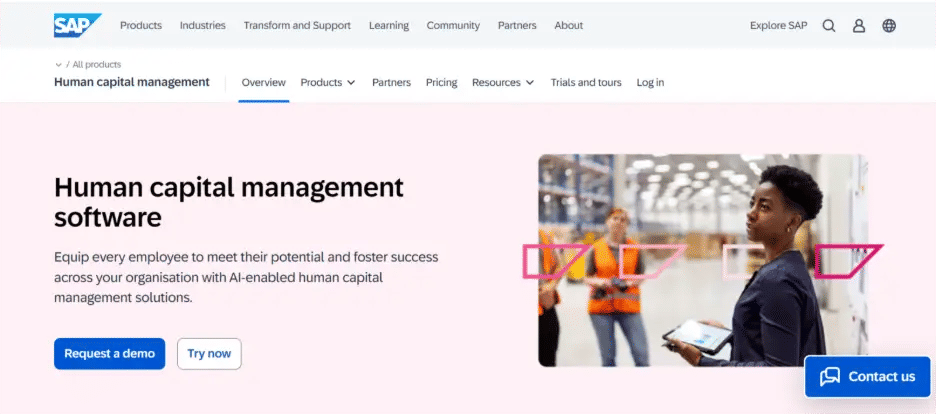
SAP SuccessFactors combines traditional HR management with tools that enhance employee experience. It’s particularly strong for enterprises with a global presence.
Why It Stands Out:
- End-to-end HR lifecycle support
- Robust learning and development features
- Global compliance management
Best For: Enterprises managing international teams with complex compliance requirements.
Deloitte research places SAP’s compliance tools in the top 5 for reliability.
4. Oracle HCM Cloud
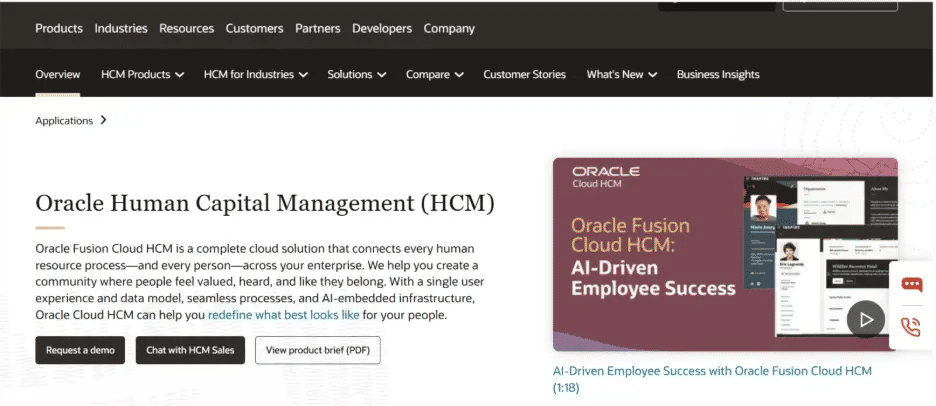
Oracle HCM Cloud delivers a wide range of HR and talent solutions tailored for enterprises that need scalability. Its strong automation features reduce time spent on manual HR tasks.
Why It Stands Out:
- Talent acquisition and retention tools
- AI-powered recommendations for hiring and planning
- Strong automation capabilities
Best For: Enterprises seeking scalability and advanced automation to reduce costs.
IDC research shows Oracle HCM Cloud reduces HR administrative costs by 20%.
5. BambooHR
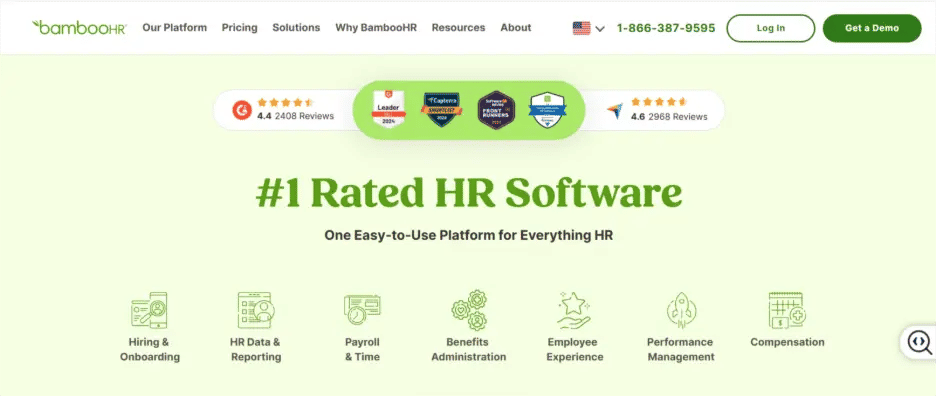
BambooHR is known for being user-friendly while still offering features that meet enterprise demands. It’s particularly strong in performance and engagement tracking.
Why It Stands Out:
- Simple and intuitive design
- Built-in applicant tracking for hiring
- Performance and engagement management tools
Best For: Mid-to-large businesses that want ease of use without sacrificing capability.
G2 reviews rank BambooHR’s user experience at 4.5/5 satisfaction.
6. ADP Workforce Now
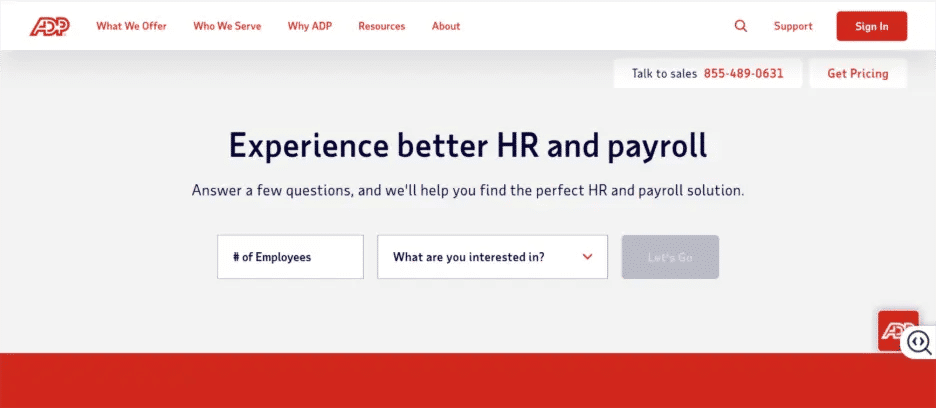
ADP Workforce Now is one of the most trusted platforms in HR and compliance. It has long been recognized for payroll accuracy and benefits management.
Why It Stands Out:
- Comprehensive payroll and benefits support
- Built-in compliance assistance
- Scalable for enterprises of any size
Best For: Enterprises prioritizing accuracy in finance and compliance.
SHRM reports ADP helps reduce payroll errors by 80%.
7. Paycom
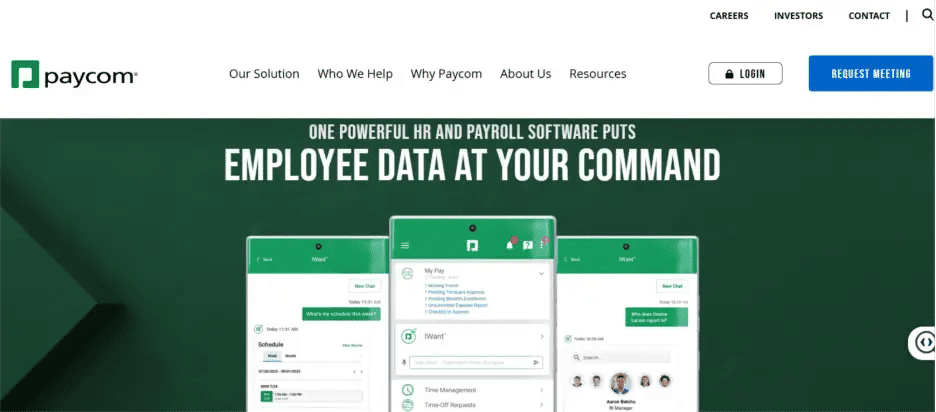
Paycom is a strong contender in the enterprise HR landscape, offering tools that streamline HR operations from hire to retire. It emphasizes accuracy, flexibility, and self-service features that empower both HR teams and employees.
Why It Stands Out:
- Unified platform for HR, talent management, and benefits
- Self-service tools so employees can handle many tasks themselves
- Flexible configuration and compliance tools
Best For: Enterprises wanting an HR solution that reduces bottlenecks, improves transparency, and lets employees have more control over their data.
Paycom has expanded its reach globally, offering services that help large organizations improve compliance and workflow efficiency.
8. Namely
Namely is an HR platform built for mid-sized and growing enterprises that want an all-in-one system without the complexity of legacy software. It combines core HR, benefits, and performance management in one modern interface.
Why It Stands Out:
- All-in-one HR, benefits, and performance features
- Customizable workflows for mid-sized enterprises
- Employee-friendly interface with self-service access
Best For: Mid-sized businesses looking for an affordable HR solution that still provides enterprise-level functionality.
According to Trust Radius, over 70% of users report Namely improves HR efficiency and reduces manual processes.
10. Lattice
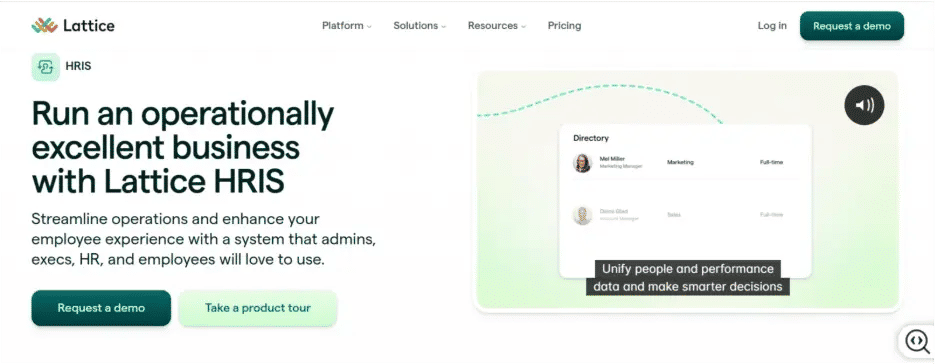
Lattice is purpose-built to enhance employee performance and development. Its tools make it easier for enterprises to align goals and retain top talent.
Why It Stands Out:
- Goal setting and OKR tracking
- Continuous feedback and reviews
- Employee development planning
Best For: Enterprises focused on retention, growth, and talent development.
Harvard Business Review shows structured feedback boosts retention by 14%.
11. Rippling
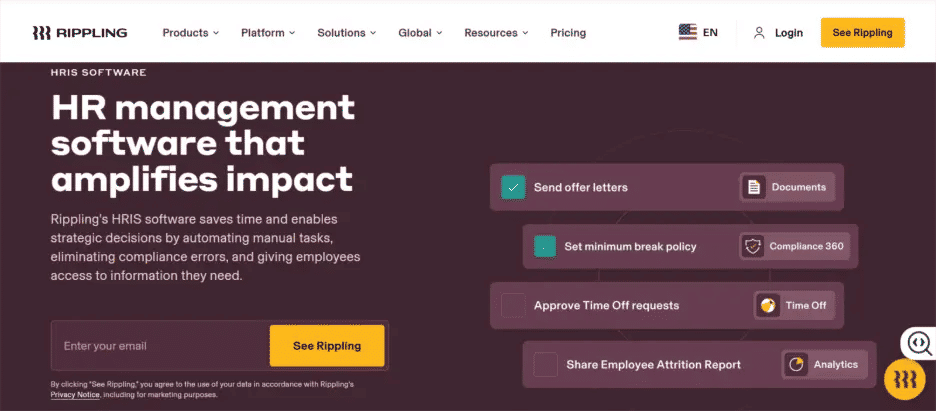
Rippling is a modern HR and IT management platform that goes beyond traditional HR systems. It unifies employee data, payroll, benefits, and even device management, giving enterprises a single place to manage workforce operations.
Why It Stands Out:
- Combines HR, IT, and finance in one system
- Automated onboarding in 90 seconds or less
- Scalable platform with strong integration ecosystem
Best For: Enterprises seeking a flexible, modern alternative to legacy HR software with the added advantage of IT and finance tools.
According to G2 reviews, over 85% of Rippling users say the platform reduces onboarding time significantly.
Comparison of the Best Enterprise HR Software in US
| Software | Description | Key Features | Pricing (Approx.) | Rating (User Reviews) |
| HRMS | All-in-one HR solution built for modern enterprises with focus on usability and scalability. | End-to-end lifecycle mgmt., reporting, compliance, engagement, intuitive design | Custom enterprise pricing | ⭐⭐⭐⭐½ (4.6/5) |
| Workday | Global leader in HR + finance with advanced analytics. | Unified HR/finance, AI-driven insights, employee self-service | Quote-based (mid–high tier) | ⭐⭐⭐⭐½ (4.5/5) |
| SAP SuccessFactors | Strong HR + employee experience tools, ideal for global teams. | Lifecycle mgmt., learning tools, compliance | Quote-based (enterprise-level) | ⭐⭐⭐⭐ (4.3/5) |
| Oracle HCM Cloud | Comprehensive HR and talent suite with strong automation. | Talent acquisition, AI recommendations, workflow automation | Quote-based (enterprise-level) | ⭐⭐⭐⭐ (4.2/5) |
| BambooHR | Simple, user-friendly HR platform with enterprise-ready features. | Applicant tracking, performance management, engagement tracking | Starts ~$6–$8 per employee/month | ⭐⭐⭐⭐½ (4.5/5) |
| ADP Workforce Now | Trusted HR + payroll solution known for compliance reliability. | Payroll, benefits, compliance, scalable workforce support | Starts ~$62/month + per-employee fees | ⭐⭐⭐⭐ (4.2/5) |
| Paycom | End-to-end HR system with strong self-service features. | Unified HR/benefits, employee self-service, compliance tools | Quote-based (mid–large enterprises) | ⭐⭐⭐⭐ (4.1/5) |
| Namely | HR platform for mid-sized businesses offering all-in-one functionality. | Core HR, benefits, performance mgmt., customizable workflows | ~$12 per employee/month (varies by plan) | ⭐⭐⭐⭐ (4.0/5) |
| Lattice | Designed for performance, engagement, and employee development. | Goal setting/OKRs, feedback loops, growth planning | ~$11 per user/month | ⭐⭐⭐⭐½ (4.6/5) |
| Rippling | Modern HR + IT platform that unifies people and device management. | HR, IT, finance in one system, fast onboarding, strong integrations | Starts ~$8 per employee/month | ⭐⭐⭐⭐½ (4.7/5) |
Key Features of Enterprise HR Software
Managing people at scale is one of the biggest challenges enterprises face. Without the right technology, HR teams often spend too much time on repetitive tasks and too little on driving employee engagement and growth. Modern HR platforms, such as HRMS, are designed to close this gap by giving organizations everything they need in a single, connected system.
Here are the key features every enterprise should expect from world-class HR software:
1. End-to-End Employee Lifecycle Management
From recruitment to onboarding, development, and offboarding, the employee journey needs to be smooth and consistent. Enterprise HR software makes this possible by connecting every stage into one process. HRMS ensures that new hires are welcomed properly, existing employees stay engaged, and departures are managed with professionalism.
2. Customizable Workflows
No two enterprises operate the same way. HRMS allows organizations to create workflows that match their internal processes. Whether it’s handling approvals, designing onboarding steps, or managing role changes, customization ensures the system adapts to the business not the other way around.
3. Employee Self-Service
Modern employees want independence when managing their HR needs. With self-service features, they can request leave, update personal information, or access key documents without waiting for HR to intervene. This saves time for both employees and HR staff, while creating a smoother experience.
4. Reporting and Analytics
Data is at the core of smart decision-making. Enterprise HR software provides leaders with dashboards and analytics that reveal trends in performance, turnover, and employee engagement. HRMS gives HR leaders the ability to make decisions backed by real insights, helping them focus on strategy instead of just administration.
5. Engagement and Feedback Tools
Employee engagement is one of the strongest predictors of productivity and retention. Platforms like HRMS include built-in tools to run surveys, gather feedback, and track engagement levels. This ensures employees feel heard and valued, creating a stronger workplace culture.
6. Performance Management
Enterprises can’t afford to wait until annual reviews to measure success. With HRMS, managers can set goals, track progress, and provide continuous feedback. This keeps employees motivated, aligned with company objectives, and aware of their growth opportunities.
7. Compliance and Security
Large organizations face complex compliance challenges across regions. Enterprise HR software helps them stay aligned with labor regulations and secure employee data. HRMS includes compliance safeguards and secure data handling, ensuring peace of mind for both businesses and employees.
8. Scalable for Growth
As enterprises expand, HR systems must grow with them. HRMS is built to scale supporting thousands of employees across multiple regions without losing efficiency. This ensures businesses can expand confidently without worrying about HR.
9. Integration with Microsoft 365 and Collaboration Tools
A unique strength of HRMS is its seamless integration with Microsoft Teams, SharePoint, and other collaboration platforms. This means HR functions become part of the tools employees already use every day, driving adoption and ease of use.
10. Mobile Access
Work no longer happens only at desks. With mobile access, HRMS ensures employees and managers can manage HR tasks anytime, anywhere. Whether approving a request, submitting feedback, or checking schedules, the system is always within reach.
11. Smart Automation
Repetitive tasks drain HR productivity. Enterprise HR software introduces automation to streamline approvals, send reminders, and manage documents. HRMS reduces manual workload so HR teams can focus on building a better employee experience.
12. Personalized Dashboards
Every leader and manager values different insights. HRMS offers customizable dashboards so each user can view the data that matters most to them, whether it’s attrition rates, training completion, or engagement trends.
Benefits of the Best Enterprise HR Software
The true value of enterprise HR software in us isn’t just in its features but in the transformation it brings to businesses. The best systems make HR more efficient, empower employees, and help leaders make smarter decisions. Platforms like HRMS combine usability with enterprise-grade power, delivering benefits that impact every corner of the organization.
1. Improved Efficiency
Manual HR processes drain valuable time. Enterprise HR software automates repetitive tasks such as approvals, reminders, and record updates. This frees HR teams from admin-heavy work and allows them to focus on strategy, talent development, and building a stronger workplace culture.
2. Better Employee Experience
Employee expectations have shifted people now want quick access to information, transparency in processes, and tools that support their growth. With self-service portals and smooth onboarding experiences, platforms like HRMS put employees in control, making them feel empowered and engaged from day one.
3. Stronger Decision-Making
Data is the backbone of modern HR strategy. Enterprise HR systems provide leaders with real-time dashboards that show everything from attrition trends to engagement scores. This visibility helps executives spot risks early, optimize workforce planning, and align HR goals with business objectives.
4. Cost Savings
Turnover, compliance fines, it can be expensive. By minimizing these risks and improving efficiency, enterprise HR software saves money in both the short and long term. These savings can then be reinvested into innovation, employee programs, or expansion initiatives.
5. Scalability for Growth
As enterprises grow, so does the complexity of managing their people. It is designed to support thousands of employees across multiple locations. Its scalable framework ensures businesses don’t need to switch systems as they expand, making it a long-term solution for growth.
6. Compliance Confidence
Staying compliant with regional and global labor regulations is challenging for large organizations. Enterprise HR software comes with built-in compliance management, ensuring that policies, documentation, and processes align with regulations. This reduces the risk of penalties while protecting brand reputation.
7. Enhanced Collaboration
When HR tools integrate with platforms employees already use daily, adoption becomes effortless. HRMS connects directly with Microsoft Teams, SharePoint, and other collaboration apps, making HR activities part of natural workflows instead of a separate, disconnected process.
8. Increased Employee Retention
A positive workplace experience is directly linked to retention. By offering growth opportunities, recognition tools, and transparent communication, enterprise HR software keeps employees engaged and loyal. This reduces the high cost and disruption of turnover.
9. Flexibility and Customization
No two enterprises operate exactly the same way. It allows businesses to configure workflows, dashboards, and reporting according to their needs. This flexibility ensures the system adapts to the organization’s processes rather than forcing a “one-size-fits-all” model.
10. Future-Readiness
The world of work is evolving quickly with remote work, hybrid teams, and digital transformation shaping new realities. Enterprise HR software prepares organizations for the future by offering mobile access, AI-powered insights, and integration capabilities that keep them agile in a changing environment.
How HRMS Operates Within Your Organization
Every enterprise has complex people processes, and HRMS is built to simplify them without losing flexibility. It works as a central hub where HR, managers, and employees come together, making everyday operations seamless.
From Hiring to Onboarding
The platform starts by streamlining recruitment—managing applications, shortlisting candidates, and scheduling interviews in one place. Once hired, new employees experience a smooth onboarding journey with digital forms, task checklists, and team introductions.
Day-to-Day Employee Management
After onboarding, HRMS supports the entire employee lifecycle. Managers can assign goals, track performance, and share feedback, while employees use self-service options to request time off, update information, or access documents instantly.
Data and Insights for Leaders
Executives and HR leaders get real-time dashboards that show workforce trends, productivity levels, and engagement insights. Instead of relying on guesswork, leaders can make strategic decisions backed by accurate data.
Collaboration and Accessibility
HRMS integrates with Microsoft Teams and SharePoint, making HR tasks part of daily workflows. Employees can check schedules, submit requests, or receive notifications without leaving their collaboration tools. With mobile access, everything is available anytime, anywhere.
Compliance and Security Built In
Behind the scenes, HRMS ensures compliance with regulations and safeguards sensitive employee information. This reduces risks and strengthens trust between the organization and its people.
Automation of Routine Tasks
HRMS automates repetitive processes like approvals, notifications, and reminders. This not only reduces delays but also ensures tasks are handled consistently, giving HR teams more time for strategic initiatives.
Scalable for Enterprise Growth
As your workforce grows, HRMS scales effortlessly. Whether managing hundreds or thousands of employees across different regions, the system adapts to increasing complexity without compromising on performance.
1. Advanced Analytics for Predictive Insights
HRMS doesn’t just provide data; it helps you make sense of it. With predictive analytics, HR teams can foresee turnover risks, identify trends in engagement, and proactively address potential issues before they escalate.
2. Enhanced Employee Development Tools
Tracking performance is just the beginning. HRMS offers tools for continuous employee development, helping managers align personal growth goals with company objectives, track progress over time, and provide personalized learning opportunities.
3. Seamless Communication with Chatbots
HRMS includes AI-powered chatbots that enhance communication within the platform. Employees can quickly get answers to HR-related questions, access policies, or even file requests without waiting for HR intervention. This makes HR more responsive and accessible.
Conclusion
Choosing the right enterprise HR software can have a transformative impact on your organization. From reducing turnover and improving efficiency to boosting employee engagement and satisfaction, these tools are essential for modern HR management.
Investing in the right HR platform empowers HR teams, enhances decision-making, and helps create a more connected, motivated workforce. With the right solution in place, your business can streamline operations, drive growth, and foster a workplace where employees thrive.
Book a Demo
Ready to see how enterprise HR software can change your business? Book a demo with our team today and experience the difference for yourself.
Join Our Creative Community
Frequently Asked Questions
What is enterprise HR software?
Enterprise HR software is a digital system that manages hiring, performance, compliance, and employee data for large organizations. It integrates all HR processes into one platform, simplifying HR management and boosting efficiency.
How does HR enterprise software help employees?
It reduces paperwork, provides self-service tools for tasks like time-off requests and personal information updates, and supports career growth through performance tracking and development resources, improving overall employee satisfaction.
Why do large organizations need enterprise HR software in US?
Large organizations use enterprise HR software in US to manage complex workforce operations across multiple teams and locations. The right enterprise HR software in US centralizes employee information, automates workflows, ensures compliance with U.S. labor laws, and delivers valuable insights through analytics. It helps HR departments handle recruitment, performance management, onboarding, and employee engagement efficiently boosting productivity, transparency, and collaboration across the organization.
Can HR enterprise software support remote teams?
Yes, modern HR systems are cloud-based and allow employees and managers to access HR tasks and tools from anywhere, making it easy to manage remote or hybrid teams and maintain smooth operations.
How does enterprise HR software in US help modern organizations stay competitive?
Enterprise HR software in the US helps organizations stay competitive by unifying core HR functions such as recruitment, performance management, and compliance into a single, intelligent platform. It automates repetitive tasks, reduces errors, and offers valuable insights through analytics and reporting. With built-in compliance tools, companies can easily meet US labor laws and data security standards. Additionally, enterprise HR software in the US enhances employee experience through self-service options, feedback tools, and recognition features, helping teams stay engaged and productive.


_JiluXJRGNl.svg)