
_eH2jDg7dZ.png)
Have you ever started a new job and felt confused about who to talk to for what? Or worked in a team where nobody was sure who was in charge of a project? These are very common problems in companies, big and small. The good news is there is a simple solution: an employee organizational chart.
An employee organizational chart clarifies roles and reporting structures, reducing confusion and improving communication. It helps employees know who to approach for tasks, enhancing collaboration.
For new hires, it provides quick clarity on company structure. Regular updates keep the team aligned, boosting decision-making and productivity.
An org chart is like a map of your company. It shows who works where, who reports to whom, and how different teams connect with each other. When done properly, it removes confusion and makes the whole team work better together.
In this blog, we will explain in simple words what an employee organizational chart is, why it matters, and exactly how it can help your team become clearer, faster, and more productive.
Quick fact: According to workplace studies, teams with a clear structure and defined roles are up to 25% more productive than teams without one. An org chart is the first step toward that clarity.
What is an employee organizational chart?
An employee organizational chart (also called an org chart or organogram) is a diagram that shows the structure of a company or a team. It shows:
Who works in the company
Every employee’s name, role, and department listed clearly.
Who reports to whom
Lines show which manager each employee reports to.
How teams are arranged
Departments like HR, Sales, Tech shown in their own groups.
Levels of authority
Who is a junior, senior, manager, or director at a glance.
Think of it like a family tree, but for your workplace. At the top, you usually see the CEO or Managing Director. Below them are the department heads. Then come the team leaders. And at the bottom are the individual employees.
“An org chart is not just a document. It is a communication tool that tells every employee — you belong here, this is your role, and this is how you connect with others.”
Why team clarity matters at work
Before we talk about org charts in detail, let us understand why team clarity is so important in the first place.
When employees do not know their roles clearly, several problems happen:
Duplicate work
Two people do the same task because nobody told them who owns it.
Missed deadlines
Tasks fall through the cracks when no one is clearly responsible.
Confusion during problems
Employees do not know who to go to when something goes wrong.
Low morale
People feel lost and undervalued when their role is not clear.
Slow decisions
Nobody wants to make a decision because they do not know if it is their job.
All of these problems cost companies time and money. An employee organizational chart directly tackles all five of these issues. It gives everyone a clear picture of where they stand and how they fit into the bigger picture.
10 ways an employee organizational chart improves team clarity
1. Everyone knows their role
The most basic benefit of an org chart is that every employee can see exactly what their position is. When someone joins your company, showing them the org chart immediately tells them: “This is your role, this is your team, and this is who you report to.” There is no need to guess or ask around.
This is especially helpful for new employees who need to understand a big company quickly. Instead of weeks of confusion, they get clarity in minutes.
2. Clear reporting structure
An org chart shows exactly who reports to whom. This removes the awkward situation where an employee is not sure which manager to go to for permission, feedback, or help.
Example: If a software developer has a bug to report, the org chart tells them to go to the Team Lead → who goes to the Engineering Manager → who goes to the CTO. No confusion, no skipping steps, no wasted time.
3. Better communication across teams
In a company, different teams often need to work together. The marketing team needs content from the design team. The sales team needs help from the product team. An org chart makes it easy to find the right person in the right department without sending multiple confused emails.
When communication is easier, projects move faster. And when projects move faster, the company grows faster.
4. Faster onboarding for new employees
Hiring new people is expensive and time-consuming. The faster a new employee understands the company, the sooner they become productive. Org charts cut onboarding time significantly by giving new hires a visual map of the company on day one.
faster onboarding with clear structure
more likely to stay after 1 year
higher productivity in clear-role teams
5. Accountability becomes easy
When every task has a clear owner, people feel more responsible. There is no “I thought someone else was doing it” excuse. The org chart, combined with proper task assignment, creates a culture of accountability where everyone knows what they are responsible for.
6. It supports better performance management
Managers need to know who is on their team to give proper feedback, set goals, and run performance reviews. An org chart gives managers a complete view of their team at any time. It also helps HR teams run annual reviews more smoothly because the reporting structure is always clear.
7. Helps identify skill gaps
When you look at an org chart, you can quickly see if certain departments are overstaffed or understaffed. For example, if one manager has 20 direct reports but another has only 2, that is a sign that something needs to change. You can also see if important roles are missing, like a company that has no dedicated data analyst when they clearly need one.
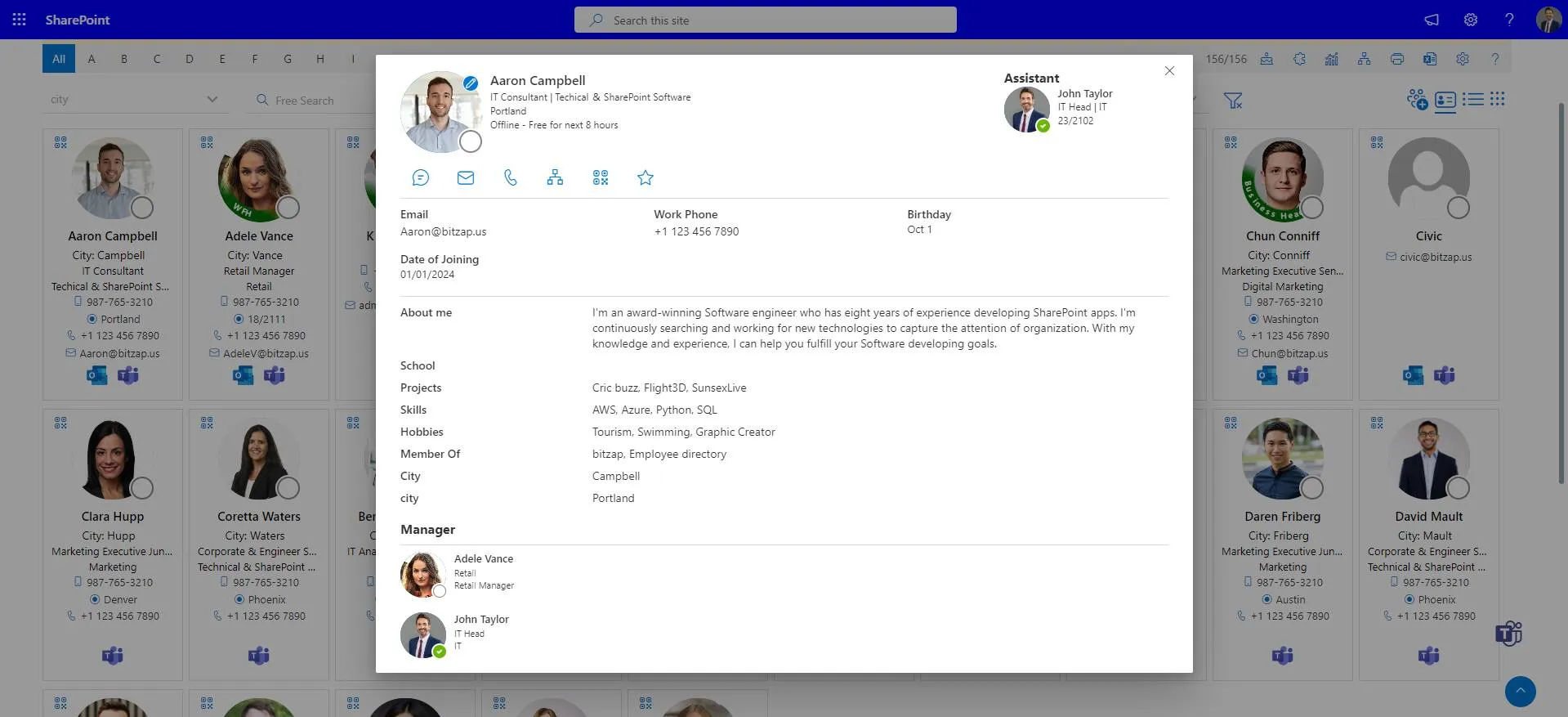
Pro tip: Add employee skills and certifications to your digital org chart. This helps HR quickly find the right person for a new project without posting a new job listing.
8. Makes succession planning easier
What happens when a senior manager leaves the company? If there is no plan, the whole team suffers. Org charts help companies plan for the future by showing who might be ready to step up when a senior person leaves or retires. This is called succession planning, and it is one of the most important parts of long-term business success.
9. Reduces internal politics and confusion
In many companies, “unofficial” power structures develop. People start going around their managers or ignoring the chain of command. This causes tension and unfairness. When an org chart is in place and properly communicated, there is a clear, official structure that everyone respects.
10. Helps remote and hybrid teams stay connected
After the rise of remote work, many companies have employees spread across cities, states, or even countries. For remote teams, an org chart becomes even more important. It helps remote workers understand where they fit in without the benefit of physically seeing colleagues every day.
Did you know? Many companies now use digital, interactive org charts that employees can access from anywhere. These tools also let you click on a person’s name to see their contact details, role description, and current projects.
Types of organizational charts
Not all org charts look the same. Different companies use different types based on how they are structured. Here are the four most common types:
Hierarchical org chart
The most common type. CEO at the top, departments below, employees at the bottom. Works well for traditional companies.
Flat org chart
Few or no middle managers. Everyone has direct access to leadership. Common in startups and creative agencies.
Matrix org chart
Employees report to two managers, one for their department and one for their project. Used in large tech and consulting firms.
Divisional org chart
Each product line or region has its own mini-structure. Common in large corporations like retail chains or global brands.
Choosing the right type of org chart for your company is important. The wrong structure can create more confusion instead of less. Think about your company size, the number of projects you run at once, and how much collaboration happens across teams.
How to build a great employee organizational chart
Building an org chart is not hard. Here is a simple step-by-step process you can follow:
Collect all employee information
List all employees, their job titles, departments, and who they report to. Your HR system is the best place to start.
Choose the right chart type
Based on your company structure, decide whether a hierarchical, flat, matrix, or divisional chart fits best.
Use the right tool
Tools like Lucidchart, Canva, Microsoft Visio, or even Google Slides can help you build a clean, professional org chart quickly.
Keep it visual and simple
Use boxes, lines, and colors to make it easy to read. Avoid cramming too much text into each box.
Share it with the whole team
Post it on your company intranet, include it in the onboarding kit, and update it every time someone joins, leaves, or changes role.
Keep it updated
An outdated org chart is worse than no org chart. Assign someone, usually in HR, to keep it updated regularly.
Common mistakes to avoid when creating an org chart
Many companies make these mistakes when creating org charts. Avoid them to get the most benefit:
Mistake 1 — Making it too complicated: If your org chart needs a legend and a manual to understand, it is too complicated. Keep it simple. If needed, make separate charts for each department.
Mistake 2 — Not updating it regularly: Companies change all the time. People join, people leave, people get promoted. If the org chart does not reflect reality, it creates more confusion than clarity.
Mistake 3 — Only sharing it with managers: The org chart should be visible to every employee, not just leadership. The whole point is to give everyone clarity.
Mistake 4 — Ignoring remote employees: Make sure remote workers are included in the org chart just like in-office employees. They need clarity too, maybe even more so.
Mistake 5 — Using it as a control tool: Org charts are for clarity, not for showing off hierarchy. If employees feel like the chart is used to remind them of their “place,” morale will drop. Communicate the chart as a helpful tool, not a power structure.
Real-world examples of org charts improving team clarity
Example 1 — A fast-growing startup
A tech startup with 15 employees did not have an org chart. When they grew to 50 employees in one year, chaos followed. Nobody knew who owned the product roadmap. Developers did not know which manager to go to for code reviews. Customer support did not know who to escalate complaints to.
Once the founders built a clear org chart and shared it company-wide, things improved within weeks. Team leads became more confident, new hires settled in faster, and inter-department communication became smooth.
Example 2 — A large retail company
A retail chain with 500 employees across 10 stores used a divisional org chart — one for each store, all connected to the central head office. This helped store managers understand their authority clearly without needing constant approval from the head office for small decisions. Regional managers could now see the full picture across all stores in one view.
Example 3 — A remote-first company
A fully remote company with employees across 8 countries used an interactive digital org chart. Every employee’s profile included their name, photo, time zone, contact details, and current project. This made collaboration across borders feel personal and easy. New hires reported feeling “connected” to the company much faster than at their previous jobs.
Conclusion
An employee organizational chart is a simple yet powerful tool that brings clarity to any workplace. It helps new hires settle in, ensures tasks are assigned to the right person, and improves communication and decision-making. With Employee Directory 365, building and maintaining an up-to-date org chart is seamless. Whether you have 5 or 5,000 employees, Employee Directory 365 integrates with Microsoft 365 to clarify roles and boost team productivity. Simply build, share, and update your org chart to enhance clarity and efficiency across your team.
Frequently Asked Questions
What is the main purpose of an employee organizational chart?
The main purpose is to show the structure of a company, who works there, what their role is, and how everyone is connected. It removes confusion and helps teams communicate better.
How often should an org chart be updated?
Ideally, your org chart should be updated every time there is a change, someone joins, leaves, or changes role. At a minimum, do a full review every quarter to make sure it reflects the current reality.
What tools can I use to create an org chart?
Popular tools include Lucidchart, Microsoft Visio, Canva, Miro, OrgWeaver, and even Google Slides or PowerPoint. Many HR platforms like BambooHR and Workday also have built-in org chart features.
Is an org chart useful for small businesses?
Yes! Even a 5-person team benefits from an org chart. It makes roles clear from day one and prepares the company for future growth without confusion.
Can an org chart improve employee morale?
Absolutely. When employees know their role and see where they fit in the big picture, they feel more valued and secure. Clarity reduces anxiety and builds confidence in the workplace.
What is the difference between a flat and hierarchical org chart?
A hierarchical org chart has multiple levels of management, CEO, directors, managers, employees. A flat org chart has fewer levels, meaning employees have more direct access to leadership. Flat structures are common in startups; hierarchical structures are common in large traditional companies.


_JiluXJRGNl.svg)