_mVFFaHUZhS.webp)
The selection of the appropriate employee onboarding system may or may not make the first impression on your new hires. An automated, structured platform will provide clarity, engagement and a smooth beginning for all employees.
Contemporary employee onboarding systems simplify workflows, increase engagement, and retention. Structured onboarding is automated, and all new hires have a similar experience. The personalization provided by analytics and AI will enable the optimization of the processes and maximization of ROI.
Contemporary onboarding is not paperwork, but it determines retention, expedites productivity, and develops a sense of belonging. When the appropriate employee onboarding platform is invested in, high performing, connected, and confident teams are formed on the first day.
Why Onboarding Is the Future of Work
The initial days of the new employee determine his or her perception of your organization. These interactions at the beginning have an impact on retention, trust, engagement, and long-term performance. However, most companies continue to use disjointed emails, paper-based reminders, and old-fashioned checklists that bewilder new employees and overwhelm the HR departments.
This is addressed by a modern employee onboarding system through centralization of tasks, predictable workflow, and providing new employees with a path forward. Studies indicate that formal onboarding enhances retention, speedy productivity, minimizes premature resignations, and employee loyalty.
Onboarding also becomes a strategic benefit and not a routine due to digital automation, which enhances accuracy, accelerates role preparation, and minimizes the workload of HR Brandon Hall Group 2023.
Knowing What an Employee Onboarding System Does
An effective employee onboarding system binds all the moving components of the onboarding process. Rather than having to juggle folders, forms and reminders, HR teams are able to manage everything within one unified environment.
What it Enables:
- Planned pre-boarding and early interaction.
- Reduced time spent filling out the necessary paperwork.
- Automated HR, IT and management workflows.
- Safe storage of documents using eSignatures.
- Employee self-directed paths.
- Training and compliance monitoring.
- Transparency among all the stakeholders.
The studies prove that expectations are clear, less stressful, early structured experiences are more engaging, and regular communication creates confidence APA Workplace Study 2024.
The Reason Companies are leaving Manual Onboarding
Paper-based onboarding is time consuming, inaccurate, and prone to errors. Scattered tasks across systems lead to errors and time wastage misplaced papers, partial compliance, and disillusioned employees are the order of the day.
A Scalable employee onboarding system addresses these issues by automating the workflow, standardizing the processes, and making them visible to all stakeholders. Automation minimizes delays, enhances accuracy, and simplifies the process of onboarding remote and hybrid teams. Research shows that automated workflows decrease the time of onboarding by more than 60 percent and enhance the efficiency of the HR significantly SHRM 2024.
Common Automated Problems:
Follow-ups on documentation: The HR department must make a number of follow-ups to new hires to deliver the required paperwork, and this wastes time and creates a feeling of frustration.
Manual compliance tracking: Manual compliance tracking puts the company at risk of errors and due dates.
Disorganized role structures: New employees are not provided with all the tools, accounts, and access they need, and this slows down their productivity with no standardized processes.
Deceiving the experience of new employees: The timetable and guidelines are not properly arranged, and the employees might get lost or confused.
Slow IT provisioning: It is hard to prepare devices, software or credentials on time to enable employees to be productive on the first day.
Weak performance in the initial week: Lack of structured activities or presentations can reduce motivation and the original commitment.
Lack of perception of progress: HR and managers may not know the onboarding activities performed and this creates gaps in accountability and misunderstandings.
Key Features to Look for in a Modern Onboarding Platform
In the case of onboarding software, it is necessary to take into consideration features that simplify the operations, reduce redundancy, and make the process more pleasant for the employees.
Core Capabilities:
Automated Task Workflows: This ensures that no step is omitted and there are predictable cycles. This reduces the errors and makes everyone on board the onboarding process.
Pre-boarding Portals: This provides welcome information, culture videos, and early orientation materials. It prepares new employees and makes them feel prepared and connected before the first day.
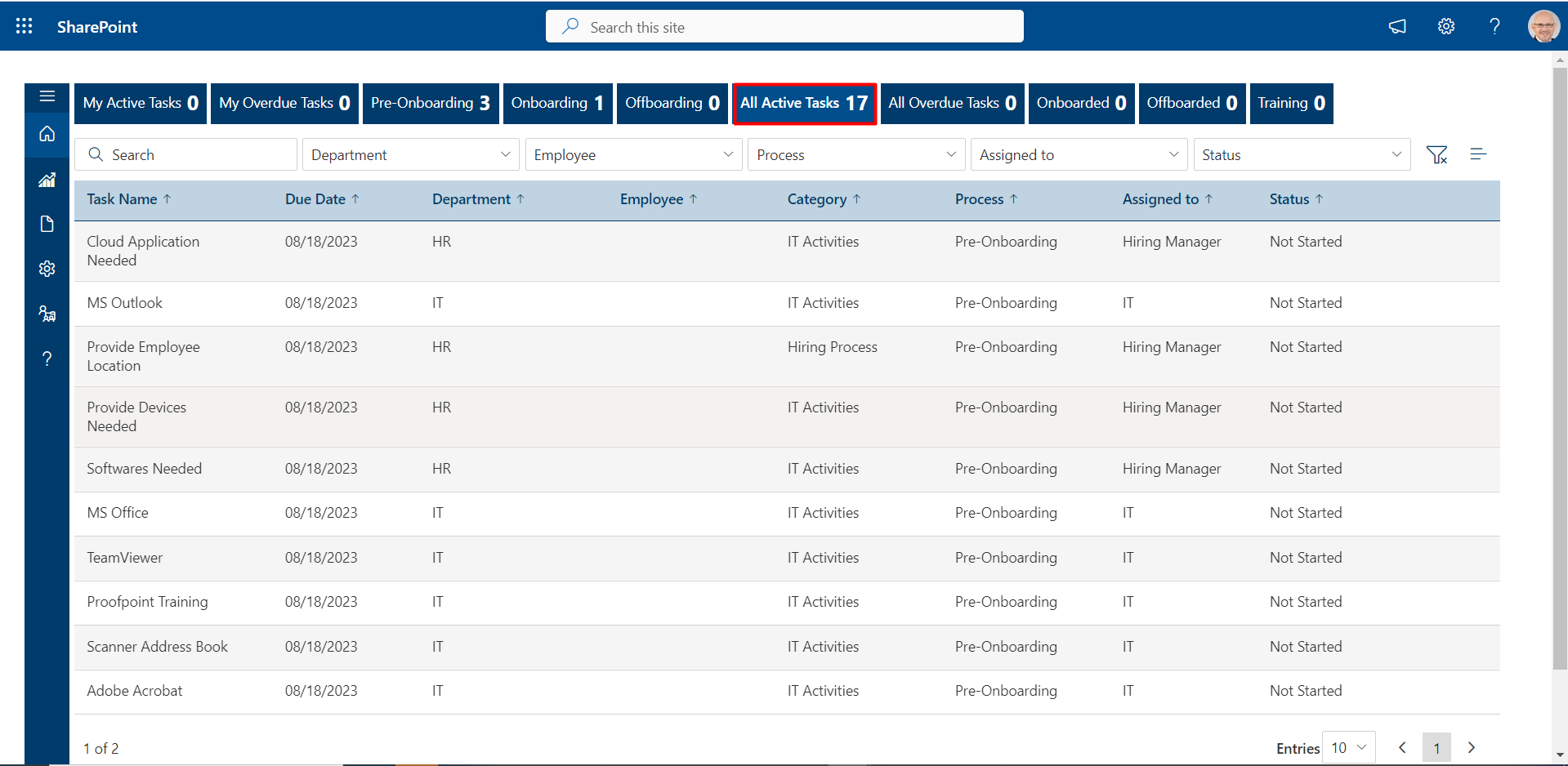
Centralized Document Management: Policies, compliance documents and contracts are secure and monitored. All this is made accessible to the employees and the HR without the need to search for emails or paper files.
Role-based Employee Journeys: Individual workflows enhance productivity and clarity. Only pertinent information is provided to the employees and this accelerates learning and performance.
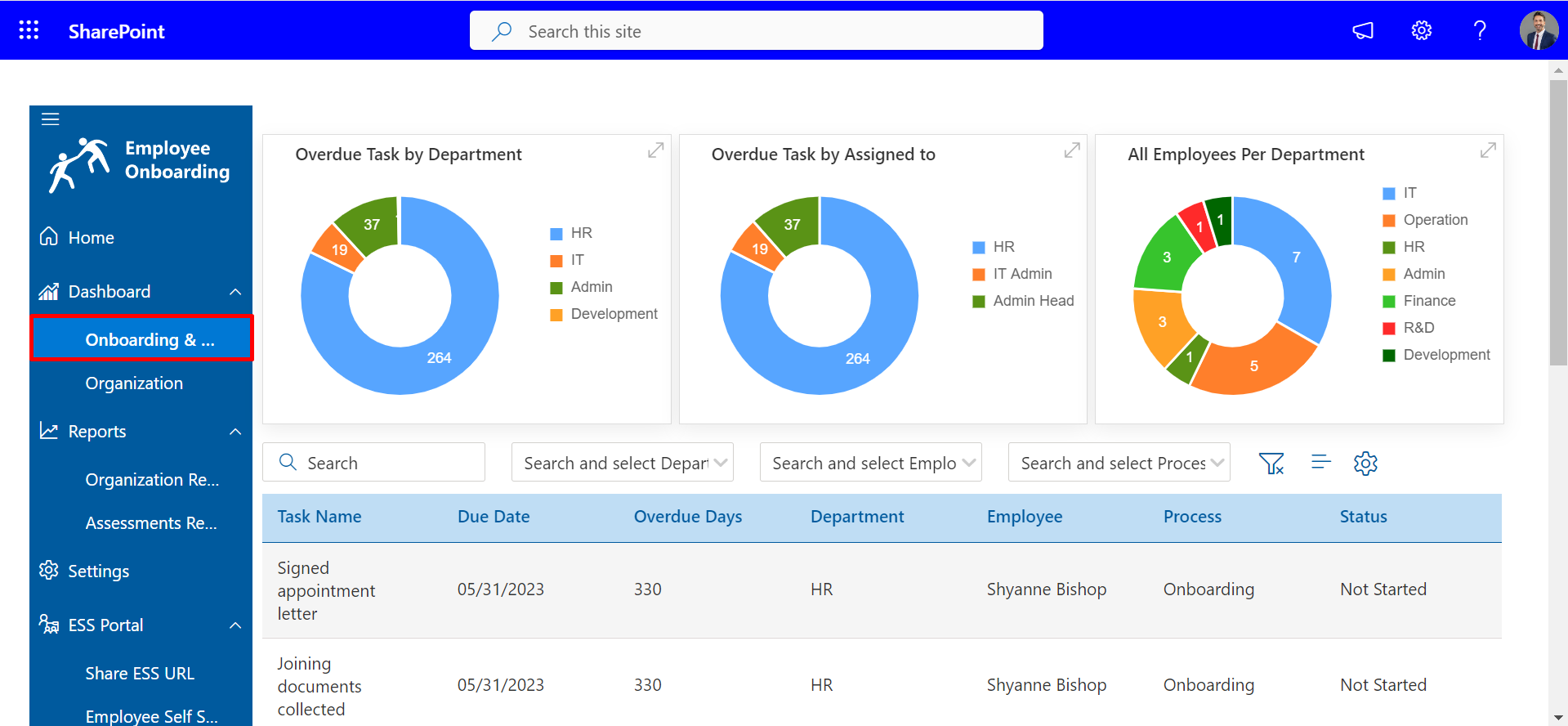
Manager Dashboards: This gives management control and responsibility for manager activities. Managers will be able to monitor progress, detect delays, and provide employees with the necessary support in time.
Training Modules and Compliance Tracking: Systematic learning channels mitigate risk and speed up preparedness. The employees are able to undertake the necessary training at their own pace as HR keeps track of the training.
Cross-department Coordination: This is to guarantee seamless interaction between IT, payroll, and HR. This eliminates the delays in the set-up, access, and compliance procedures and onboarding becomes smooth.
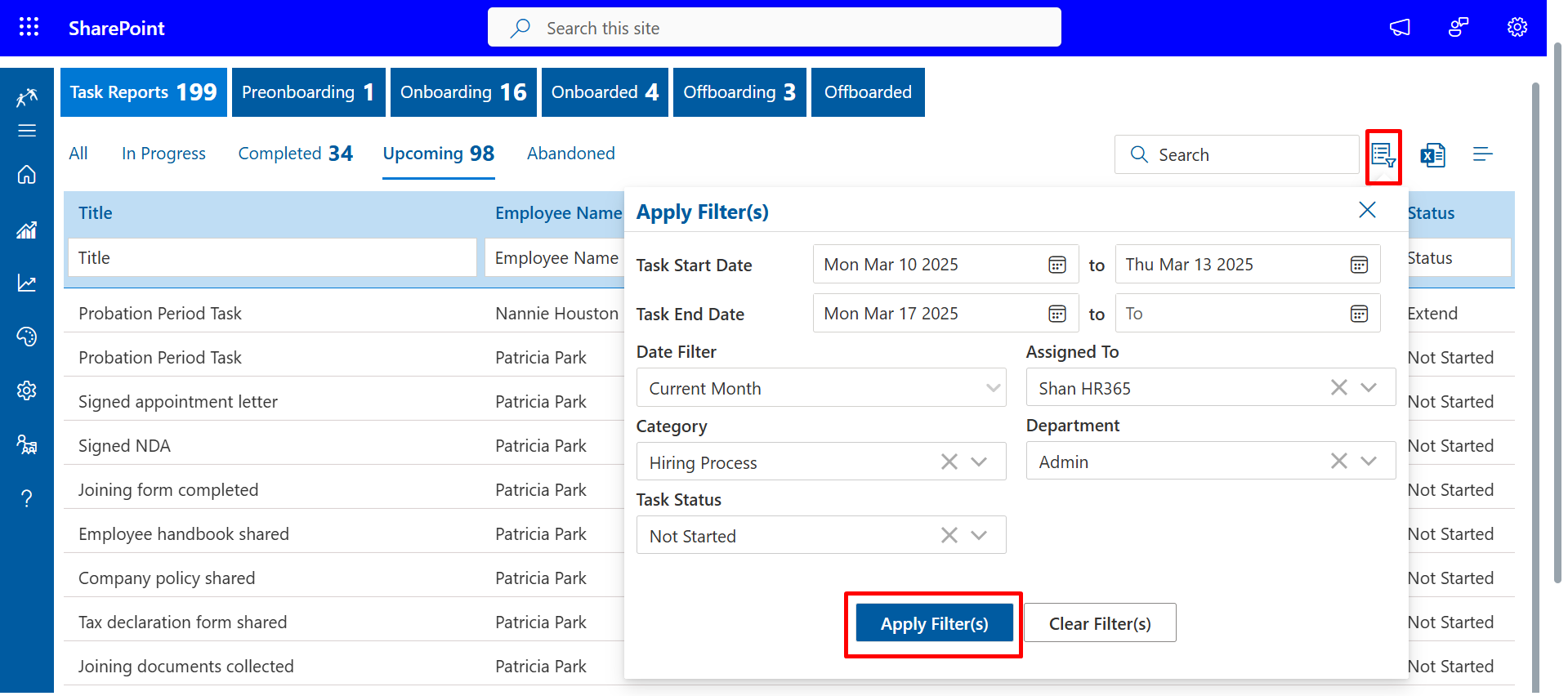
Analytics and Reporting: Provides information to find challenges and enhances the quality of onboarding. Data-driven decisions can be used to improve the process and increase the experience of employees in the long run.
It has been found that firms whose onboarding experiences are based on roles enhance staff satisfaction, involvement, and initial performance indicators.
Enhancing Employee Experience by Structured Onboarding
The experience of employees begins prior to the first day. It starts with effective communication, foreseeable work processes, and a feeling of belonging. The use of a structured human resources onboarding software solution will make the employees feel supported and confident in the initial stages.
Three Pillars of Employee Experience:
Clarity: The employees know what and when to do it and there is no uncertainty.
Confidence: The guided work processes and timely communication build trust in the organization.
Connection: The sense of belonging is improved by introducing teams early, buddy programs, and manager check-ins.
Studies have shown that the first week experience is highly influential on the long-term engagement, motivation, and retention of Brandon Hall Group.
The future of Automation in HR Workload and Efficiency
HR teams tend to waste hours in search of documents, arranging training, and sending reminders. Automation removes these burdens and the HR can concentrate on strategic initiatives, culture-building and employee engagement.
Benefits of Automation:
- Minimizes redundant operations and communication costs.
- Accelerates the process of onboarding.
- Assures adherence and precision.
- Facilitates inter-team coordination.
- Improves HR scalability
- Endorses remote and hybrid work.
Research shows that automation is capable of boosting HR productivity by more than 45% and decreasing the number of manual errors and ensuring consistency.
Constructing a Repeatable, Scalable Onboarding Framework
Scalability means that all hires get equal guidance, without regard to department, location or size of teams. Onboarding modern employee platforms enable organizations to build repeatable and reliable onboarding experiences that save time and enhance employee experience.
The major components of a scalable framework are:
Established Onboarding Event Timeline.
An effective timeline will be used to define every step of the onboarding process so that the new hires are aware of what to expect. It assists HR and managers to be organized and gives the employees a clear roadmap from the first day.
Standardized Task Workflows.
Standardization of workflow will mean that all new employees will be able to perform the necessary duties in the same sequence, eliminating mistakes and inaccuracies. This also ensures that progress is easier to monitor and gauge the effectiveness of onboarding.
Automated Communications
Employees are reminded of deadlines and tasks to do through automated emails and notifications. This keeps everybody updated, minimizes follow-ups, and no step in the onboarding process is overlooked.
Document Libraries and Centralized Policies.
All the contracts, policies, and compliance documents are in a single location that is secure. The information required by employees and HR can be accessed very fast without having to search through emails and paper files.
Modular Training Content
Training contents are subdivided into role-based modules, which enables the employees to learn at their speed. This strategy will guarantee that the relevant knowledge is provided effectively and enhance skills acquisition.
Cross-department Collaboration
Close collaboration between the HR, IT, payroll, and managers is necessary to ensure that activities such as access to the system and provisioning of equipment are achieved in time. Teamwork eliminates time wastage and offers a smooth onboarding process.
Development Reporting and Dashboards.
Dashboards will give real-time information on the completion of tasks, training progress and general onboarding status. HR and managers will be able to detect bottlenecks, solve problems, and streamline the onboarding process in a short period of time.
Studies affirm that formal and repeatable onboarding enhances retention, engagement, and productivity of employees in organizations (Glassdoor 2024; APA Workplace Study 2024).
Optimizing ROI using Smart Onboarding Solutions.
A modern employee onboarding system and employee onboarding platform is not only an investment in streamlining paperwork, but it has a direct influence on the bottom line of your organization. Onboarding is the most effective way to decrease employee turnover, increase productivity faster, and improve engagement, which will bring quantifiable returns to your HR investment.
An effective onboarding solution will make all new employees productive sooner and minimize the cost of disengagement and turnover. Smart onboarding practices result in better performance, retention, and employee satisfaction in organizations.
The most important ROI maximizing ways of Onboarding Solutions:
Reduced Ramp-Up Time: Automation of processes and efficient workflows allow the employees to become fully productive earlier.
Reduced Turnover Costs: The employees who are engaged will be more likely to stay, and this will lower the turnover cost in terms of recruitment and training.
Improved Compliance and Reduced Risk: Automated document management will guarantee that all legal and regulatory requirements are met and the costly fines are removed.
Unified Employee Experience: Onboarding is unified in such a way that all new employees receive equal support, which reduces confusion and mistakes.
Data-Driven Insights: Onboarding analytics may help HR to make the processes more efficient, comprehend the bottlenecks, and make the decisions that could be made in future recruitments.
Increased Interaction: Personalized experience and contact with peers and managers at a younger age result in increased satisfaction and loyalty.
With the help of a modern employee onboarding system and platform, organizations can make onboarding a strategic instrument that does not only save time but also leads to quantifiable business outcomes.
Choosing the Right Onboarding Technology
To choose the appropriate employee onboarding system, you need to know the needs of your organization, the experience that you would like to provide to new employees, and how you can expand in the future. The correct solution does not only automate the repetitive processes but also gives each new employee a smooth, interactive and productive beginning.
The following is a more detailed evaluation checklist to use in making your decision:
Is it possible to customize workflows either by role or location?
Response: Yes, current onboarding systems enable HR departments to customize workflows in accordance with department, role, or office. As an illustration, IT and finance positions can demand extra training, compliance verifications, or access controls, whereas remote employees can undergo special pre-boarding. Individualization makes sure that employees are only given the information that is relevant and this will save a lot of time in confusion and speed up productivity.
Is it automated to HR, IT and managers?
Answer: A good onboarding software solution is the one that automates such repetitive processes as sending reminders, assigning tasks, or gathering signatures. Automation eliminates human error, saves time, and liberates HR, IT and managers to concentrate on strategic priorities, mentoring and engagement activities.
Does it enhance first-week employee experience?
Response: A well-developed onboarding system offers organized schedules, pre-boarding material, buddy programs, and prompt communication. This provides new hires with a sense of expectations, familiarizes them with the team, and makes them feel like they are welcomed. First-week experience can be directly improved to enhance engagement, confidence and retention in the long-term.
Is it possible to get actionable insights through analytics?
To select the right employee onboarding system, you must be aware of the needs of your organization, the experience you would like to offer to the new employees, and how you can grow in the future. The appropriate solution is not just automating the repetitive processes but also providing every new employee with a smooth, interactive and productive start.
What makes an onboarding software solution effective?
Answer: The onboarding software solution that automates such repetitive tasks as sending reminders, assigning, or collecting signatures is a good one. Automation removes the human factor, time is saved and HR, IT and managers are free to focus on strategic priorities, mentoring and engagement processes.
How does an onboarding system improve the new-hire experience?
Response: A properly designed onboarding system has structured schedules, pre-boarding content, buddy programs, and timely communication. This gives the new hires a sense of expectation, introduces them to the team and makes them feel that they are welcome. The experience during the first week can be directly enhanced to increase the engagement, confidence and retention in the long-term.
How do advanced onboarding systems help HR teams optimize processes?
Response: Advanced onboarding systems collect data regarding the completion of tasks, training success, engagement, and feedback. The insights can assist the HR teams in identifying the bottlenecks, workflows, and effectiveness of onboarding. The experience of employees in general can be improved with the help of evidence-based decisions and ensure the ROI of onboarding programs.
Is it scalable for growth?
Response: The onboarding system should be in a position to accommodate additional hires as the organization grows without compromising efficiency and consistency. Scalable platforms help firms to roll out new processes, establish branches in new locations, and recruit new remote employees without additional human resources.
Is it able to support remote, hybrid and on-site teams?
Answer: Remote and hybrid onboarding is an emerging need in the contemporary workforces that are increasingly becoming distributed. The relevant system will ensure that every employee regardless of their location can have access to the required documents, training, and communication tools. This makes the work models uniform in terms of experience and productivity.
Offboarding: Why Offboarding Matters in the Onboarding Cycle.
Onboarding is targeted at the integration of new employees, but offboarding is applied to make sure that the employees leave the company in a professional way that the company image remains positive and the organizational knowledge is preserved. The smooth offboarding process is a reflection of the company values that affect retention, relations between the company and the alumni, and even future recruitment.
Also read : Complete Guide to Smooth Employee Offboarding
The rationale behind offboarding:
- Maintains knowledge: The essential information and processes are recorded before the departure.
- Compliance: Imposes all legal, HR and IT formalities and risk minimization.
- Maintains relationships: You should always leave on a positive note to encourage a future cooperation or referral.
- Strengthens the culture of the company: Appreciates the importance of employees, and this increases trust among the other employees.
The key aspects of a successful offboarding process are:
- Exit Interviews: Collect information and feedback to improve the employee experience.
- Knowledge Transfer: Develop major tasks, processes and contacts.
- System Access Revocation: Secure data by blocking system and email access.
- Final Payroll and Benefits: It must be done in a smooth manner to prevent bad blood.
- Goodbye and Appreciation: Thank you to make a good impression.
Research shows that firms with properly structured offboarding processes reduce risk, improve employee perception and possess a superior talent pool to recruit in future (SHRM 2024; Gallup 2024).
Future Trends in Employee Onboarding
The onboarding landscape is evolving at a very fast pace because of the impact of digital transformation, the remote work, and the expectations of the employees experience. Thoughtful companies are adopting technology and emerging trends of doing things to come up with exciting and personalized onboarding experiences.
Key Trends to Watch in 2026:
- AI and Automation: Chatbots and AI-based assistants help to simplify the process of onboarding and automate routine tasks.
Also Read: why AI matters in Employee Onboarding
- Data-driven personalization: Analytics-based role, experience, and learning-style customization of onboarding.
- Remote-first Onboarding: Software and systems that accommodate fully remote or hybrid workers so that they can integrate easily.
- Gamification: Interactive learning units and employee progress monitoring.
- Continuous Feedback Loops: Feedback during the onboarding process in order to implement changes to processes and improve experience.
- Cross boarding Integration: This is automated internal role transition, which enables lateral transitions.
Why These Trends Matter:
- Make the onboarding process enjoyable and significant to increase the interaction and retention.
- Enhances productivity through availing the right information at the right time.
- Increases scalability, thus allowing companies to handle hires more efficiently.
- Aligns onboarding with overall experience of employees and long-term development goals.
The studies indicate that the engagement of the employees and the reduction of the ramp-up time by 60 percent is higher in the organizations that apply AI and tailored onboarding (Brandon Hall Group 2023; MIT Sloan Review 2023).
Conclusion
Investment in a contemporary employee onboarding system and platform is no longer a choice to make but a necessity to create engaged, productive, and loyal teams. Formalized onboarding minimizes errors, speeds up the ramp up process and provides a smooth experience that is beneficial to both the organization and employees.
Are you willing to change your onboarding process? Book a demo today and have 14 days of free trial to feel how our employee onboarding system can help simplify the workflows, enhance engagement, and increase your HR ROI.
Join Our Creative Community
Frequently Asked Questions
What is an Employee Onboarding System Template?
The Employee Onboarding System Template is a guide that helps the new employee take part in every step of the integration process through activities, documents, and systems. HR departments benefit greatly in terms of time saved by using employee onboarding templates while also ensuring that the entire onboarding process is smooth and even.
What is Small Business Employee Onboarding Software?
The small business Employee Onboarding Software that is mostly chosen is the one which is not expensive, very accessible, and can be modified depending on the number of users. Small business employee onboarding software can make the new hire productive even during the onboarding process because it sorts all the documents in an orderly fashion, sends out reminders automatically, and keeps the new employee.
What are the mandatory characteristics of an Employee Onboarding Platform?
The mandatory characteristics of an Employee Onboarding Platform are the automated workflows, document management, training modules, and integrations. Choosing the right Employee Onboarding Platform that guarantees a structured, interactive, and rapid onboarding journey will not leave any new hire behind.
What is an HR Onboarding System?
The HR Onboarding System is a legal and efficient system since it offers you a safe place where all documents, tasks, and communication are systematically arranged. The introduction of an HR onboarding system will not only improve compliance management but also lead to fewer errors and quicker processing times for HR.
What are Employee Onboarding Solutions used for?
Employee Onboarding Solutions do come with a huge number of advantages as far as the onboarding of a remote or hybrid workforce is concerned.


_JiluXJRGNl.svg)