Corporate Skilling Software Explained: Features, Benefits, and Best Practices

In today’s fast-paced and constantly evolving workplace, developing corporate skills through structured upskilling is no longer optional it is a business imperative. Technological advancements, economic shifts, and changing workforce expectations are transforming how organizations operate. According to the World Economic Forum, 50% of all employees will need reskilling by 2025 as the adoption of new technologies accelerates.
Corporate skilling software helps businesses train, upskill, and retain employees with smart, role-based learning tools. It automates training, tracks progress, supports compliance, and personalizes learning for each employee—whether they are in-office or remote. With mobile access and real-time analytics, it ensures everyone learns what they need, when they need it.
From onboarding to leadership development, corporate skilling tools boost productivity, close skill gaps, and align learning with business goals. The result? A future-ready workforce that adapts fast, performs better, and stays longer—powered by data-driven, digital learning.
This is where corporate skilling software becomes indispensable. It allows companies to deliver targeted, personalized learning experiences at scale, ensuring employees can stay current, competitive, and capable in building essential corporate skills. A report by LinkedIn Learning found that 94% of employees say they would stay at a company longer if it invested in their learning and development.
Whether it is onboarding new hires, improving technical capabilities, or building future leadership, corporate learning platforms make training more accessible, engaging, and data-driven. Tools such as, skill gap analysis, and progress tracking empower HR teams to align learning with business outcomes and develop high-impact corporate skills across departments.
The result? A future-ready workforce that is agile, motivated, and equipped to drive innovation. As McKinsey & Company highlights, companies that successfully reskill their workforce are 2.5 times more likely to achieve organizational performance goals proof that investing in corporate skills is a powerful driver of long-term success.
What Is Corporate Skilling Software?
Corporate skilling software refers to digital platforms designed to help organizations train, upskill, and reskill their workforce. These solutions provide employees with the tools and knowledge they need to succeed in their current roles or grow into new ones making them vital for closing skill gaps and boosting overall business performance.
Modern skilling platforms go beyond basic training. They offer personalized learning journeys, interactive content, skill progress tracking, and real-time analytics to measure impact. Many also support mobile learning and integrate seamlessly with workplace tools like Microsoft Teams, SharePoint, or existing HR systems.
By adopting corporate skill solutions, companies can foster a culture of continuous learning, enhance workforce agility, and ensure employees stay aligned with evolving industry standards and technologies.
In short, it is the backbone of building a future-ready, high-performing team.
Why Corporate Skilling Software Matters
In today’s fast-moving business environment, organizations must invest in continuous learning to stay ahead. Here is why corporate skilling software has become essential:
- Bridges Skill Gaps
80% of CEOs are concerned about the lack of critical skills in their workforce (PwC). Skilling software helps close these gaps by providing targeted learning paths aligned with business needs.
- Boosts Employee Retention
67% of employees say they want more opportunities to learn and grow (LinkedIn Learning). When learning is made accessible, employees are more likely to stay, reducing costly turnover.
- Drives Engagement and Productivity
Companies that use skill-building platforms report a 70% increase in employee engagement (McKinsey). Engaged employees contribute more, collaborate better, and deliver higher-quality work.
- Supports Business Growth
A skilled workforce adapts faster to market changes, drives innovation, and contributes to strategic goals making talent development a growth engine, not a cost center.
- Scales Learning Across Teams
Corporate skill platforms allow centralized, role-specific training at scale ensuring consistency, tracking progress, and aligning development with company objectives.
- Fosters a Culture of Continuous Learning
Encourages curiosity, adaptability, and internal mobility by making learning a part of the daily workflow, not just a one-time event.
In summary, corporate skilling software is no longer a nice-to-have it is a strategic asset for building future-ready teams and achieving long-term success.
Who Needs Corporate Skilling Software?
Corporate skilling software is not just an HR tool it supports multiple roles across the organization. Here is how different stakeholders’ benefit:
- HR Leaders
Goal: Streamline talent development and retention
- Need structured tools to onboard new hires efficiently and reduce ramp-up time.
- Want to automate compliance training and track certifications company wide.
- Use analytics to monitor learning outcomes and ensure alignment with HR goals.
- Aim to foster a learning culture that improves employee engagement and retention.
- Learning & Development (L&D) Managers
Goal: Design impactful learning programs that drive growth
- Use the platform to create, customize, and manage training modules.
- Track learning progress, completion rates, and skill mastery across teams.
- Analyze training effectiveness to continuously improve learning strategies.
- Deliver personalized learning paths based on roles, goals, or skill gaps.
- Team Leads & Department Heads
Goal: Keep their teams competitive and agile
- Want their teams to be prepared for evolving responsibilities and technologies.
- Need access to role-specific training to support productivity and innovation.
- Use progress dashboards to monitor who is learning and who needs support.
- Empower employees with the right skills to achieve team goals faster.
- IT & Compliance Officers
Goal: Enforce regulatory standards and data security practices
- Ensure all employees complete mandatory training on compliance and IT protocols.
- Track certifications related to security, safety, and industry-specific regulations.
- Minimize risk exposure by automating audit-ready training documentation.
- Integrate with internal systems like Microsoft 365, Teams, or SharePoint for centralized control.
- Employees
Goal: Advance their careers and stay relevant
- Seek flexible, on-demand access to training that fits their goals and schedule.
- Want opportunities to upskill and reskill for career growth or role changes.
- Appreciate recognition, certifications, and visibility into their learning progress.
- Feel more motivated and engaged when employers invest in their development.
In essence, corporate skilling software supports everyone from leadership to individual contributors by enabling continuous growth, compliance, and future-readiness.
Top Features to Look for in Corporate Skilling Software
- Role-Based Learning
Corporate skilling software should support role-based learning, which allows organizations to automatically assign relevant courses based on an employee’s job title, department, or location. This eliminates manual mapping and ensures that every learner receives content tailored to their responsibilities, making the learning process more targeted, efficient, and aligned with business goals.
- Progress Tracking
A robust platform must offer detailed progress tracking to help administrators and managers monitor course completion, learning timelines, and assessment scores. This visibility allows for timely interventions, better performance reviews, and a clear understanding of how well employees are progressing through their learning journey.
- Mobile Learning
In today’s hybrid and remote work environments, mobile learning is essential. The software should allow employees to access training modules on smartphones, tablets, or laptops, whether they are in the office or on the go. This flexibility improves engagement and encourages learning anytime, anywhere without disrupting productivity.
- Course Creation Tools
The best corporate skill platforms include intuitive tools for creating custom content. Organizations should be able to build their own courses using a mix of media such as instructional videos, PDFs, quizzes, and interactive modules. This helps align learning materials with the company’s culture, industry standards, and internal processes.
- Compliance Management
Managing compliance training is critical, especially in regulated industries. The software should provide tools to schedule mandatory courses, send reminders, and generate audit-ready reports. Tracking certifications and compliance completion ensures that organizations reduce risk and meet legal or industry-specific requirements.
- Gamification
Engaging learners through gamification can significantly increase participation and knowledge retention. Features like points, badges, challenges, and leaderboards create a more enjoyable and competitive learning experience motivating employees to stay active in their development.
- Feedback & Surveys
Collecting feedback directly from employees helps organizations understand how training is being received. Built-in survey tools allow L&D teams to assess course effectiveness, gather suggestions, and make improvements based on real learner input ensuring training remains relevant and impactful.
- Analytics
Data-driven insights are essential for optimizing training strategies. Corporate skilling software should provide comprehensive analytics that reveal learner engagement trends, course effectiveness, and ROI. This allows leadership to align training efforts with business outcomes and make informed decisions for continuous improvement.
Benefits of Corporate Skilling Software
- Enhances Workforce Productivity
Corporate skilling software helps employees learn faster and apply knowledge more effectively in their day-to-day roles. With structured, role-specific training, teams can complete tasks more efficiently, reduce errors, and contribute to overall business success.
- Promotes Continuous Learning Culture
A dedicated skilling platform encourages ongoing development, not just one-time training. It creates a culture where learning becomes part of everyday work, leading to better adaptability, innovation, and employee confidence in a fast-changing business environment.
- Reduces Skill Gaps and Training Costs
By delivering targeted learning at scale, companies can quickly close skill gaps without relying on expensive external programs. Automated training delivery also reduces administrative overhead and maximizes ROI on learning investments.
- Improves Employee Engagement and Retention
Employees who feel supported in their growth are more likely to stay with the organization. Offering learning opportunities through modern platforms shows commitment to career development which strengthens loyalty and reduces turnover.
- Ensures Compliance and Reduces Risk
With built-in compliance management features, companies can track mandatory training, certifications, and policy updates. This reduces the risk of non-compliance, audit failures, and legal penalties especially in regulated industries like healthcare, finance, and manufacturing.
- Empowers Personalized Career Development
Employees can take ownership of their career path by choosing courses that match their interests, goals, or future roles. Personalized learning journeys lead to better motivation, skill alignment, and long-term success.
- Drives Measurable Business Outcomes
With advanced reporting and analytics, companies can tie learning initiatives directly to performance metrics. This helps leadership make data-backed decisions, justify L&D investments, and continuously refine learning strategies.
- Scales Learning Across Locations and Teams
Whether your team is in one office or spread globally, skilling software allows you to standardize training, maintain quality, and ensure everyone is aligned regardless of geography or time zone.
Top 10 Corporate Skilling Software
Choosing the right corporate skilling software can transform how your teams grow, engage, and stay compliant. Here’s a detailed breakdown of the top 10 solutions in 2025.
1. LMS 365
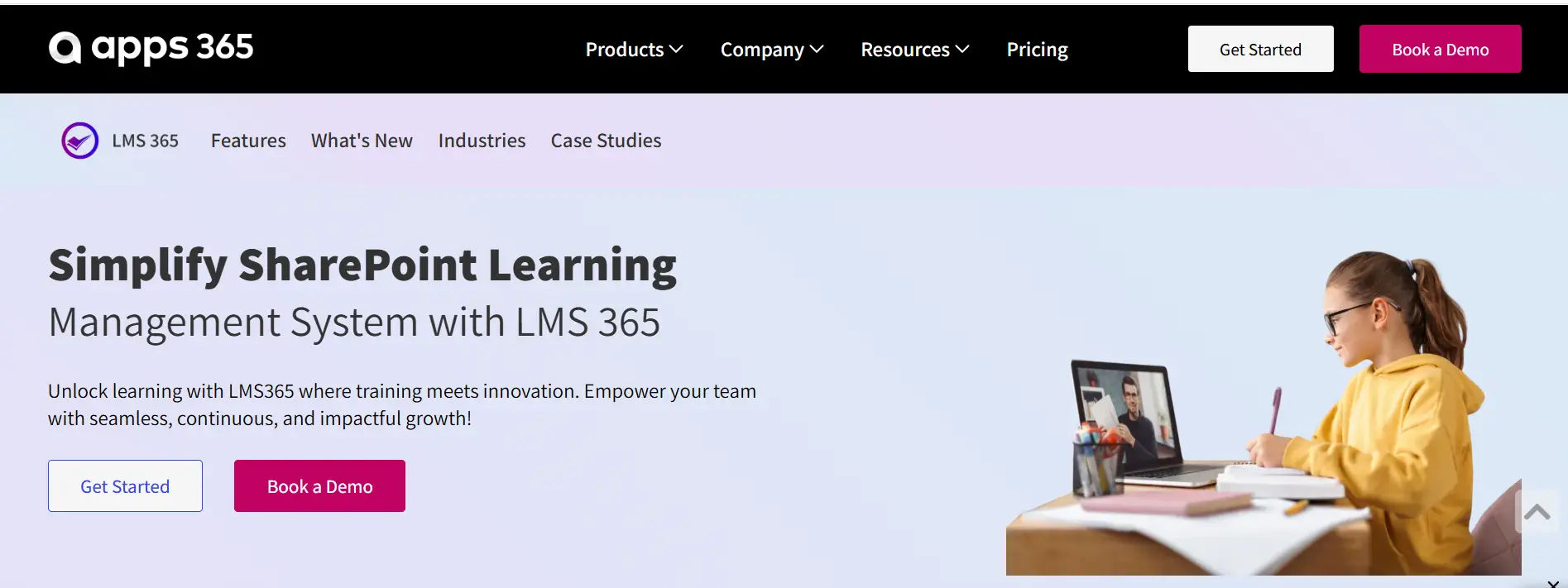
Built natively into Microsoft 365 & Teams for seamless training
Pros:
Native integration with Microsoft Teams, SharePoint, and Outlook
Easy to deploy, intuitive for users already using Microsoft 365
Supports role-based learning, compliance tracking, mobile access
SCORM & xAPI support with modern UX
Cons:
Best suited for Microsoft-centric organizations
Limited standalone use outside the Microsoft ecosystem
Free Trial: 14-day free, no-obligation trial
Ideal For: Enterprises using Microsoft 365 looking for unified learning
Highlight: Delivers learning right where your teams already work — within Microsoft Teams.
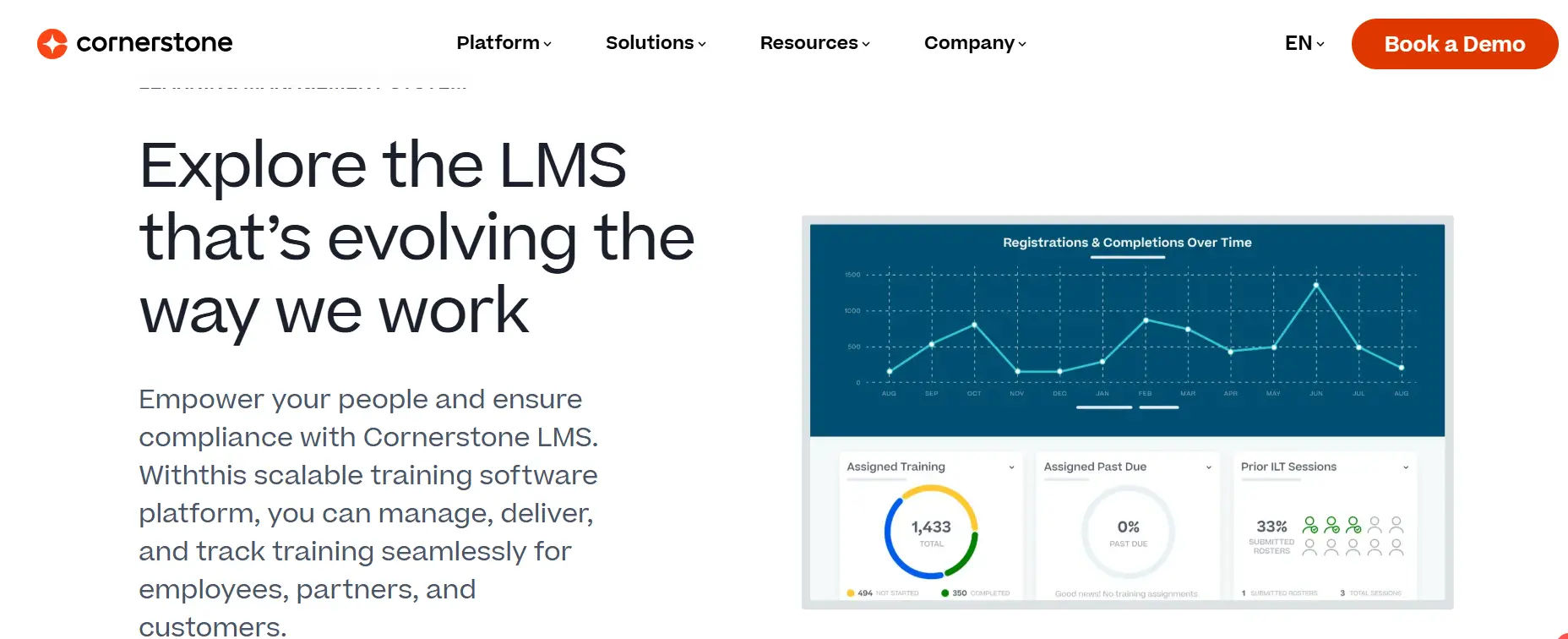
Pros:
Highly salable with strong compliance and certification management
Supports AI-based personalization and learning paths
Powerful reporting and integrations with HRIS
Cons:
Complex to implement and may require a dedicated admin team
Higher price point for small businesses
Free Trial: No public trial, demo on request
Ideal For: Large enterprises focused on long-term talent development
Highlight: Combines L&D with performance and succession planning.
3. Docebo
Pros:
User-friendly UI with multilingual support
AI suggests content based on learning behavior
Marketplace for off-the-shelf content
Cons:
Some learning curve for new admins
Advanced features locked behind higher plans
Free Trial: 14-day free trial
Ideal For: Mid-to-large businesses with global teams
Highlight: Smart automation and deep analytics for modern learning needs.
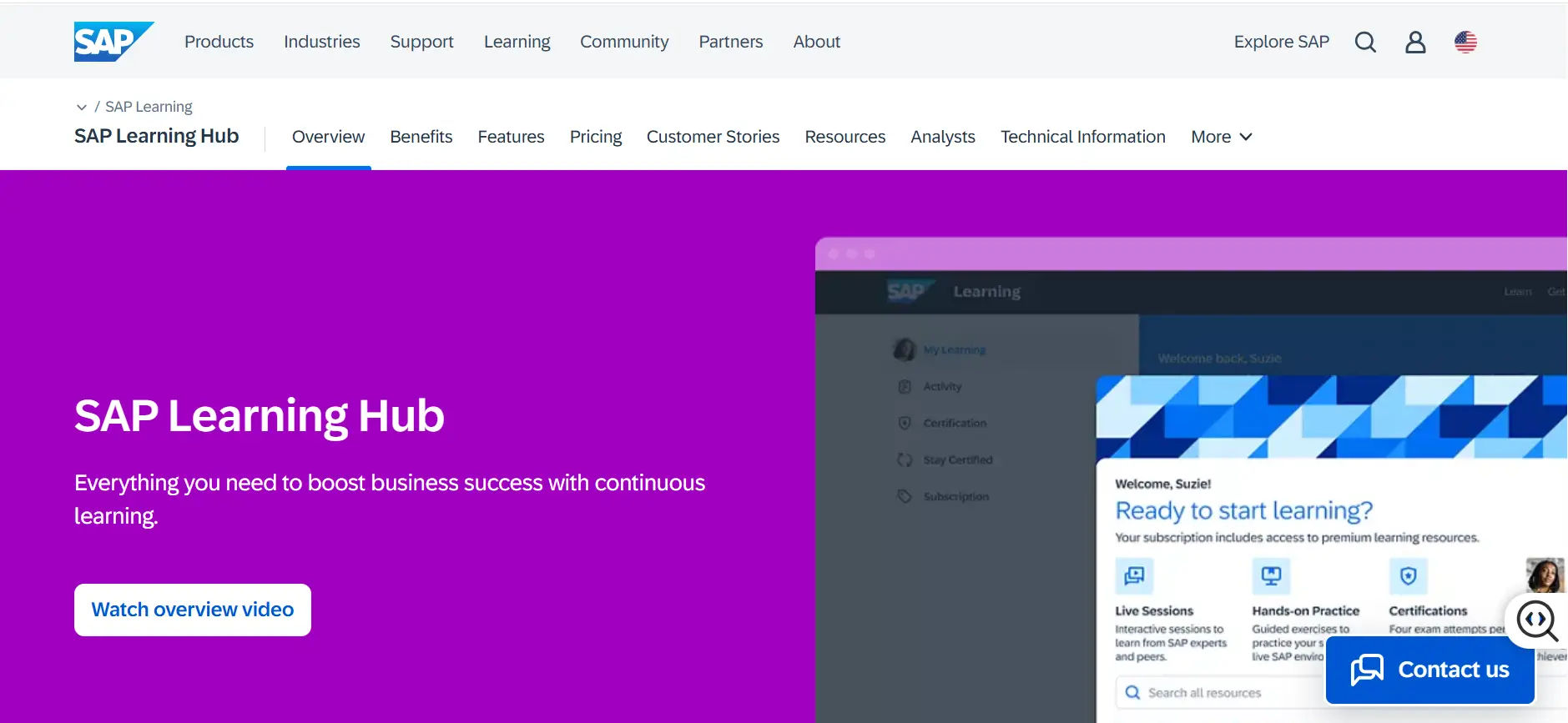
Pros:
Fully integrated with broader HR, performance, and goal tools
Rich reporting for compliance-heavy industries
Support for both structured and informal learning
Cons:
Requires SAP ecosystem for full benefits
User interface is less modern compared to newer tools
Free Trial: Not available, requires enterprise consultation
Ideal For: SAP customers needing a robust L&D suite
Highlight: Ideal for organizations already using SAP SuccessFactors.
5. TalentLMS
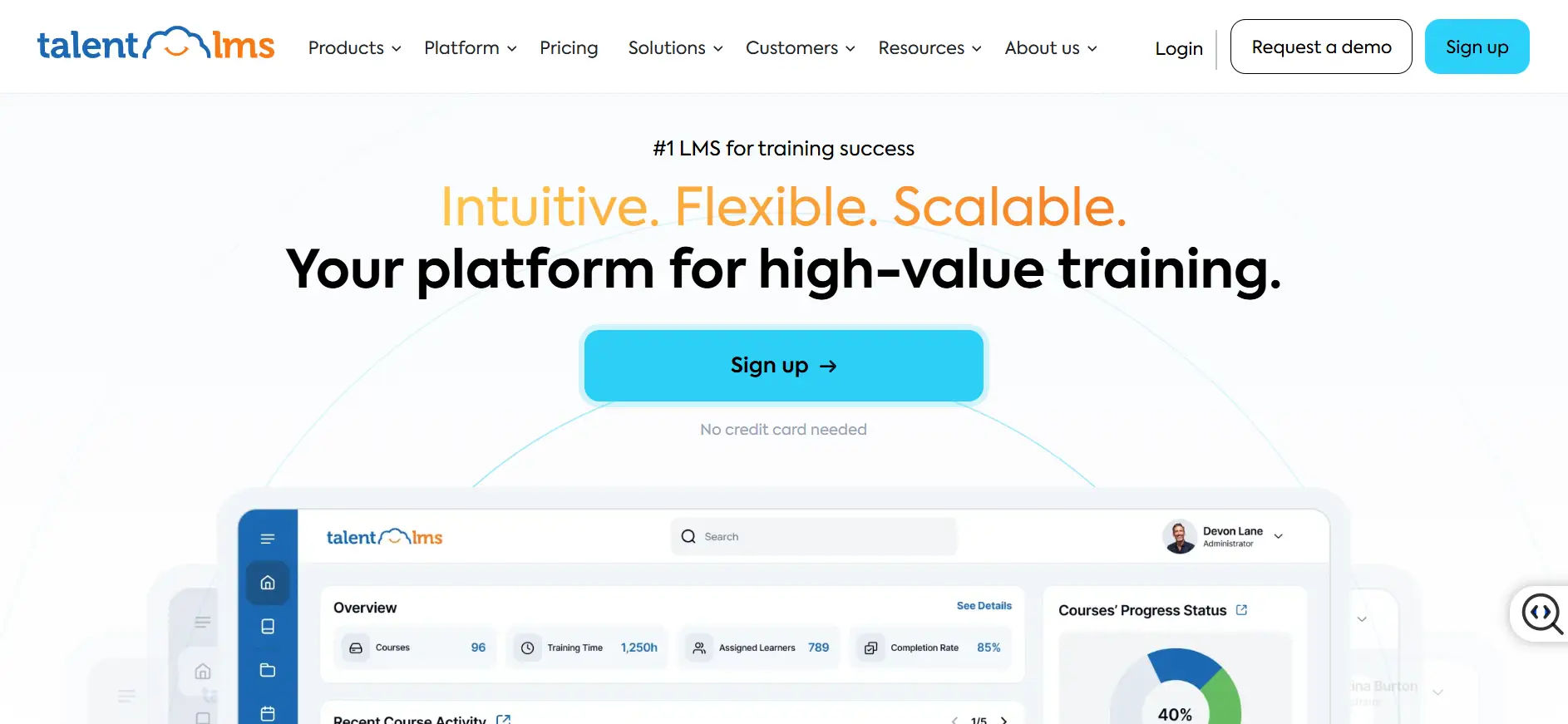
Pros:
Quick setup and easy-to-use interface
Offers gamification, quizzes, and mobile learning
Affordable pricing plans for smaller teams
Cons:
Limited scalability for complex enterprise needs
Reporting can be basic in lower-tier plans
Free Trial: Free forever plan available
Ideal For: Startups, SMBs, and non-tech-savvy teams
Highlight: Rapid deployment with minimal learning curve.
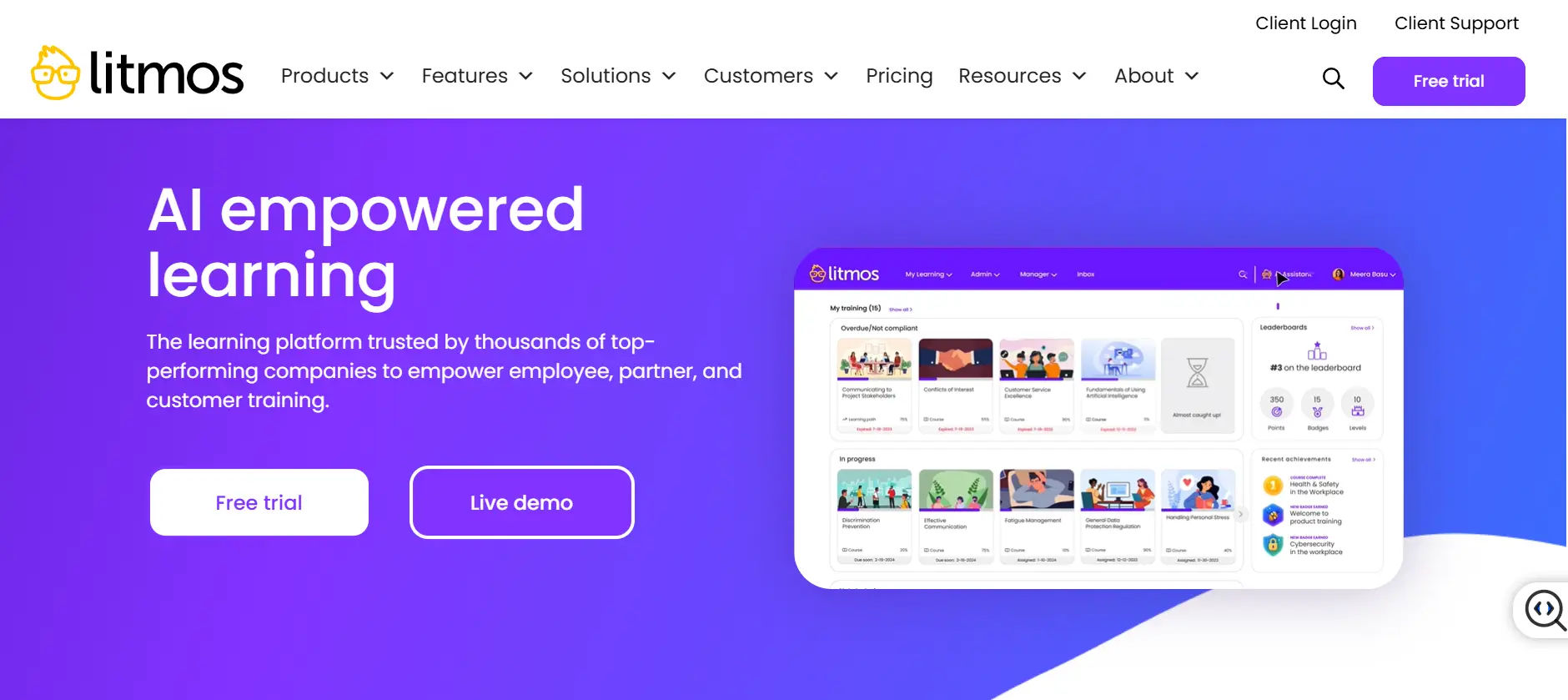
Pros:
Extensive library of ready-made courses
Mobile-friendly, SCORM-compliant
Easy-to-use admin tools and learner experience
Cons:
Content customization may be limited
Slightly dated UI compared to competitors
Free Trial: 14-day free trial
Ideal For: Organizations needing fast course deployment
Highlight: Get started with a large content library out-of-the-box.
7. 360Learning
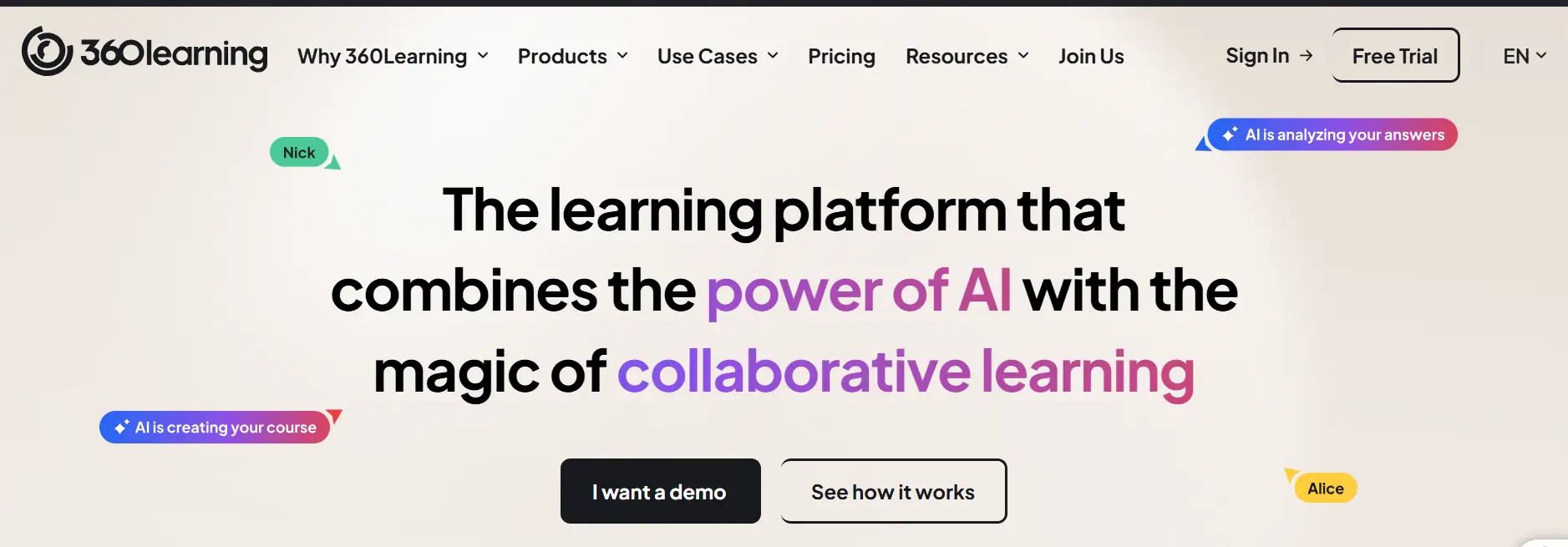
Pros:
Enables peer-driven learning
Simple course builder and feedback tools
Strong collaboration and social learning features
Cons:
Limited pre-built content
May not suit traditional compliance-heavy needs
Free Trial:14-day free trial
Ideal For: Agile teams that value internal knowledge sharing
Highlight: Empower employees to become trainers and creators.
8. LearnUpon
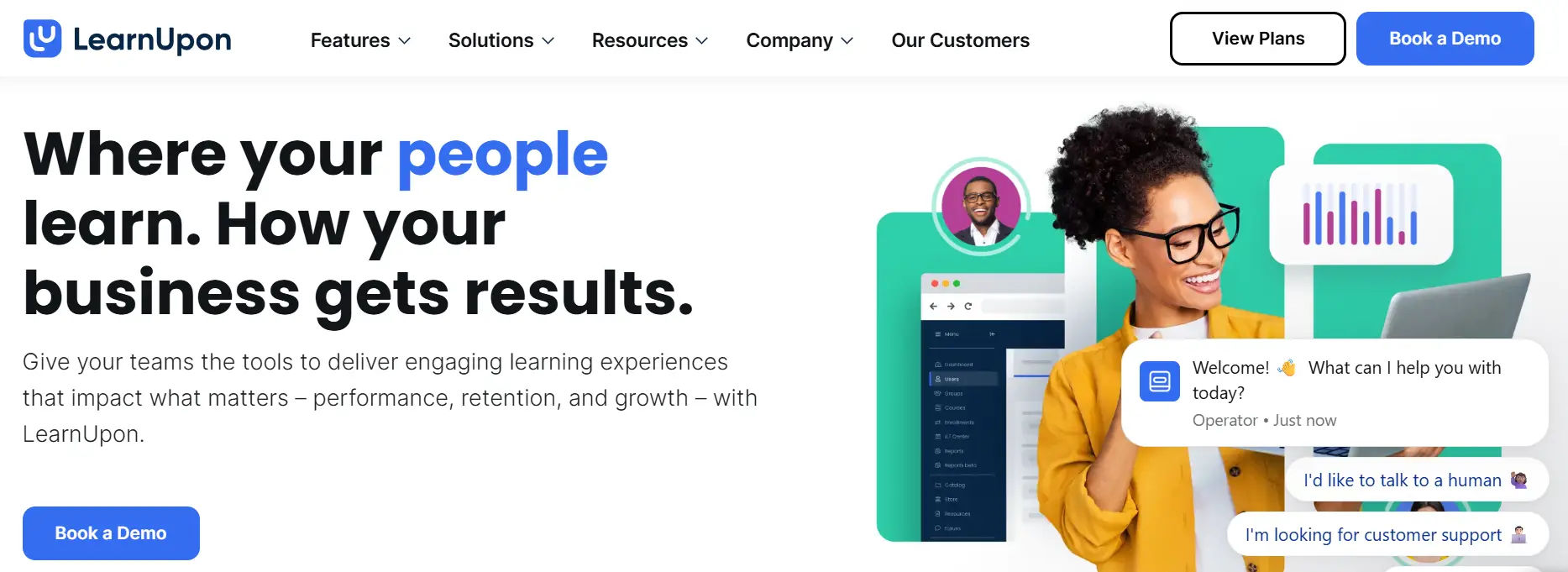
Pros:
Supports multiple learning portals (internal + external)
Clean UI, strong integrations, excellent support
SCORM, xAPI, and certification management
Cons:
Limited content library
Slightly expensive for very small teams
Free Trial: Demo available upon request
Ideal For: Companies training both staff and external stakeholders
Highlight: Centralizes learning across multiple audiences.
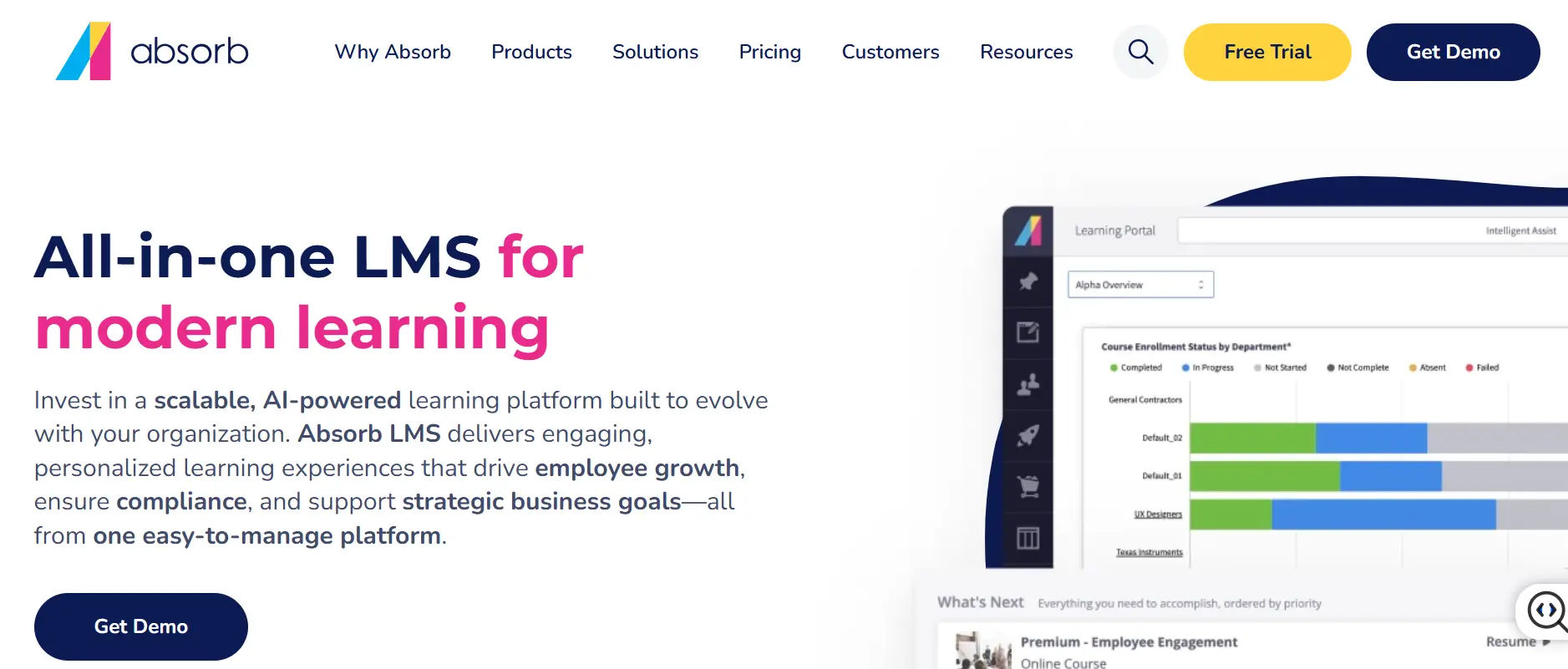
9. Absorb LMS
Pros:
Flexible branding and interface options
AI assistant for admin tasks
Built-in eCommerce tools for selling courses
Cons:
Requires some training to use advanced features
Can be costly for smaller teams
Free Trial: Free trial available
Ideal For: Growing enterprises or training providers
Highlight: Combines scale with customization and commerce.
10. WorkRamp

Pros:
Strong integrations with Salesforce, Slack, and Zoom
Built-in onboarding and sales enablement tools
Simple UI with role-specific learning
Cons:
Not ideal for compliance-heavy industries
Limited features in base plans
Free Trial: Demo available on request
Ideal For: Sales, support, and customer success teams
Highlight: Combines L&D and enablement in one easy platform.
How Corporate Skilling Drives Business Results
- Improves Change Management Success
Organizational changes like new systems, mergers, or strategy shifts often fail due to poor employee readiness. Corporate skilling software allows organizations to roll out targeted, time-sensitive training that prepares teams for transitions. This increases adoption rates, reduces resistance, and improves the success of change initiatives.
- Reduces Managerial Bottlenecks
Managers often become training bottlenecks when they are responsible for onboarding or coaching each team member manually. Skilling software automates and standardizes knowledge transfer, freeing up managers to focus on strategic priorities while ensuring employees still receive consistent guidance.
- Accelerates Digital Transformation
As organizations adopt new digital tools and workflows, employee training is often the missing link. Corporate skilling software helps employees learn new technologies quickly and effectively, reducing lag time and maximizing ROI from digital investments.
- Enables Real-Time Policy and Process Updates
In fast-paced industries, policies and procedures can change frequently. Corporate skilling platforms allow organizations to push real-time updates and training content, ensuring everyone stays informed and compliant without delay.
- Unifies Dispersed Teams Under Common Goals
Remote and hybrid teams often struggle with alignment. Corporate skilling software reinforces company values, vision, and expectations through consistent messaging and shared learning experiences creating a sense of unity across distributed workforces.
- Drives Peer-to-Peer Learning
Modern skilling platforms support user-generated content, discussion forums, and knowledge sharing. This allows experienced employees to create and share their own micro-courses, turning internal expertise into a scalable resource that improves team performance.
- Boosts Project Readiness
When launching a new project or entering a new market, time is critical. Corporate skilling software enables just-in-time training, so employees can quickly gain the knowledge they need to hit the ground running, avoiding delays and performance gaps.
- Improves Mental Confidence and Role Clarity
When employees know what is expected of them and have the tools to perform, they report lower stress levels and higher job satisfaction. Skilling platforms support mental wellness by reducing ambiguity, boosting self-efficacy, and enhancing job clarity.
- Improves Change Management Success
Organizational changes like new systems, mergers, or strategy shifts often fail due to poor employee readiness. Corporate skilling software allows organizations to roll out targeted, time-sensitive training that prepares teams for transitions. This increases adoption rates, reduces resistance, and improves the success of change initiatives.
- Reduces Managerial Bottlenecks
Managers often become training bottlenecks when they are responsible for onboarding or coaching each team member manually. Skilling software automates and standardizes knowledge transfer, freeing up managers to focus on strategic priorities while ensuring employees still receive consistent guidance.
- Accelerates Digital Transformation
As organizations adopt new digital tools and workflows, employee training is often the missing link. Corporate skilling software helps employees learn new technologies quickly and effectively, reducing lag time and maximizing ROI from digital investments.
- Enables Real-Time Policy and Process Updates
In fast-paced industries, policies and procedures can change frequently. Corporate skilling platforms allow organizations to push real-time updates and training content, ensuring everyone stays informed and compliant without delay.
- Unifies Dispersed Teams Under Common Goals
Remote and hybrid teams often struggle with alignment. Corporate skilling software reinforces company values, vision, and expectations through consistent messaging and shared learning experiences creating a sense of unity across distributed workforces.
- Drives Peer-to-Peer Learning
Modern skilling platforms support user-generated content, discussion forums, and knowledge sharing. This allows experienced employees to create and share their own micro-courses, turning internal expertise into a scalable resource that improves team performance.
- Boosts Project Readiness
When launching a new project or entering a new market, time is critical. Corporate skilling software enables just-in-time training, so employees can quickly gain the knowledge they need to hit the ground running, avoiding delays and performance gaps.
- Improves Mental Confidence and Role Clarity
When employees know what is expected of them and have the tools to perform, they report lower stress levels and higher job satisfaction. Skilling platforms support mental wellness by reducing ambiguity, boosting self-efficacy, and enhancing job clarity.
- Supports DEI (Diversity, Equity, and Inclusion) Goals
Training software can promote inclusive learning by offering multilingual content, accessibility features, and DEI-focused modules. This fosters equity in development opportunities and creates a more inclusive work culture.
- Helps Build a Learning Ecosystem with External Partners
Organizations can extend training to vendors, partners, or franchisees through external portals. This ensures brand consistency, quality control, and aligned messaging critical for businesses that operate through extended networks.
Common Use Cases
- New Hire Onboarding Help new employees understand company values, tools, and processes quickly.
- Cross-Training Prepare employees to take on other roles or fill in when needed.
- Upskilling for Promotions Help team members move up in their careers with the right training.
- Compliance Training Make sure everyone follows the latest safety, legal, and process rules.
- Leadership Development Build future managers by training them on communication, planning, and decision-making.
How to Choose the Right Corporate Skilling Tool
Selecting the right skilling platform goes beyond checking for basic features. It requires a deeper understanding of your organization’s needs, learning goals, technical ecosystem, and long-term growth strategy. Below is a fully expanded guide to help you evaluate your options effectively:
Ease of Use
One of the most important considerations is how easy the platform is to use for both learners and administrators. If the interface is overly complicated or cluttered, employees may disengage quickly. Look for software that offers a clean, intuitive design and simple navigation. The more effortless the experience, the higher the engagement and completion rates. Platforms with drag-and-drop course creation, self-paced learning, and contextual guidance empower users to focus on learning rather than figuring out how to use the tool.
Scalability
Your corporate skilling software should grow with your business. A tool that works well for 50 users may struggle with 5,000 unless it is built to scale. Evaluate whether the system can support multi-level hierarchies, expanding teams, global locations, and an increasing number of course materials without compromising speed or reliability. Scalability also means being able to support future business units, new job roles, or geographic expansion without needing to migrate or rebuild the learning infrastructure.
Integration Capabilities
A learning platform should fit into your existing tech ecosystem, not sit isolated from it. Seamless integration with tools such as Microsoft Teams, SharePoint, Outlook, your HRIS (like SAP SuccessFactors or Workday), and CRM platforms ensures data flows smoothly and reduces manual work. Integration enables automation such as assigning courses upon hiring and supports better analytics by connecting performance and learning data.
Customization Flexibility
No two companies are alike, and your skilling platform should reflect that. The ability to customize learning paths based on job roles, departments, regions, or skill levels is vital. Look for solutions that allow branding alignment, custom email templates, multi-language support, and adaptable assessments. Personalization drives relevance, and relevance drives completion. The right tool should feel like an extension of your workplace, not a third-party add-on.
Reporting and Analytics
Tracking learning outcomes is crucial, not only for compliance but also for strategic decision-making. Choose a tool that offers real-time dashboards, advanced filtering, exportable reports, and insights into completion rates, learner engagement, assessment scores, and training ROI. Ideally, the system should allow custom report generation and automated scheduling so you can share key metrics with leadership effortlessly.
Support and Training Services
Even the best software requires a helping hand now and then. Ensure that your vendor offers reliable, accessible support, whether via live chat, email, dedicated account managers, or community forums. Beyond basic tech support, vendors that provide onboarding assistance, admin training, help documentation, and periodic product webinars add long-term value. A great support team can make the difference between success and frustration.
Course Creation and Content Management
Being able to create custom training content in-house saves money and time. Look for platforms with built-in course authoring tools that support videos, documents, SCORM/xAPI files, quizzes, drag-and-drop assessments, and conditional logic. You should also be able to organize content by categories, track revisions, and reuse content across departments or programs.
Compliance and Certification Management
For organizations in regulated industries, compliance is non-negotiable. Your platform should be able to automate compliance training, issue certifications, track expirations, and generate audit-ready reports. Notifications for overdue or upcoming re-certifications, along with time-stamped records, help mitigate risks and demonstrate your commitment to accountability.
Security and Data Protection
Your platform will house confidential employee data and performance records. Ensure the vendor follows best practices in cybersecurity. Look for features like role-based access control, secure data encryption, GDPR and SOC 2 compliance, and deployment on secure cloud infrastructure such as Microsoft Azure. Regular audits, vulnerability scans, and data recovery protocols also add to system trustworthiness.
Feedback and Survey Collection
The ability to collect feedback after training sessions helps you continuously improve learning programs. Look for features like built-in surveys, learner rating systems, open-text comments, and pre/post-assessments. Feedback loops provide valuable insights into what resonates with employees and what needs revision.
Pricing and Licensing Flexibility
Choose a solution that fits your budget and offers transparency in its pricing. Whether you prefer monthly, annual, per-user, or enterprise-wide pricing models, ensure the cost structure is scalable and predictable. Beware of hidden costs for storage, integrations, or premium features. Some vendors offer pay-as-you-scale models, which are ideal for startups or growing businesses.
Free Trial or Pilot Program
Before making a final decision, test the software with a free trial or pilot deployment. This allows you to assess usability, performance, compatibility with your systems, and employee response in real-world conditions. A pilot also gives internal stakeholders confidence in the investment and minimizes post-implementation regret.
Best Practices for Using Corporate Skilling Software Effectively
To fully realize the benefits of corporate skilling software, organizations must go beyond just implementing a platform. A strategic approach is essential to drive engagement, improve learning outcomes, and align training efforts with business objectives. Below are best practices to help you get the most out of your corporate skilling solution:
- Align Training with Business Goals
Start by identifying key business priorities and the skills needed to support them. Your training strategy should be directly linked to performance outcomes such as increased productivity, customer satisfaction, or regulatory compliance. When learning aligns with organizational goals, it becomes more purposeful and impactful. - Involve Stakeholders Early
Engage department heads, team leads, and HR professionals in the planning process. Their input can help define relevant learning paths, prioritize role-specific skills, and increase overall adoption. Involving employees in content design or pilot testing can also foster ownership and improve buy-in. - Personalize Learning Paths
Use the platform’s customization features to tailor learning experiences based on roles, departments, or skill levels. Personalized training makes content more relevant and increases learner motivation. Incorporating self-paced modules and adaptive assessments can further improve engagement. - Integrate Learning into Daily Workflows
Make learning seamless by integrating it with tools employees already use, such as Microsoft Teams, SharePoint, or your company’s intranet. Embedding training into everyday tools helps eliminate friction and ensures learning happens naturally throughout the workday. - Track and Measure Outcomes
Set clear KPIs and use built-in analytics to track completion rates, progress, certifications, and performance improvements. Use the insights to refine content, identify gaps, and demonstrate ROI. Regular reporting also helps keep stakeholders informed and aligned. - Foster a Culture of Continuous Learning
Promote ongoing development through recognition, internal knowledge sharing, and leadership support. Offer refresher modules, cross-functional training, and leadership development programs. A culture that values learning leads to higher engagement and long-term workforce agility. - Keep Content Fresh and Relevant
Regularly update your training materials to reflect industry changes, new technologies, or internal process updates. Encourage feedback from learners to improve course quality, and retire outdated content to maintain accuracy and relevance. - Support Mobile and Remote Learning
Ensure your skilling platform is accessible on mobile devices so employees can learn anytime, anywhere. This is especially important for remote or field-based teams who may not have consistent access to desktop systems. - Automate Where Possible
Leverage automation to assign courses, send reminders, track compliance deadlines, and issue certifications. Automation reduces administrative burdens and ensures training is delivered consistently and on time.
- Provide Continuous Support
Offer help resources, onboarding assistance, and a clear escalation path for learner support. A dedicated internal point of contact or learning champion can help guide employees and maintain momentum.
Conclusion
Corporate skilling software is no longer optional, it is essential for organizations focused on growth, retention, and long-term agility.
LMS365 empowers companies to deliver impactful learning experiences that integrate directly into the flow of work. From faster onboarding to smarter upskilling and seamless compliance management, LMS365 helps you build a skilled, future-ready workforce without disrupting daily productivity.
Experience it yourself start your 14-day free trial or request a personalized walkthrough today.
Book a Free Demo
Want to see how LMS365 works in action? Book a free demo and let us show you how to start building a stronger, smarter team today.
Join Our Creative Community
Frequently Asked Questions
What is corporate skilling, and why is it important?
Corporate skilling is the process of building employee capabilities to perform better in current roles and prepare for future opportunities. It drives long-term business success by improving workforce productivity, adaptability, and retention. Organizations that invest in skilling are better equipped to handle change and innovation.
Is corporate skilling only for large enterprises, or can small businesses use it too?
Corporate skilling is valuable for businesses of all sizes. Modern platforms are built to scale, making it easy for small and mid-sized companies to offer structured learning without needing extensive resources or dedicated training teams. Even small businesses can gain a competitive edge through consistent skill development.
How does corporate skilling support compliance training?
Corporate skilling tools often include features to manage compliance requirements—such as assigning mandatory courses, tracking completions, and generating audit-ready reports. This helps organizations stay aligned with legal and industry standards. It also reduces the risk of non-compliance penalties and regulatory issues.
Can skilling tools integrate with existing business systems?
Yes. Most skilling platforms offer integration with widely used tools like Microsoft 365, HR systems, CRM platforms, and communication apps. This enables smoother workflows and embeds learning into the tools employees already use. Integration also supports better data tracking and automation.
What types of content can be used in corporate skilling platforms?
Corporate skilling platforms typically support a range of content formats including SCORM, xAPI, PDFs, videos, slide decks, quizzes, and interactive modules. Many also offer built-in tools to create and personalize training content. This flexibility allows companies to deliver both formal training and informal knowledge sharing.
Table of Contents

Trusted by the Best

_JiluXJRGNl.svg)