Zuora Alternatives: 10 Best Solutions to Consider in 2026

Business models that are based on subscription are growing at a very high rate and recurring revenue management has become more significant than ever.
This blog explores the best Zuora alternatives for businesses looking for easier, cost-effective subscription billing and management solutions. It compares leading tools like Revenue 365, Chargebee, Stripe Billing, Paddle, and Maxio, highlighting their features, pricing, and ideal use cases.
Click here to listen on the go!
Zuora has been a best software for managing subscription billing and revenue recognition over the years. It provides robust enterprise-level capabilities to facilitate complicated subscription processes.
Some companies find Zuora to be complex and better suited for large enterprises with intricate subscription requirements.
That is where Zuora alternatives come in new platforms that offer similar or even better functionality, with easy to use and low prices.
Here are 10 Zuora alternatives in 2026
- Revenue 365
- Chargebee
- Recurly
- Paddle
- Zoho Subscriptions
- Stripe Billing
- Maxio (SaaSOptics + Chargify)
- Billing Platform
Why Businesses Find Alternative for Zuora?
Zuora is a reliable subscription billing software that has been used by many businesses. But, there are other tools that are investigated by some organizations and are more suitable in terms of their cost, technical infrastructure, and expansion strategies. The most prevalent reasons are listed below.
- Faster Deployment – There are platforms that can be deployed very fast, and teams can start billing without the lengthy deployment process.
- Easy to Learn and Use – The businesses would like to use tools which can be adopted by their staff without high technical expertise.
- Better Integration Options – A large number of companies seek solutions that integrates with their existing systems like ERP, and accounting software.
- Support for Global Growth – Companies that are going global require services that can manage various currencies, taxes and organizations.
- Personalized Support Services – Firms can have a preference towards vendors who are more supportive and able to give guidance depending on their business size and requirements.
Best 10 Zuora Alternatives
The following is our list of the 10 best Zuora alternatives of 2026 that we have carefully selected to assist businesses of all sizes in identifying the appropriate subscription billing and revenue management software.
Product Name | Key Integrations | Free Trial Availability |
| Revenue 365 | Microsoft Teams, Outlook, SharePoint and Power BI | 14 days |
| Chargebee | Salesforce, NetSuite, Xero, PayPal, Stripe | 14 days |
Recurly | Salesforce, HubSpot, NetSuite, QuickBooks | 30 days |
Younium | Salesforce, HubSpot, and TaxJar | Connect with Sales Team |
Paddle | Stripe, PayPal, HubSpot and QuickBooks | 14 days |
| Zoho Subscriptions | Zoho Suite, PayPal, Stripe, QuickBooks, Xero | 14 days |
| Stripe Billing | Stripe Ecosystem, Salesforce, HubSpot, QuickBooks | Connect With Sales Team |
Maxio | Salesforce, HubSpot, NetSuite, QuickBooks | Contact sales |
1. Revenue
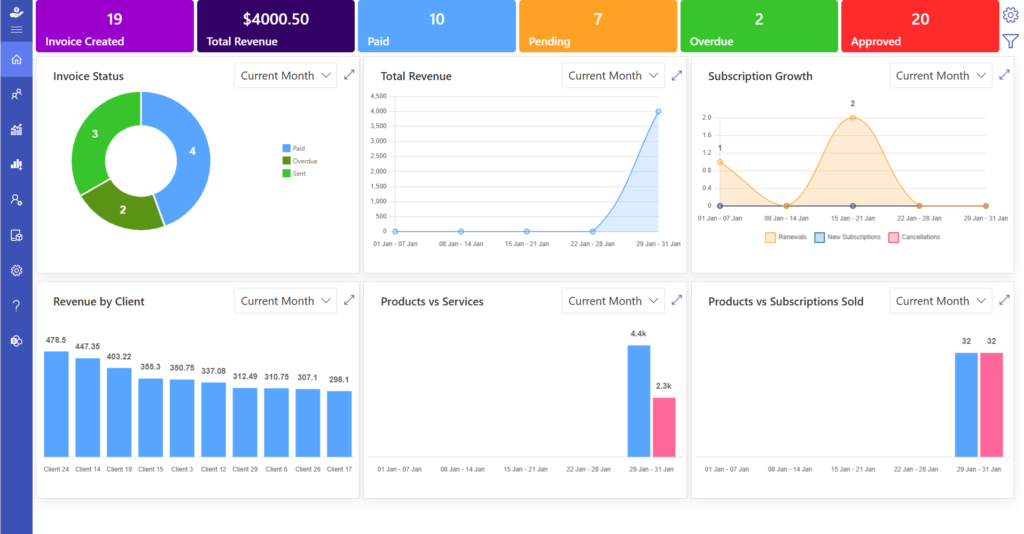
Revenue 365 is a best alternative for Zuora which helps handle revenue, subscription billing, CPQ and invoice in one secure place. It assists organizations to deal with billing, invoicing, manage revenue and aids in global accounting standards. Revenue 365 is a great fit for SMBs and enterprise level business looking to transform their revenue and subscription management. It’s secure and user-friendly interfaces helps businesses manage their revenue cycle efficiently.
Core Features
- Supports billing automation for various subscription models
- Generates pro forma invoices
- Automated workflow
- Provides dashboards for revenue tracking and forecasting
- Supports multiple entities and currencies
- Helps manage product bundles, upgrade and downgrade
- Includes a customer billing portal
- Audit logs
- Compliance management
- Offers automated invoice templates
- Reporting & analytics for revenue forecasting
- Includes audit logs and access control based on user roles
Benefits
- Fast implementation
- Reduces manual finance tasks through automation
- Helps leaders make decisions using real-time data
- Supports global business expansion
Why Revenue 365 is Considered as Zuora alternatives
Revenue 365 provides advanced billing automation, global compliance support, and strong security while remaining cost-friendly. It is ideal for subscription companies that want faster setup, lower cost, and deep integration with Microsoft tools.
How to Deploy Revenue 365
Follow the steps below to install and deploy Revenue 365 in your SharePoint environment:
- Open the SharePoint Admin Center from your Microsoft 365 admin panel.
- Go to the More Features section.
- Select Apps to open the SharePoint App Catalog.
- Switch the view to Classic Experience.
- Click the Upload button.
- Choose the SPPKG (SharePoint Package) file from your computer.
- Enable the checkbox “Make this solution available to all sites in the organization.”
- Allow a few moments for the package upload to finish.
- When the confirmation window appears, click Deploy to complete the installation.
2. Chargebee
Chargebee is a good Zuora alternatives that is utilized across the globe. It assists companies in managing with subscriptions, recurring payments and reporting revenue. The platform supports many pricing models and works with multiple payment gateways, making it suitable for SaaS and digital service providers.
Features
- Handles the entire subscription process including signup and renewal
- Facilitates accounting compliance revenue recognition
- Smart dunning tools to recover failed payments are included
- Allows billing in various currencies
- Offers customer self-service portal
- Provides subscription and revenue analytics
- Has API support of custom integrations
Benefits
- Easy to deploy and configure
- Helps decrease loss of revenue due to non-payment.
- Allows various pricing schemes like tiered and usage-based billing.
- Applicable to companies engaging in different locations.
- Gives valuable financial and operational reporting.
Why Chargebee is is Considered as Zuora alternatives
Chargebee has an flexible billing system and accepts payments worldwide, which makes it a suitable choice among the growing SaaS businesses that require a stable subscription billing system without the complexity of an enterprise.
3. Recurly
Recurly is an enterprise-grade Zuora alternatives that is relied upon by numerous international companies. It assists companies to deal with recurring revenue, monitor subscriptions, and enhance customer retention. The platform is known for has been reputed having powerful payment recovery applications and subscription reporting services.
Features
- Automates invoicing and billing
- Includes payment recovery and recovery tools
- Supports recognition of revenues
- Admits flexible pricing models
- Deals with customer accounts and subscriptions
- Offers subscription performance analytics
Benefits
- Helps reduce failed payments and revenue loss
- Offers flexible pricing options
- Supports global business operations
- Connects with CRM, ERP, and other business systems
- Provides clear subscription and revenue reporting
Why Recurly is Considered as Zuora alternatives
Recurly is also a good choice because it is aimed at enhancing recurring revenue and minimizing payment failures; hence it suits well in subscription businesses that rely on recurring income.
4. Younium
Younium is one of the best Zuora alternatives, developed primarily to serve B2B SaaS companies. It supports complex contracts, numerous price models, and multi-currency invoicing. The platform integrates billing, tracking revenue and reporting into a single system.
Features
- Supports flexible and usage-based pricing models
- Automates invoicing and revenue tracking
- Includes tools for payment collection and reminders
- Integrates with CRM and ERP platforms
- Provides financial and subscription analytics
- Supports multiple currencies and business entities
- Includes a customer portal for billing access
Benefits
- Suitable for companies with complex subscription structures
- Reduces manual billing and administrative work
- Provides real-time revenue and financial insights
- Allows workflow customization based on business needs
- Improves visibility into billing and subscription status
Why Younium is Considered as Zuora alternatives
Younium has strong billing and reporting capabilities that are aimed at SaaS businesses but are easier to manage.
5. Paddle
Paddle is a reliable Zuora alternatives designed to serve software and SaaS businesses. It assists businesses to handle recurring billing, payments, invoicing, and revenue under a single system. Paddle also enables foreign sales where it does the taxation, currency exchange, and payment processing in various countries.
Features
- Processes payments in multiple countries
- Manages VAT, GST, and sales tax requirements
- Supports subscription billing and invoicing
- Provides a customer billing portal
- Offers revenue and payment reporting dashboards
- Includes chargeback and dispute management
- Supports multi-currency billing
Benefits
- Handles global tax requirements automatically
- Reduces manual work for finance teams
- Provides protection from payment disputes
- Supports international payment methods
- Suitable for SaaS companies expanding globally
Why Paddle is Considered as Zuora alternatives
Paddle is especially useful for software companies selling internationally, as it manages payments, taxes, and billing from one platform.
6. Zoho Subscriptions
Zoho Subscriptions is a good Zuora alternatives built mainly for small and mid-sized businesses. It helps companies automate recurring billing and manage subscriptions while working closely with other Zoho products.
Features
- Manages recurring billing and subscriptions
- Sends automated payment reminders
- Integrates with Zoho CRM, Books, and other Zoho tools
- Supports multiple payment gateways
- Provides multi-currency billing
- Includes a customer billing portal
- Automates invoice creation
- Provides subscription and revenue reporting
Benefits
- Easy to set up and use
- Works well for businesses already using Zoho products
- Affordable pricing for smaller companies
- Provides clear billing and revenue tracking
- Helps manage recurring payments efficiently
Why Zoho Subscriptions is Considered as Zuora alternatives
Zoho Subscriptions is a good option for SMBs that want simple subscription billing and are already using the Zoho ecosystem.
7. Stripe Billing
Stripe Billing is a component of the Stripe payment system that enables companies to handle subscriptions, recurring billing, and invoicing. Startups and SaaS companies are big consumers of it because it is flexible and has developer support. The system facilitates international payments and therefore, businesses find it easier to charge customers at various countries and currencies.
Features
- Direct integration with Stripe payment processing
- Supports usage-based and recurring billing
- Provides revenue recognition support
- Includes payment retry and recovery tools
- Offers developer-friendly APIs
- Supports global payments
- Automates invoice generation
- Provides subscription and revenue analytics
Benefits
- Quick implementation
- Supports businesses operating globally
- Transparent and predictable pricing
- Reliable and scalable platform
- Suitable for startups and growing companies
Why Stripe Billing is Considered as Zuora alternatives
Stripe Billing is a convenient solution to companies that are already using Stripe payments and need to have built-in subscription billing and revenue management.
8. Maxio (SaaSOptics + Chargify)
Maxio is a financial management and subscription billing platform that is specifically made to address SaaS businesses. It assists the companies to manage recurring billing, forecast SaaS revenue and produce financial reports through a single system. It also gives insights into the important SaaS metrics such as MRR and ARR, which can be used by businesses to track growth.
Features
- Automates complex billing processes
- Supports revenue recognition tracking
- Tracks SaaS metrics such as MRR and ARR
- Provides financial reporting tools
- Supports multiple entities and currencies
- Includes payment recovery tools
Benefits
- Provides clear visibility into recurring revenue
- Helps prepare reports for investors and stakeholders
- Supports complex billing models
- Saves time for finance and accounting teams
- Helps maintain financial compliance
Why Maxio is a Good Alternatives to Zuora
Maxio fits well in SaaS companies that require a detailed financial reporting, revenue tracking, and subscription billing within a single platform.
How to Choose the Best Zuora Alternative for Your Business
The first step towards the right Zuora alternative is to know what you want to do with your business, how you bill, and what you plan to do in the future. Here are the best practices that will guide you to choose the appropriate solution.
1. Identify Your Business Requirements
Understanding what your business requires before choosing a platform. There are those that are designed to work with small and mid-sized businesses that have a clear billing structure and others that work with large businesses.
- Include the features you must have, e.g., use based billing, automated invoicing, or global tax support.
- Confirm whether the system can accommodate your pricing models and type of subscriptions.
- Ensure that the platform can support your existing business and future expansion.
2. Compare Pricing and Long-Term Value
Different subscription billing platforms are associated with various pricing models. One should consider the initial price and the long-term value that the platform will offer.
- Compare pricing schemes depending on your business size and billing volume
- Consider of the amount of time and manual labor the platform will save
- Evaluate the platform to determine its suitability to the business in future
- Check total cost, such as setup charges, subscription charges and other service charges
3. Review Integration Options
The billing platform must be compatible with your current business systems like CRM, ERP, accounting software or Microsoft 365. Good integration support ensures that there is accuracy and consistency of data between systems.
- Determine the tools that your business uses now
- Check whether the platform has in-built integrations with those tools
- Ensure that systems can share billing, customer, and financial data
4. Evaluate Subscription Lifecycle Management
Subscriptions billing is not only about collecting money. It involves customer onboarding, plan changes, renewals, and cancellations.
- Test the platform regarding trial periods, plan upgrades, and downgrades
- Verify whether automated renewal reminders and payment retries
- Ensure that the history of customer billing and subscription are recorded
5. Analyse Reporting and Revenue Tracking
Revenue reporting is significant for understanding business performance. An effective billing system must deliver understandable data on the recurrent revenue and subscription patterns.
- Determine whether the platform measures important metrics, including MRR and ARR.
- Check revenue, payment, and subscription dashboards and reports.
- Verify the customization of reports in accordance with your business needs.
6. Check Global Billing and Payment Support
If your business operates internationally or plans to expand, global billing features are important.
- Ensure that it supports more than one currency
- Check the platform capabilities about international taxes like VAT and GST
- Check on the available payment methods in various countries
7. Evaluate Vendor Support and Reliability
Vendor support plays an important role in platform setup and ongoing use. Reliable support helps resolve issues quickly and improves overall platform experience.
- Review available support channels such as email, chat, or phone
- Check onboarding support, training materials, and documentation
- Look for vendors that offer dedicated account support if needed
- Research vendor reputation, customer reviews, and platform reliability
Conclusion
Zuora remains a well-known platform in the subscription billing space, but many businesses are now looking for solutions that are faster to set up, more affordable, and easier to manage. As subscription models continue to grow, more billing platforms have entered the market, giving companies a wider range of options.
The best Zuora alternative depends on your business size, billing requirements, and future expansion plans. Choosing the right platform can help reduce operational costs, improve billing accuracy, support regulatory requirements, and handle business growth effectively in 2026 and the coming years.
Join Our Creative Community
Frequently Asked Questions
Why would a company look for Zuora alternatives?
Organizations look for Zuora alternatives to reduce costs, simplify implementation, integrate more easily with existing tools, and receive support tailored to their business size or industry.
Are Zuora alternatives only for SaaS companies?
Not at all. While SaaS businesses are the main users, many alternatives also serve service-based companies, media organizations, and global subscription-based operations.
What types of businesses gain the most from Zuora alternatives?
Startups, small and medium businesses (SMBs), and scaling SaaS companies often find these alternatives more user-friendly and cost-effective compared to large enterprise platforms.
Can Zuora alternatives scale with a growing company?
Yes. Platforms like Revenue 365 and Paddle are built to support growth, offering flexible billing options, multi-currency capabilities, and global scalability.


_JiluXJRGNl.svg)