Best LMS for Compliance Training in 2026: Complete Guide

Compliance training has become a powerful tool that makes people safe, companies secure, and confidence is established in the workplace. Most leaders today declare that good compliance training enhances trust and that it assists teams to adhere to rules in a clear and meaningful way. The 2026 decision about the appropriate LMS to rely on in the sphere of compliance training will determine the extent to which your employees are prepared and confident in their daily work.
In 2026, the best LMS for compliance training automates and scales mandatory learning, tracks progress, and ensures audit readiness. With features like real-time tracking, automated reminders, and role-based permissions, LMS platforms simplify compliance management and reduce administrative work.
These platforms also enhance employee confidence by offering clear, engaging learning experiences. With integrated reporting and customizable learning paths, they support organizational growth and foster a culture of compliance and trust.
Good compliance training would also make the employees feel assisted, rather than coerced. When individuals are aware of rules and expectations, they make more sound decisions and are less afraid at work. It has been proved that organizations that have carefully designed compliance training programs minimize risks and policy breaches at the workplace by more than 30 percent and enhance employee confidence and responsibility.
What Is Compliance Training?
Compliance training educates employees about rules, laws and other policies that employees have to adhere to at work. It also makes people know what is expected and how to be responsible in various circumstances. Such training usually includes such aspects as data protection, workplace safety, ethics and policies of the company.
Employees become more confident in doing things the right way when the compliance training is obvious and constant. Research indicates that companies that have frequent compliance training experience fewer offenses and enhance work responsibility, which makes employees and leaders feel safer and better equipped.
Healthy work culture where fairness and responsibility is valued is also supported with compliance training. Providing equal guidance to all people will limit confusion and teams will be guided and kept on track with the values of the company. It has been established that when organizations have effective compliance training programs they are more likely to establish trust among employees and minimise compliance risks and provide a safer and more reliable working environment to all employees.
Why Compliance Training Matters More in 2026
The expectation of compliance is increasing, and traditional training methods are no longer sufficient. New legislation, changing work teams, and global operations have made compliance more complex than ever. Any failure to follow policies can lead to penalties, loss of trust, and increased stress among employees who are unclear about the rules they need to follow.
The latest findings in the industry indicate that 68 percent of organizations were grappling with compliance, as their training systems were not keeping pace with the changes and 42 percent of the employees reported that compliance training was confusing or difficult to follow. Such loopholes pose risk and diminish inter-team confidence.
It is this increasing pressure that is making organizations resort to a Compliance Training LMS. Modern system maintains training concise, current and consistent so that the employees remain assured as the leaders remain audit and change prepared.
Who Needs an LMS for Compliance Training?
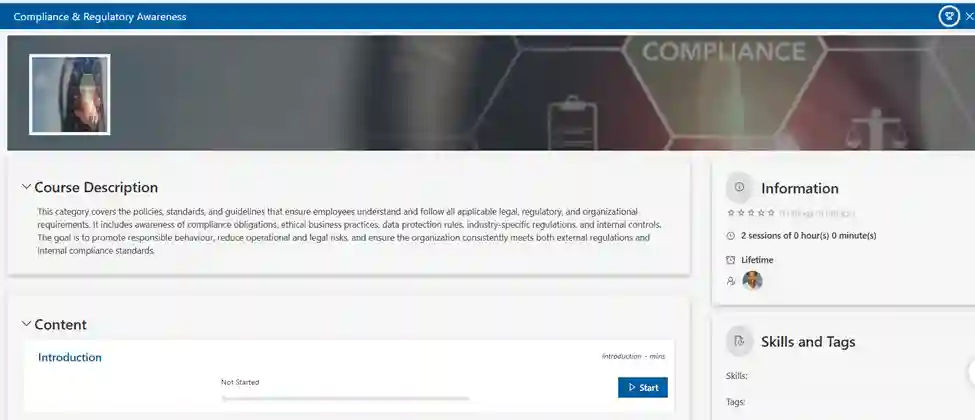
Compliance training is involved in all the aspects of an organization, but the choice to invest in the appropriate system is influenced by several roles. There are various pressures in each group, but they all are based on the same outcome training that does not drop through the cracks.
HR Leaders
Policies, training schedules and audit files are taken care of by HR teams. The absence of appropriate tools makes the process of completion tracking time-consuming and prone to errors. A compliance training LMS substitutes the manual follow-ups with the visibility and organized workflow.
Compliance Officers
Their work is based on precision and confidence. They should be assured that all the necessary courses are attended and well documented. A compliance training LMS can remind them of upcoming reports, logs, and reminders using automated reports, which make them confident and audit ready.
IT Managers
IT teams do not just look at the content of training. They are concerned with data control, integrations, and system security. An efficient compliance training LMS should be compatible with the current platforms and need to have high security standards.
Executives and Leadership Teams
Leaders are risk oriented, reputation oriented and long term stable. They should be assured that there will be no lapses in compliance, which will leave the organization vulnerable to legal or financial damages.
A reliable LMS compliance training system is not an option, but a necessity when it comes to spreading pressure among all of these positions in case one of the necessary trainings is not completed.
Key Features of the Best LMS for Compliance Training
Not all learning platforms are designed in a manner that they can effectively address the compliance requirements. The optimal LMS to use in compliance training in the year 2026 should lower the complexity, promote accuracy, and instill confidence in both employees and the leadership. All of these are the characteristics of a reliable future-proof compliance training system.
1. Smart Training Assignment
A strong LMS for compliance training removes guesswork by assigning courses automatically based on employee role, department, location, or regulatory requirement. This ensures no one is overlooked and helps organizations stay compliant even as teams grow, roles change, or new rules are introduced.
2. Real-Time Tracking and Reporting
Clear reporting will enable the leaders to be informed without the manual checks. Dashboards that are easy to use give real-time access to:
- Training completion progress
- Overdue or pending courses
- Certification history and renewal timelines
This real-time clarity supports quicker decisions and stronger compliance oversight across departments.
3. Audit-Ready Records
When records are well organized, preparing audits would be much less stressful. A reliable compliance training LMS safely archives all training information such as dates of completion, certifications and user activity which can be presented at any time it is needed.
4. Simple and Clear Learning Experience
The system should be user-friendly to ensure employees are willing to undergo training. A well-structured and user-intuitive interface will make it less frustrating, save time, and enable the employees to concentrate on the understanding of the policies rather than on the process of mastering the platform. Systems that are user friendly will enhance completion rates by 41.
5. Automated Reminders and Alerts
Employees are reminded of a deadline in an automated manner without the need to be pursued all the time. Early notifications serve to avoid training errors as well as save on the part of HR and compliance departments.
6. Centralized Policy Management
When every policy, update and learning material are contained under a single roof, confusion is eliminated. The employees will never be left with any doubts about where to get the latest instructions, and the leaders are sure that the old policies are not applicable.
7. Flexible Learning Formats
An online learning system favors multiple styles of learning. The compliance training can be done through videos, brief lessons, quizzes, and recognition-based learning to enable the employees to complete the training in bits without interfering with their daily work.
8. Role-Based Permissions
Role permissions are effective in ensuring control and security. Administrators control the settings of the system, managers can monitor the progress of the team, and employees concentrate on learning, and sensitive information is not lost at any level.
9. Scalable for Organizational Growth
The compliance requirements increase as the organization expands. The most appropriate LMS to be used in compliance training can be easily scaled to accommodate new users, departments, and regulations without any additional administrative overhead or strain on the system.
10. Consistent Training Experience
Consistency builds trust and accountability. When every employee receives the same structured and up-to-date training, misunderstandings are reduced and a shared understanding of compliance expectations is created across the organization.
Benefits of a Compliance Training LMS
A compliance training LMS is not just a location to install courses. It establishes a dependable framework that enables organizations to remain ready, assists the employees to know what is expected and also provides the leaders with assurance that compliance is being managed in the right way. The main advantages are explained further below.
Lower Compliance Risk
A compliance training LMS can be used to ensure that no training can be skipped because the tasks and deadlines are all automated, and no one can forget about them. This decreases the chances of breach, sanctions, and lawsuits that may occur as a result of undergoing incomplete or old training.
Reduced Administrative Work
Manual tracking is generally subject to error and delays. LMS takes care of enrollments, reminders and reports automatically, which means that HR and compliance teams can work on individuals and policies rather than spreadsheets.
Stronger Audit Readiness
Evidence is important during audits. The completion records, timestamps and certifications are stored in a single place and are easily accessed through a compliance training LMS, unlike when they are stored separately, which makes it easy to respond to audit requests in a quick and confident manner.
Higher Employee Confidence
Employees know what is expected of them when the content in the training is simple to understand and follow. This transparency makes them responsible at the workplace and less uncertain in dealing with delicate cases.
Consistent Training Across Teams
Fairness and accountability require consistency. A LMS can provide all employees with a similar training experience, no matter their position or location, in order to create a standardized team in line with company standards.
Better Training Completion Rates
The ease of navigation, brief learning modules and the display of progress motivates employees to attend training within the stipulated time. Participation comes in naturally when learning is manageable.
Clear Visibility for Leaders
Leaders get a clear picture of the compliance level within the departments. Real-time insights assist them in detecting gaps at an early stage and acting before things can go wrong.
Faster Policy Updates
Policies and regulations are dynamic. An LMS allows sharing updates in real-time, and the employees will be able to read the most current information.
Scales With Organizational Growth
The larger the organization, the more the compliance requirements. A scalable LMS can readily accommodate new users, teams, and regulations without complicating it.
Improved Workplace Trust
Trust is establish through transparent and consistent compliance training. Employees are motivated to think that they are supported, and the leadership has a feeling that they are being heard and adhered to.
An effective compliance training LMS transforms mandatory learning into a reliable process that enhances accountability, lowers stress, and fosters the long-term organizational stability.
How LMS Compliance Training Improves Engagement
Compliance training does not have to feel heavy or tiring. Modern LMS compliance training platforms are built to keep employees interested, even when learning is mandatory. By dividing content into short, focused lessons, employees can learn at a steady pace without feeling overloaded or rushed.
Engagement grows when training connects to real workplace situations. Practical examples, quick knowledge checks, and clear progress indicators help employees see how rules apply to their daily tasks. Research shows that organizations that updated their compliance programs using LMS tools improved training completion rates by 37%, showing that well-designed learning keeps people involved.
Modern LMS platforms also give employees a sense of progress and achievement. Seeing completed lessons, upcoming tasks, and clear milestones encourages learners to stay motivated and finish training on time.
When compliance training feels relevant, structured, and easy to complete, employees pay more attention, follow guidelines with confidence, and take greater ownership of doing the right thing at work.
LMS for Compliance Training vs Traditional Methods
Traditional Training | LMS Compliance Training |
Manual tracking using spreadsheets or emails | Automated tracking with real-time dashboards |
One-time classroom or annual sessions | Continuous learning with ongoing updates |
Paper-based or scattered records | Secure digital proof stored in one system |
Low knowledge retention over time | Higher recall through structured learning |
High administrative effort | Reduced admin workload through automation |
Delayed visibility into training status | Instant visibility for leaders and managers |
Difficult audit preparation | Audit-ready records available anytime |
Inconsistent training delivery | Consistent training for all employees |
Limited scalability as teams grow | Easily scales with organizational growth |
Hard to update policies quickly | Policies and content updated centrally |
Little employee engagement | Better engagement through short modules |
Missed deadlines are common | Automated reminders reduce missed training |
Organizations that moved to an LMS for compliance training reported a 48% reduction in administrative effort, allowing teams to focus more on people and less on manual tracking.
How to Choose the Best Compliance Training LMS
Choosing the right compliance training LMS is an important decision, not a quick purchase. The right platform removes uncertainty, supports teams, and helps organizations stay confident as requirements change. Clarity matters more than features that look impressive but add confusion.
Before making a decision, pause and ask the right questions:
- Does it handle mandatory training smoothly?
The system should support required courses, deadlines, and renewals without manual work. - Can it grow with your organization?
A reliable LMS should adapt easily as teams expand, roles change, or new regulations appear. - Does it provide clear and useful reports?
Leaders should be able to see training status, gaps, and readiness without digging through data. - Is the learning experience simple for employees?
If training feels hard to complete, engagement drops. Ease of use directly affects completion rates. - Does it meet security and compliance expectations?
Strong controls and secure data handling are essential for trust and accountability.
The best LMS for compliance training feels like a support system, not another task. It brings structure, reduces stress, and helps everyone focus on doing the right thing with confidence.
Cost vs Value: What Really Matters in Compliance Training
Choosing a compliance training LMS based only on price can create bigger problems later. Low-cost tools often lack reliability, clarity, and long-term support, especially when audits, updates, or growth put pressure on the system. What truly matters is the value the platform brings over time.
Instead of focusing only on cost, it helps to compare short-term savings with long-term impact.
Low-Cost LMS Focus | High-Value Compliance Training LMS |
Lower upfront price | Long-term protection and stability |
Limited automation | Reduced compliance risk through automation |
High manual follow-ups | Lower administrative effort for HR teams |
Poor reporting | Clear visibility into training readiness |
Low employee engagement | Higher employee confidence and understanding |
Weak audit support | Strong audit readiness and documentation |
Short-term savings | Ongoing brand and reputation protection |
Investing in the right compliance training LMS protects more than budgets. It safeguards people, strengthens trust, and supports the organization when it matters most.
How AI Is Shaping the Future of Compliance Training LMS
Artificial intelligence is changing how compliance training is designed and managed. In modern compliance training LMS platforms, AI helps personalize learning by aligning content with employee roles, past training activity, and learning pace. This makes training more relevant, easier to complete, and more effective, while reducing the risk of missed or misunderstood requirements.
AI also supports future-ready compliance by identifying learning gaps and highlighting potential risks early. By analyzing completion patterns and assessment results, AI can suggest timely refreshers and ensure employees receive updated training when regulations change. This helps organizations stay prepared without increasing manual effort.
Looking ahead, AI will make compliance training more proactive and responsive. Future LMS platforms will use AI-driven insights to improve engagement, predict training delays, and guide employees with the right content at the right time. This approach strengthens compliance readiness while creating a more supportive and confident learning experience.
Conclusion
Compliance training works best when it supports people with clarity and confidence. In 2026, the best LMS for compliance training helps organizations move beyond basic requirements and build a culture of accountability and trust. By making learning simple, consistent, and reliable, a modern compliance training LMS reduces pressure on teams and supports confident decision-making. Book a demo today and get a 14-day free trial to see how the right LMS can turn compliance training into a dependable, stress-free experience for your organization.
Join Our Creative Community
Frequently Asked Questions
What is the best LMS for compliance training in 2026?
The best LMS for compliance training combines automation, clear reporting, strong security, and an easy learning experience. It helps organizations manage mandatory training while keeping employees confident and prepared.
How does an LMS for compliance training support audits?
An LMS for compliance training stores completion records, certificates, and timestamps in one secure system. This makes audit preparation faster and reduces last-minute stress for compliance teams.
What makes a compliance training LMS different from regular LMS platforms?
A compliance training LMS is built specifically to manage mandatory learning, track deadlines, and maintain audit-ready records. It focuses more on accuracy, consistency, and accountability than general learning systems.
Is LMS compliance training suitable for small and growing teams?
Yes. LMS compliance training platforms are designed to scale easily, making them suitable for small teams as well as large enterprises with complex compliance needs.
How often should content be updated in an LMS compliance training system?
Most organizations review and update compliance content annually or whenever regulations, policies, or industry standards change.
Can compliance training LMS platforms improve employee engagement?
Yes. Modern compliance training LMS platforms use short lessons, real-world examples, and clear progress tracking to keep employees engaged and improve completion rates.


_JiluXJRGNl.svg)