_eH2jDg7dZ.png)
ITAM software strengthens data security by providing full visibility into IT assets, helping prevent unauthorized software use and reduce security risks.
It also supports compliance by tracking licenses, maintaining audit-ready records, and ensuring systems follow regulatory and internal policies.
Organizations have come to understand the critical role that efficient asset optimization plays throughout an asset’s lifecycle. It not only enhances operational productivity but also helps in managing costs more effectively. Recent AI innovations are streamlining many areas of IT asset management, making it easier for businesses to manage their assets.
For instance, software can automatically alert you when software licenses are nearing expiration or identify underused assets that could be reassigned, reducing waste. By automating routine tasks like asset tracking and monitoring, AI significantly cuts down on manual effort, ultimately saving time and money for organizations.
In this guide, we’ll explore the leading AI-powered tools designed to enhance asset management, offering insights into how they can streamline your processes in 2024 and beyond.
What is Asset Management Software
Asset management software is a centralized system that helps organizations track, organize, and manage physical and digital assets throughout their entire lifecycle. It acts as a single source of truth for asset data, ensuring information stays accurate from the time an asset is acquired until it is retired.
Key features explained:
- End-to-end asset lifecycle tracking: Manages assets from procurement and onboarding to assignment, maintenance, and retirement, ensuring nothing is missed at any stage.
- Centralized asset records: Stores detailed information for hardware, software, licenses, and equipment, including ownership, location, and configuration.
- Visibility into asset usage: Helps teams understand how assets are being used, which supports better planning and cost control.
- Compliance and audit readiness: Maintains accurate records and documentation to support internal reviews, audits, and license compliance.
- Operational alignment: Links assets with incidents, service requests, and changes to provide context and improve issue handling.
- Reduced manual effort: Automates tracking and reporting, reducing reliance on spreadsheets and manual updates.
Overall, asset management software helps organizations maintain control, improve planning, and manage assets in alignment with IT and operational needs.
Best 12 Asset Management Software
Overall, asset management software helps organizations maintain control, improve planning, and manage assets in alignment with IT and operational needs.
Asset Management Software | Best For | Key Strength | Deployment |
Asset 365 | Microsoft 365–centric organizations | Native SharePoint and Intune integration, lifecycle tracking | Cloud (Microsoft 365) |
ServiceNow IT Asset Management | Large enterprises | Deep ITSM alignment and advanced automation | Cloud |
Asset Panda | Teams needing mobile asset tracking | Mobile-first asset tracking with QR codes | Cloud |
Zluri | SaaS-focused organizations | SaaS discovery and license optimization | Cloud |
Jira Service Management | Jira-based IT teams | Asset and service alignment within Jira ecosystem | Cloud |
SysAid | Mid-sized IT teams | Built-in asset and service management workflows | Cloud / On-premise |
Miradore | Mobile device management teams | Strong mobile and device management capabilities | Cloud |
Device42 | Infrastructure-heavy environments | Automated discovery for physical and virtual assets | Cloud / On-premise |
ManageEngine AssetExplorer | Cost-conscious IT teams | Hardware, software, and license management | Cloud / On-premise |
Freshservice Asset Management | Modern IT service teams | Easy-to-use UI with asset-service linkage | Cloud |
Lansweeper | Network-focused IT teams | Agentless network discovery and asset visibility | Cloud / On-premise |
InvGate Asset Management | IT teams needing service context | Asset lifecycle tracking with service alignment | Cloud / On-premise |
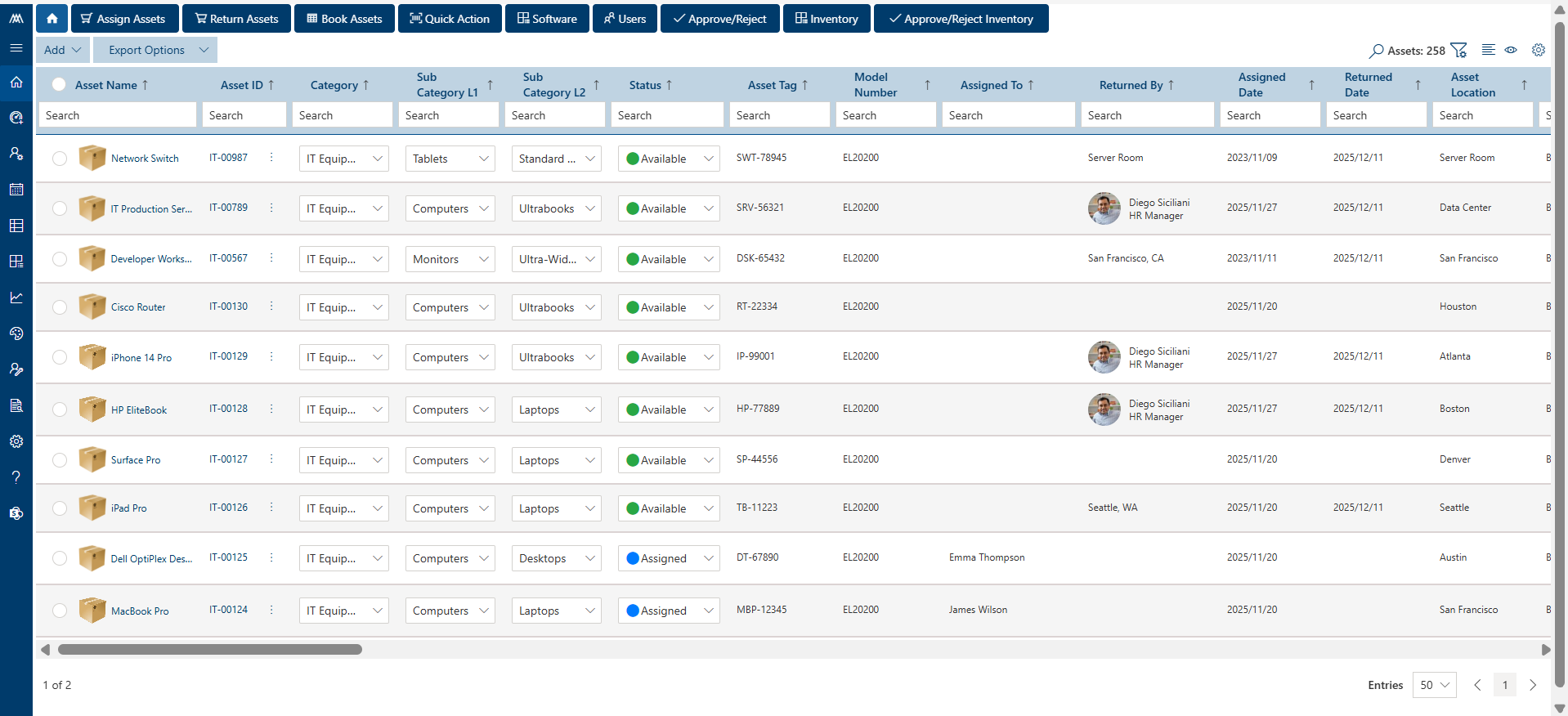
Key capabilities include:
- Configure custom asset attributes and maintain detailed records for both hardware and software assets.
- View asset relationships across users, incidents, and service requests to clearly understand impact and dependencies.
- Automate asset lifecycle workflows, covering procurement, assignment, maintenance, and retirement.
- Integrate seamlessly with Microsoft Intune to sync device data and maintain a single, unified asset record.
- Use detailed asset usage reports to support informed planning and lifecycle decisions.
Why Asset 365?
Asset 365 is built for modern IT teams that require accuracy, visibility, and scalability inside their Microsoft 365 environment. The platform supports asset, incident, request, and change alignment, helping teams manage assets in context rather than isolation.
With a centralized system, IT teams can link incidents and service requests directly to affected assets, improving traceability and operational clarity. Integration with device management platforms such as Intune ensures asset data remains consistent and up to date across systems—without manual effort.
2. ServiceNow
ServiceNow’s Asset Management system offers comprehensive visibility into assets, enabling organizations to enhance asset utilization and lower costs. Employees can conveniently use mobile devices to request assets, view assigned assets, and report incidents at any time.
Key features:
- Access and manage assets on the go with mobile apps, boosting field service efficiency.
- Gain real-time insights into asset performance, usage trends, and maintenance requirements.
- Handle various assets such as hardware, software, facilities, and consumables throughout their entire lifecycle.
3. Asset Panda
Asset Panda is a cloud-based asset tracking and management solution designed to help various industries manage diverse digital assets. With its robust integrations and logging capabilities, IT teams can Asset Panda streamline their asset management processes effectively.
Key features:
- Flexible, customizable workflows for asset management.
- Comprehensive audit trails to track the history of assets.
- Automated alerts to improve asset planning and decision-making.
4. Zluri
Zluri is one of the top software in manage IT assets, non-IT assets, software, asset components, and user groups. The platform also offers robust features for tracking software compliance and provides advanced tools for software usage forecasting.
Key features:
- Monitor software compliance through detailed visual reports.
- Manage asset relationships seamlessly using an integrated Configuration Management Database (CMDB).
- Discover and track assets automatically via network scans and individual device assessments.
5. Jira Service Management
Jira Service Management provides comprehensive IT asset management functionality, allowing for seamless asset tracking, inventory control, and procurement process automation.
Key features:
- Establish a centralized database to monitor and manage various assets, such as hardware, software, facilities, and more.
- Connect assets to relevant Jira issues like service requests, incidents, or change requests for streamlined resolution.
- Structure assets in a hierarchical format based on factors like location, department, or function for improved organization and management.
6. SysAid
SysAid is an IT service management solution that incorporates comprehensive asset management features, enabling organizations to effectively track and manage IT assets throughout their lifecycle.
Key features:
- Automated Asset Information Collection: SysAid automatically gathers relevant asset details, including screenshots and videos, to facilitate swift issue resolution
- Remote Issue Resolution: Service desk agents can securely access and resolve end-user issues remotely, enhancing efficiency and response times
- Built-in Discovery Capabilities: The system can scan IT assets and their attributes across the network, ensuring that asset data remains accurate and up to date
7. Miradore
Miradore is a versatile IT asset management solution specializing in lifecycle management. It offers IT teams comprehensive tools to discover and track IT assets with detailed information, capturing numerous attributes and changes in real time.
Key features:
- Remote collection of custom asset data and manual updates for complete inventory oversight
- Precision planning for budgeting, procurement, and device changes
- Seamless deployment of new hardware and software, ensuring security and compliance
- Efficient monitoring and maintenance with updated configurations
- Secure retirement and replacement of outdated assets to minimize operational risks
8. Device42
Device42 is a sophisticated IT inventory and asset management platform that utilizes auto-discovery tools to maintain precise records for physical, virtual, cloud, and hybrid infrastructures. The system accommodates various discovery protocols and virtualization platforms, ensuring your inventory remains current and audit ready. For hardware, Device42 automates the detection and updating of devices, facilitating straightforward documentation and modifications.
Key features:
- Auto-Discovery Tools : Maintains accurate inventory for physical, virtual, cloud, and hybrid infrastructures with support for various discovery protocols and virtualization platforms.
- Hardware Inventory Management : Automatically detects and updates devices, simplifying documentation and component modifications.
- Software Inventory Insights: Provides detailed profiles of software across the IT infrastructure, including license counts, prohibited applications, and compliance alerts.
- Mobile Device Support: Enables inventory management through smartphones and customized QR codes for tracking assets or equipment.
- Automated Warranty Checks : Streamlines lifecycle management by retrieving warranty information from major vendors like Dell, HP, IBM, and Lenovo.
9. ManageEngine AssetExplorer
ManageEngine AssetExplorer is a comprehensive IT asset management solution designed to help organizations track, manage, and optimize their hardware and software assets throughout the entire lifecycle. It provides automated discovery and centralized visibility across on-premise and network-connected environments, ensuring asset data remains accurate and audit ready.
The platform simplifies asset tracking by automatically scanning the network to identify devices, installed software, and ownership details. AssetExplorer also supports license compliance, contract management, and lifecycle tracking, enabling IT teams to maintain control without manual overhead.
Key features:
- Automated Asset Discovery: Automatically scans networks to identify hardware and installed software, ensuring real-time visibility and accurate inventory records.
- Hardware Asset Management: Tracks complete hardware details including configuration, ownership, location, and lifecycle status from procurement to disposal.
- Software License Management: Monitors software installations, license usage, and compliance to help avoid over-licensing or audit risks.
- Contract and Warranty Tracking: Maintains warranty, contract, and renewal information with alerts to support timely renewals and asset planning.
- Centralized Reporting: Provides detailed asset reports and dashboards to support audits, compliance checks, and informed IT decisions.
10. FreshService
Freshservice is a cloud-based IT asset management and service management platform designed to help IT teams gain full visibility into their hardware and software assets while aligning them with service operations. It supports asset tracking across on-premise, cloud, and remote environments, keeping asset data current and audit ready.
The platform combines asset discovery with service workflows, allowing IT teams to link assets to incidents, changes, and requests. Freshservice also includes license management, lifecycle tracking, and reporting to help organizations maintain control as their IT environment scales.
Key features:
- Automated Asset Discovery: Uses agent-based and agentless scanning to detect hardware, software, and cloud resources across the IT environment.
- Hardware and Software Tracking: Maintains detailed asset records including ownership, location, configuration, and lifecycle status.
- Software License Compliance: Tracks software usage and license consumption to reduce compliance risks and avoid unnecessary costs.
- Asset-to-Service Alignment: Links assets with incidents, service requests, and changes to provide contextual visibility and faster issue resolution.
- Reporting and Insights: Offers built-in reports and dashboards to support audits, asset planning, and operational decision-making.
11. Lansweeper
Lansweeper is an IT asset inventory and network discovery platform designed to provide deep visibility into hardware, software, and network assets across on-premise and cloud environments. It focuses on automated discovery and detailed asset intelligence, helping IT teams maintain accurate and continuously updated inventories.
The platform scans networks to identify devices, installed software, and configuration details without relying heavily on manual input. Lansweeper is widely used for asset auditing, vulnerability visibility, and infrastructure planning.
Key features:
- Agentless Network Discovery: Automatically scans networks to detect devices, systems, and connected assets without requiring agents on endpoints.
- Comprehensive Asset Inventory: Maintains detailed records of hardware configurations, installed software, IP addresses, and user associations.
- Software Visibility and Risk Insights: Identifies installed applications, unsupported software, and potential security gaps across the environment.
- Cloud and Hybrid Asset Tracking: Supports visibility across on-premise, virtual, and cloud-connected assets for unified inventory management.
- Custom Reporting and Dashboards: Provides flexible reporting options to support audits, compliance reviews, and IT planning decisions.
12. InvGate Asset Management
InvGate Asset Management is an IT asset management platform focused on helping organizations gain visibility and control over hardware, software, and cloud assets throughout their lifecycle. It supports automated discovery, asset normalization, and lifecycle tracking to keep asset data accurate and audit ready.
The platform combines asset intelligence with service alignment, allowing IT teams to connect assets with incidents, requests, and changes. InvGate also emphasizes compliance, cost control, and reporting to support informed asset planning.
Key features:
- Automated Asset Discovery: Identifies hardware, software, and cloud assets using multiple discovery methods to maintain up-to-date inventory records.
- Hardware and Software Lifecycle Tracking: Tracks assets from acquisition through assignment, maintenance, and retirement with clear lifecycle visibility.
- License and Compliance Management: Monitors software usage, license consumption, and compliance status to reduce audit risks.
- Asset-to-Service Context: Links assets with incidents, service requests, and changes for better impact analysis and operational clarity.
- Reporting and Asset Insights: Provides dashboards and reports to support audits, cost analysis, and asset planning decisions.
How to Choose the Right Asset Management Software
Choosing the right asset management software requires aligning the tool with your organization’s IT environment, asset complexity, and operational needs. The right solution should provide visibility, control, and long-term scalability without adding unnecessary complexity.
Key factors to consider:
- Asset coverage: Ensure the software supports both hardware and software assets, including licenses, equipment, and cloud resources if required.
- Lifecycle management: Look for end-to-end lifecycle tracking—from procurement and assignment to maintenance and retirement.
- Automation capabilities: The platform should support automated discovery, updates, and workflows to reduce manual tracking and data gaps.
- Integration with existing systems: Choose software that integrates with your service management tools, device management platforms, and core IT systems.
- Reporting and insights: Built-in reports and dashboards should help with audits, planning, and asset usage analysis.
- Scalability and flexibility: The solution should grow with your organization and allow customization of asset attributes and workflows.
- Deployment and security: Consider where the software is deployed and how asset data is managed, especially if you operate within a specific ecosystem like Microsoft 365.
By focusing on these factors, organizations can select asset management software that fits current requirements while supporting future growth and operational clarity.
Conclusion
Choosing the best asset management software for 2026 depends on how effectively it provides visibility, lifecycle tracking, and integration with existing IT systems. As asset environments grow more complex, the right solution should keep data accurate, support compliance, and align assets with service operations. A well-chosen platform helps organizations plan better and maintain long-term control over their assets.
Join Our Creative Community
Frequently Asked Questions
What is asset management software used for?
Asset management software is used to track, manage, and maintain physical and digital assets throughout their lifecycle, from procurement to retirement.
Who should use asset management software?
IT teams, operations teams, and organizations managing hardware, software, licenses, or equipment benefit from asset management software.
What features should the best asset management software include in 2026?
Key features include asset lifecycle tracking, automated discovery, software license management, reporting, and integration with service management tools.
How does asset management software help with compliance?
It maintains accurate asset records, tracks software licenses, and provides documentation and reports to support audits and compliance requirements.
Is asset management software suitable for cloud and hybrid environments?
Yes, modern asset management software supports on-premise, cloud, and hybrid environments, providing unified visibility across all asset types.


_JiluXJRGNl.svg)