
Managing assets efficiently is critical for growing businesses. The right asset management software for small businesses helps track equipment, reduce downtime and control costs. If you are searching for the best asset tracking software, this guide compares the top tools based on features, pricing and usability, so you can choose the right solution and start a free trial or demo today.
What is Asset Management Software?
Asset management software is a digital tool that helps businesses track, manage, and optimize their physical and digital assets throughout their lifecycle. These assets can include hardware, software, vehicles, equipment, and more. For small businesses, having an efficient asset management system ensures better resource utilization, reduces downtime, and improves compliance with industry regulations.
In 2026, small businesses are choosing smart asset management tools to stay efficient and cut costs. Top picks like Asset Management 365, Asset Panda, ManageEngine, and Raftab offer features like barcode scanning, real-time tracking, and easy mobile access.
Other strong options like AssetWorks, Zluri, ServiceNow keep things simple and budget-friendly. These tools help track equipment, reduce downtime, and stay audit-ready without the extra workload.
Click here to listen on the go!
Did you know?
According to AssetOpsBench, Benchmarking AI Agents for Task Automation in Industrial Asset Operations and Maintenance, explores how end-to-end AI agents can autonomously handle everything from condition monitoring to intervention scheduling, offering insights to SMBs aiming to boost efficiency through predictive workflows.
Criteria for Choosing the Best Asset Management Software
Selecting the right Asset Management Software can feel overwhelming, especially with so many tools promising the world. But for small businesses in 2026, the key is choosing a solution that is simple, scalable, and saves time. Here are the top criteria to consider:
Ease of Use: The software should have an intuitive dashboard and minimal learning curve. Look for clean interfaces and mobile apps that your team can use without training.
Scalability: As your business grows, your Asset management software should scale with it. Ensure the tool can handle more assets, users, and locations without performance drops or hidden upgrade costs.
Cloud Accessibility: Cloud-based systems offer real-time updates, remote access, and automatic backups—ideal for distributed teams or on-the-go operations.
Integration Capabilities: It should integrate smoothly with Microsoft 365, accounting tools (like QuickBooks), and other business systems you already use.
Maintenance and Lifecycle Tracking: A good asset management allows you to track asset condition, schedule maintenance, and monitor depreciation over time.
Customer Support: Fast, knowledgeable support is a must, especially for small teams without dedicated IT staff.
Top 10 Asset Management Software for Small Businesses in 2026
_iSADToPIS.webp)
Asset Management 365 is an advanced it management software for small businesses designed for efficiency and ease of use. It provides a cloud-based platform with AI-driven asset tracking, predictive maintenance, and automated compliance reporting.
Key Features:
- Real-time asset tracking using RFID, QR codes, and barcodes.
- AI-based predictive maintenance to reduce downtime.
- Customizable dashboards with detailed analytics.
- Automated compliance management for audits and regulatory reporting.
- Seamless integration with accounting and ERP systems.
Benefits:
- Enhances asset visibility and control.
- Reduces maintenance costs with predictive insights.
- Improves regulatory compliance with automated reporting.
- Scales easily with business growth.
2. Asset Panda
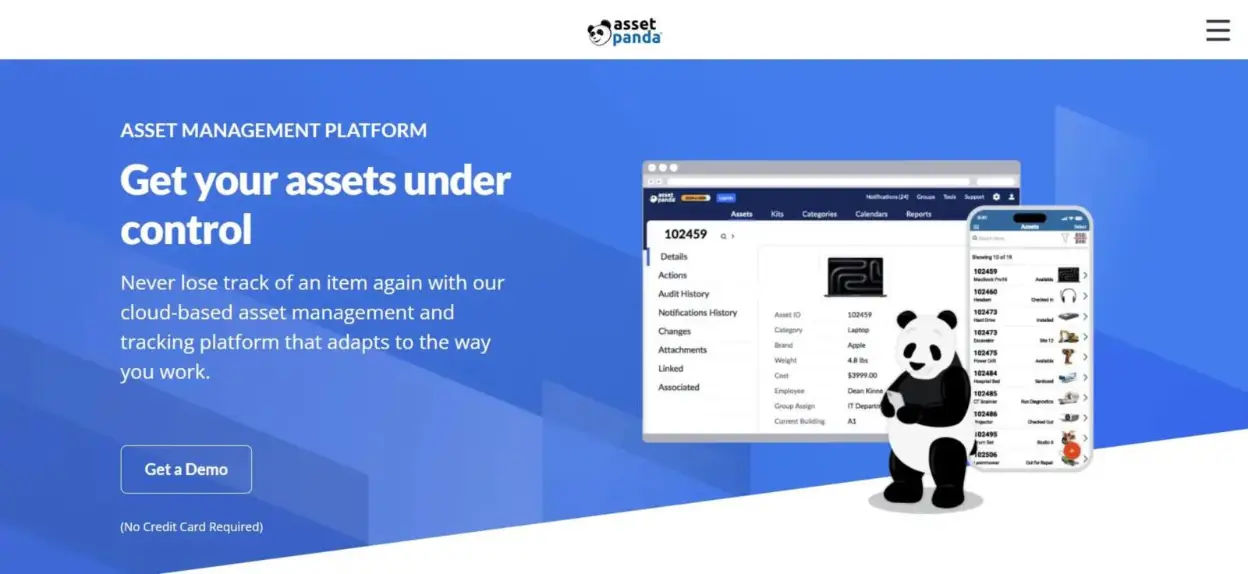
Asset Panda is a cloud-based asset management software known for its flexibility and ease of use.
Features:
- Customizable asset tracking with mobile access.
- Barcode and QR code scanning for quick updates.
- Automated maintenance scheduling.
- Integration with accounting software.
Benefits:
- Saves time with automated processes.
- Improves accuracy in asset tracking.
- Provides real-time insights for better decision-making.
_r5OI7LyOaj.webp)
ManageEngine Asset Explorer offers comprehensive asset tracking and IT asset management capabilities.
Features:
- Agent-based and agentless asset discovery.
- Software license management.
- IT compliance tracking.
- Reporting and analytics.
Benefits:
- Helps businesses stay compliant with IT regulations.
- Reduces software licensing costs.
- Provides detailed asset lifecycle reports.
4. Reftab
%20(1)__7oGlOZTZ4.webp)
Reftab is a user-friendly IT asset management software designed for seamless asset tracking and maintenance management.
Features:
- Customizable asset tracking with barcode and RFID support.
- Cloud-based platform with mobile app accessibility.
- Automated check-in/check-out system for assets.
- Maintenance scheduling and depreciation tracking.
Benefits:
- Simplifies asset management with intuitive tracking tools.
- Reduces downtime through proactive maintenance alerts.
- Provides comprehensive asset reports for better decision-making.
5. AssetWorks
%20(3)_t11xmdXrF.webp)
AssetWorks is an asset management software tailored for various industries, including government, education, and healthcare.
Features:
- Fleet and facility asset tracking.
- Capital asset planning and management.
- Preventive maintenance scheduling.
- Compliance management tools.
Benefits:
- Increases asset lifespan through proactive maintenance.
- Provides strong regulatory compliance features.
- Offers industry-specific asset management solutions.
%20(2)_VLcD2LImMp.webp)
Sage Fixed Assets is designed for businesses that need precise asset tracking and depreciation management.
Features:
- Comprehensive asset depreciation calculation.
- Fixed asset tracking with RFID support.
- Seamless integration with Sage ERP and accounting software.
- Custom reporting and forecasting tools.
Benefits:
- Helps businesses maximize tax benefits through accurate depreciation tracking.
- Reduces manual accounting errors.
- Enhances financial forecasting and budgeting.
%20(1)_w54IJ2gb-7.webp)
SAP Asset Manager is a robust enterprise-grade asset management solution suitable for small businesses looking for scalability.
Features:
- Mobile-first asset tracking.
- IoT-enabled predictive maintenance.
- Cloud and on-premises deployment options.
- Integration with SAP ERP and analytics tools.
Benefits:
- Improves operational efficiency with AI-powered insights.
- Reduces unplanned downtime through predictive maintenance.
- Enhances asset performance monitoring.
%20(1)_UUuvDcmkIf.webp)
AVEVA Enterprise Asset Management is an advanced solution for businesses that need extensive asset lifecycle management.
Features:
- Asset performance monitoring and predictive analytics.
- IoT and AI-driven asset optimization.
- Cloud-based and on-premises solutions.
- Risk assessment and compliance tracking.
Benefits:
- Reduces asset failures through predictive monitoring.
- Enhances business efficiency with AI-driven insights.
- Provides strong security and compliance management.
ServiceNow provides an enterprise-level asset management solution that integrates seamlessly with ITSM.
Features:
- Automated asset lifecycle tracking.
- IT asset and software license management.
- AI-powered analytics for decision-making.
- Integration with IT service management platforms.
Benefits:
- Improves IT and business asset tracking efficiency.
- Reduces software license costs and compliance risks.
- Provides deep analytics for asset performance optimization.
10. Zluri
%20(2)_wBN12qrDE.webp)
Zluri is a modern SaaS management and asset tracking solution designed for businesses managing multiple cloud applications.
Features:
- Automated SaaS application discovery.
- Cost optimization for SaaS spending.
- License and subscription tracking.
- Security and compliance monitoring.
Benefits:
- Helps businesses control SaaS expenses and reduce waste.
- Ensures better security compliance for cloud applications.
- Provides detailed insights on software utilization.
Asset Management Software Comparison
| Software | Best For | Pricing | Free Trial | Key Features |
|---|---|---|---|---|
| Asset Management 365 | SMBs | Custom | Yes | AI tracking, automation |
| Asset Panda | Flexible tracking | Mid-range | Yes | Custom workflows |
| ManageEngine | IT assets | Mid-high | Yes | License tracking |
| Reftab | Small teams | Affordable | Yes | Easy UI |
| Zluri | SaaS | Mid-range | Yes | Cost optimization |
Benefits of Using the Best Asset Management Software
The best asset management software provides organizations with a centralized platform to track, monitor, and optimize their assets throughout their lifecycle. Here’s a detailed look at the key benefits of using top-tier asset management software:
1. Enhanced Asset Tracking and Visibility
High-quality asset management software provides real-time tracking of assets, ensuring businesses always know where their resources are, who is using them, and their status. This reduces the risk of asset loss, theft, or misplacement and improves accountability.
2. Improved Asset Utilization
By analyzing asset usage data, companies can optimize their asset allocation, ensuring resources are used efficiently. This helps in reducing idle assets and maximizing return on investment (ROI).
3. Cost Savings and Reduced Wastage
Asset management software helps businesses avoid unnecessary purchases by identifying underutilized assets. It also reduces maintenance costs by scheduling preventive maintenance, thereby minimizing unexpected downtime and costly repairs.
4. Automated Compliance and Auditing
Regulatory compliance is crucial in industries like healthcare, finance, and manufacturing. The best asset management software automates compliance tracking, generates audit reports, and ensures businesses adhere to industry regulations, avoiding penalties and legal issues.
5. Predictive Maintenance for Longevity
Instead of reacting to asset failures, predictive maintenance capabilities allow businesses to anticipate potential issues based on asset performance data. This extends asset lifespan, reduces downtime, and enhances operational efficiency.
6. Data-Driven Decision Making
Advanced reporting and analytics provide valuable insights into asset performance, depreciation, and lifecycle trends. Decision-makers can leverage this data to plan budgets, optimize asset procurement, and improve overall business strategies.
7. Centralized Asset Repository
A unified platform consolidates all asset-related information, from purchase details to maintenance records. This ensures seamless access to critical data, eliminating the need for fragmented spreadsheets or manual record-keeping.
8. Remote Asset Management
With cloud-based asset management software, businesses can track and manage assets across multiple locations from anywhere. This is especially beneficial for remote work environments and organizations with distributed teams.
9. Improved Security and Risk Mitigation
Asset management software enhances security by providing real-time visibility and control over all assets, reducing the risk of loss, theft, or unauthorized access. With features like access controls, audit logs, compliance tracking, businesses can identify risks early and take proactive measures to protect their assets and ensure regulatory compliance.
10. Scalability for Growing Businesses
As businesses expand, managing assets becomes more complex. A robust asset management solution can scale with the company, accommodating new assets, locations, and teams without performance slowdowns.
Investing in the best asset management software is a strategic move that enhances operational efficiency, reduces costs, ensures compliance, and improves asset utilization. Whether for IT assets, physical equipment or digital resources, a comprehensive asset management solution empowers organizations to streamline processes, make data-driven decisions, and maintain a competitive edge.
Conclusion
Choosing the right asset management software can significantly impact the efficiency and growth of small businesses. Whether you need a simple asset tracking solution or a comprehensive enterprise-grade system, these top 8 software options cater to various business needs. Investing in the best asset management software for small businesses ensures improved productivity, cost savings and long-term sustainability.
Ready to simplify your asset tracking?
Start a free trial of Asset Management 365 or compare pricing with top asset management software today.
Join Our Creative Community
Frequently Asked Questions
What is asset management software for small businesses?
Asset management software helps small businesses keep a record of company assets such as laptops, equipment, tools, and furniture. It allows teams to track asset location, ownership, maintenance history, and lifecycle from a single system.
Why do small businesses need asset management software?
Small businesses use asset management software to maintain clear records of assets, avoid loss or misuse, track maintenance schedules, and maintain accountability for company equipment.
What features should small businesses look for in asset management software?
Important features include:
- Asset tracking and inventory management
- Asset lifecycle tracking
- Asset assignment and acknowledgment
- Maintenance tracking
- Reporting and dashboards
- Integration with Microsoft 365 or existing systems
Can asset management software track both IT and non-IT assets?
Yes. Most modern asset management solutions can track IT assets such as computers and servers as well as non-IT assets like office furniture, tools, machinery, and vehicles.
How does asset management software help reduce operational costs?
Asset management software helps reduce costs by preventing asset loss, improving asset utilization, maintaining maintenance records, and helping businesses make informed decisions about asset replacement or upgrades.
How much does asset management software cost?
Pricing ranges from affordable monthly plans for small businesses to enterprise-level custom pricing.
Is there free asset management software?
Most tools offer free trials, but full-featured solutions are typically paid.


_JiluXJRGNl.svg)