
5 Best Alternatives to NetSuite for Expense Management (2026)

NetSuite is a renowned cloud-based financial software that assists businesses to monitor, manage, and report costs in a single system.
Many growing businesses use NetSuite because it keeps expense data organized and reduces manual work.
In this guide, we have covered the 5 best alternatives to NetSuite for expense management. Each tool offers simple expense tracking, faster setup, and better ease of use compared to complex ERP systems. These solutions help businesses record, approve, and control expenses efficiently.
However, some companies seeks out for an alternative to NetSuite in tracking expenses. The reason is that NetSuite is also expensive, difficult to operate, and can have numerous features that they do not require. The current businesses desire easy, quick, and cheap tools that are solely aimed at controlling costs in an easy and efficient manner.
Why Look for Alternatives to NetSuite Expense Management?
NetSuite is an comprehensive financial management software that assists companies to monitor, regulate, and document costs in one system. It provides capabilities like recording expenses, approval processes, policy management and real-time financial reporting.
Although NetSuite is a powerful and efficient tool in managing expenses, companies can consider other options in order to match their needs and priorities more closely to their operations.
Pros:
- Unified Financial System: Control expenses, accounting and financial reporting within a single platform.
- Automation: Simplifies the process of submitting expenses, approvals and policy adherence.
- Real-Time Visibility: Gives a clear picture of how the company spends its money to control finances better.
Why Choose Alternative
- Specialized Expense Management: Companies can choose specialized applications that are designed to track expenses more quickly and easily.
- Operational Flexibility: There are organizations that seek solutions that are aligned with their workflows and need faster implementation.
- Integration Alignment: Firms can opt to use platforms that are compatible with their current HR, payroll, or accounting systems to operate smoothly.
5 Best Alternatives to NetSuite for Expense Management
NetSuite is a widely used solution for managing business expenses, but different organizations have different needs and priorities. Below are the 5 best alternatives to NetSuite for expense management that offer efficient expense tracking, simple workflows, and flexible options to support your business.
Alternatives | Integration | G2 Ratings |
Expense Tracker 365 | SharePoint, MS Teams, Outlook, Power BI, QuickBooks and Xero | 4.8/5 |
Zoho Expense | Connects well with all Zoho apps | 4.5/5 |
Expensify | QuickBooks, Xero, Sage, and Microsoft Dynamics | 4.5/5 |
Volopay | Xero, QuickBooks and Tally | 4.3/5 |
Rydoo | SAP S/ 4HANA, Deel, Wise and Workday | 4.4/5 |
1. Expense 365
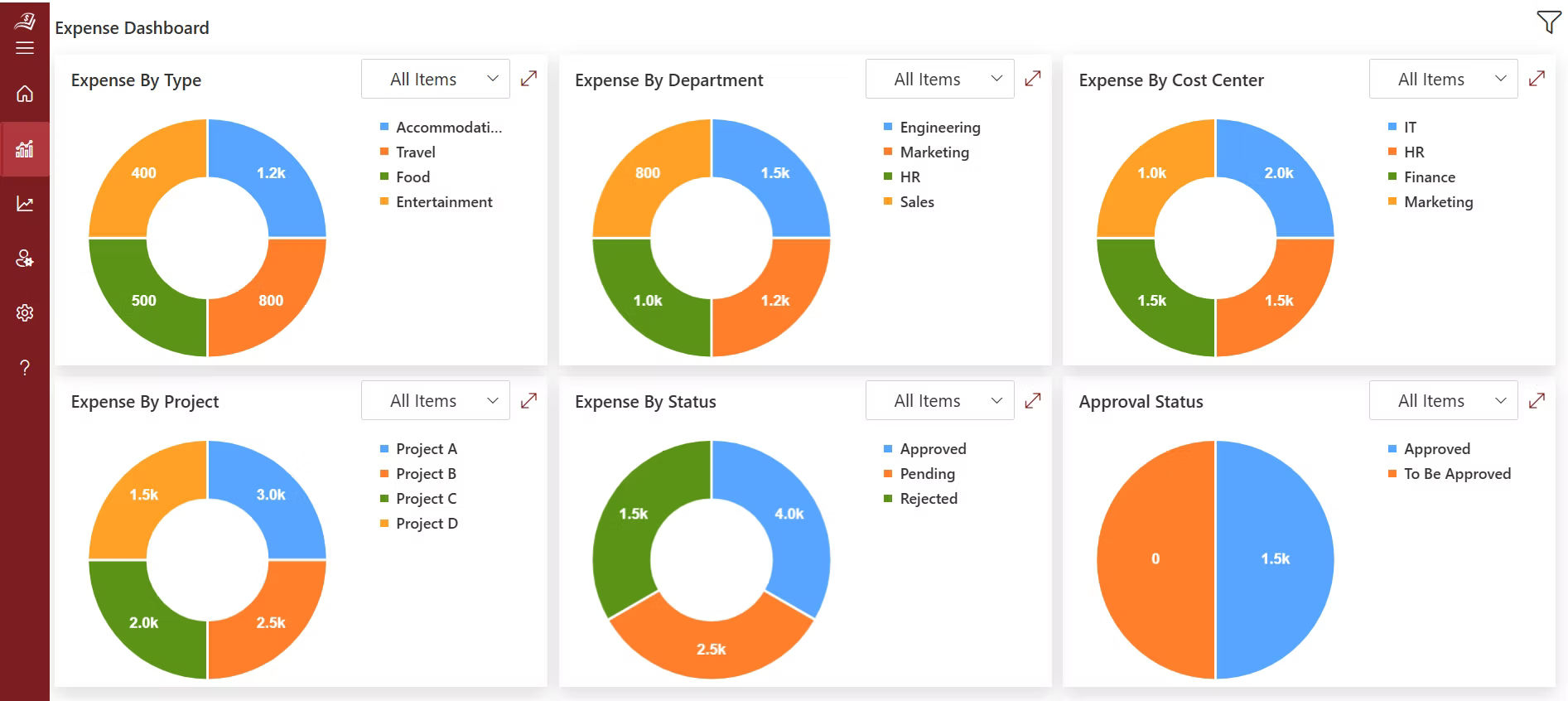
Expense 365 is a trusted expense management tool that is aimed at assisting companies to document, track, and control their costs in a single centralized system. Developed as a part of the Microsoft ecosystem, it enables teams to make expenses, analyse claims, and keep transparent financial records.
The platform offers real-time visibility of expenses, which makes finance teams and managers aware of spending in the company. Its cloud-based system also means that its users can access expense information using the desktop and mobile device and this is convenient to teams that work in different locations.
Expense 365 also includes intelligent expense automation features that automatically organize and categorize expenses.
Key Features
- AI powered receipt scanning
- Automated expense management
- Per diem automation
- Corporate card management
- Employee expense reimbursement
- Mileage tracker
- Role-Based Access Control
- Dedicated Account Manager
- Expense audit
- Group based approval workflows & delegation
- Centralized view of all expenses
- Multi-factor authentication
- Advanced audit trail report
- Tax compliance
Pricing: Starts at $49 per month, billed yearly
Business Plan – Custom pricing based on company size and needs.
Why Consider Expense Tracker 365?
Expense Tracker 365 is designed to handle business expenses specifically, and organizations can concentrate on expense tracking without the additional complexity of a full ERP system. Such a narrow-minded strategy allows faster implementation and allows employees and finance departments to begin using the platform with a less learning curve.
Best for: Businesses That Need Powerful, Easy-to-Use Expense Management
Hear From Our Delighted Clients – G2 Platform
“Expense Tracker 365 is a great app with excellent support. The advanced features make it a complete tool & has really improved our expense tracking and reporting workflow”
2. Zoho Expense
Zoho Expense is a cloud-based expense management software that helps businesses record, track, and control their expenses in one place. It enables the employees to easily submit expenses and the managers to review and approve them within a short period. Zoho Expense assists companies to manage many types of budgets, keep proper financial records and enhance expenses visibility with automated workflows and real-time tracking.
Key Features
- Automated checks to ensure expenses follow company policies
- Multi-currency support for managing global expenses easily
- Smart receipt scanning with automatic data extraction
- Mileage logging for accurate travel expense tracking
- Easy integration with popular accounting platforms
- Flexible approval workflows based on company structure
- Seamless syncing of expense data with financial systems
- Detailed expense reports and visual dashboards for better insights
Why Consider Zoho Expense as an Alternative to NetSuite for Expense Management?
Zoho Expense is a tool that assists companies to automate and control costs with ease. Its user-friendly interface and automation capabilities enable teams to monitor and authorize expenses without the need to do it manually. It is a fine option when companies need a dedicated and user-friendly expense management platform.
Best for: SMBs That Need End-to-End Expense Automation
3. Expensify
Expensify is a reliable expense management tool, particularly when the company has employees who travel or work remotely. It assists companies to document expenses, reimbursements and real time spending. Many businesses choose Expensify because it focuses on employee expense tracking and offers an easy way to manage business expenses reimbursement without needing a full ERP system like NetSuite
Key Features
- Import transactions directly from corporate cards
- Support for employee reimbursements across different regions
- Track and monitor company expenses in one place
- Manage and process employee reimbursements easily
- Capture and upload receipts using mobile devices
- Create and review detailed expense reports
- Issue virtual cards to manage company spending
Why Consider Expensify as an Alternative to NetSuite for Expense Management?
Expensify enables employees to make expenses and managers to approve them anywhere. This is why it is a good option in companies that have remote teams or high-traveling employees.
Best for: Companies with Frequent Employee Reimbursements
4. Volopay
Volopay is a modern expense management platform designed to help businesses track expenses, control spending, and manage company cards. It gives finance teams clear visibility into business expenses and helps manage approvals and payments from a single system. Many growing companies use Volopay because it offers dedicated expense management and spend control features.
Key Features
- Custom approval workflows for expense review
- Built-in controls to manage company spending
- Central dashboard to view all expense data
- Issue and manage virtual and physical company cards
- Real-time expense tracking and reporting
Why Consider Volopay as an Alternative to NetSuite for Expense Management?
Volopay is a good choice for businesses that want better control over employee spending and company cards. It helps finance teams track expenses clearly and manage approvals with ease.
Best for: Startups and SMEs needing Spend Control + Accounting Integration
5 Best Contract Management System Software in 2025
Contracts are a core part of business operations, yet many teams still rely on outdated, manual processes. In 2025, modern contract management system software helps simplify workflows, reduce risk, and improve team collaboration.
Here are five top tools that stand out for their features, ease of use, and real business impact.
1. CLM 365
CLM 365 is a reliable contract management system software built for legal teams that want flexibility and full control. It is built on Microsoft Ecosystem, and it integrates with SharePoint, MS Teams, Outlook and MS Word. It offers powerful automation and AI features while remaining simple to use. With strong integrations and customizable workflows, CLM 365 fits well into enterprise-level operations.
Key features
- Easy contract creation with smart templates
- Role-based access to improve security
- AI-based clause suggestions and risk alerts
- Centralized dashboard to manage workflow
- Automated approval and signature workflows
- Real-time contract tracking
- Custom alerts for renewals and key dates
- Draft comparison
- Generate custom contracts
Best known for: Deep Microsoft ecosystem integration and workflow customization. A great fit for businesses that already use Microsoft tools and need a flexible and scalable contract management system.
Rating
G2: 4.8
Capterra: 4.8
Microsoft AppSource: 4.9 (79 reviews)
Our Pricing: CLM 365 makes contract management easier and faster for businesses. It starts at just $29.99 per user.
2. Zoho Contracts
Zoho Contracts is part of the Zoho suite and offers a simple yet feature-rich contract solution for small to medium businesses. It’s known for its intuitive interface and easy setup, making it a great option for growing teams.
- Pre-built contract templates
- Approval workflows with status tracking
- E-signature support built-in
- Centralized contract repository
- Audit trails for every action
- Renewal reminders and date alerts
- Clause library for faster drafting
- Seamless integration with Zoho CRM and other tools
Best known for: Ease of use and tight integration with the Zoho ecosystem. Perfect for small to mid-sized teams seeking an easy-to-use and budget-friendly contract management solution.
Rating
G2 Review: 4.5
Capterra: 4.4
3. ContractWorks
ContractWorks focuses on speed and simplicity. Designed for quick setup, it allows teams to hit the ground running without lengthy training or complicated onboarding. It’s especially popular among legal teams that want fast deployment and essential features without overpaying.
- Quick setup with minimal training
- Drag-and-drop contract upload
- Secure cloud storage with permissions
- Smart document tagging and search
- Built-in e-signature tools
- Custom alerts for deadlines
- Audit logs for compliance
- Simple pricing model
Best known for: Fast implementation and user-friendly design. A strong choice for teams that want a straightforward tool that just works without overcomplicating the process.
Rating
G2 Review: 4.8
Capterra: 4.8
4. Juro
Juro is designed for in-house legal teams that want to manage contracts end to end in one platform. It brings contract creation, negotiation, and management together in a single collaborative space, reducing back-and-forth between tools.
- Browser-based contract editor
- Internal and external collaboration tools
- Real-time contract version tracking
- Clause control and smart templates
- Integrated e-signatures
- Approval workflows built-in
- Automatic renewal tracking
- CRM and Slack integration
Best known for: Collaborative contract workflows in one platform. It is a perfect fit for legal teams looking for a modern all-in-one platform that supports fast contract cycles and teamwork.
Ratings
G2 Review: 4.6
Capterra: 4.8
5. Ironclad
- Workflow designer for custom processes
- AI contract data extraction
- Advanced analytics and dashboards
- Version control and collaboration
- Native e-signature support
- Clause library with compliance controls
- Auto-reminders for renewals and tasks
- Enterprise-grade security and permissions
5. Rydoo
Rydoo is a digital expense management solution built to help businesses record, track, and manage expenses efficiently. It allows employees to submit expenses quickly and helps finance teams review and manage expense data. Many companies use Rydoo because it offers a simple and focused platform for managing business expenses.
Key Features
- Easy creation and submission of expense reports
- Integration with bank accounts and credit cards
- Automatic expense categorization
- Receipt capture using mobile devices
- Mileage tracking for travel expenses
- Integration with business tools and software
- Custom approval workflows
- Automated reminders for pending actions
- Reliable performance for daily use
- Mobile access for employees and managers
Why Consider Rydoo as an Alternative to NetSuite for Expense Management?
Rydoo is useful for businesses that manage expenses across multiple locations or countries. It helps teams track expenses, manage reimbursements, and maintain clear expense records from one platform.
Best for: Global Teams Managing Multi-Currency Travel Expenses
Final Takeaway from Us
NetSuite continues to be a strong ERP platform, but many businesses prefer dedicated tools when their main goal is expense management. Based on industry insights and adoption trends:
- Expense Tracker 365 stands out as great choice for SMBs and enterprise businesses looking for secure and user-friendly solutions with advanced features.
- Zoho Expense and Expensify are widely used by small and mid-sized businesses for their ease of use and practical features.
- Volopay and Rydoo are good options for growing companies and teams operating across multiple locations.
If your goal is to manage company spending better, improve expense tracking, and make it easier for teams to submit and review expenses, these alternatives to NetSuite for expense management are strong options to consider.
Conclusion
NetSuite is a well-known ERP platform that includes expense management as part of its financial system. However, some organizations prefer solutions that focus only on expense tracking and offer features that match their specific business needs. Tools like Expense Tracker 365, Zoho Expense, Expensify, Volopay, and Rydoo provide reliable options, each with strengths such as easy expense tracking, flexible controls, and practical pricing.
Industry trends show that many businesses are choosing dedicated expense management software that fits their team size, budget, and daily operations.
Join Our Creative Community
Frequently Asked Questions
Why should I consider alternatives to NetSuite for expense management?
NetSuite can be complex and costly for some businesses. Alternatives often offer simpler, more affordable, and specialized solutions focused just on expense management.
What key features should I look for in a NetSuite alternative?
Look for automated expense tracking, receipt scanning, approval workflows, real-time reporting, and integration with your accounting software.
Are these alternatives suitable for small to mid-sized businesses
Yes. Many alternatives are designed to scale and cater specifically to the needs and budgets of small and mid-sized businesses.
Can I easily switch from NetSuite to one of these alternatives?
Most modern expense tools support smooth data migration and integrations with popular accounting platforms, making the switch easier.
Do these alternatives support mobile expense tracking?
Yes, the majority offer mobile apps allowing employees to capture receipts and submit expenses from anywhere, streamlining the process.


_JiluXJRGNl.svg)