AI-Based LMS Explained: How AI Improves Learning

Learning and development has become a crucial factor in enhancing workforce capability and driving organizational growth. As roles evolve and skill requirements shift, organizations are adopting smarter learning systems that go beyond static courses and manual administration. An AI-Based LMS enables a more focused approach to learning by personalizing content, guiding learners based on data, and supporting scalable training programs aligned with real performance needs.
An AI-Based LMS personalizes learning by using artificial intelligence to create customized training paths, recommend relevant content, and provide real-time insights. This leads to more engaging, efficient learning, helping employees develop skills that align with business goals.
Unlike traditional systems, an AI-Powered LMS adapts to each learner’s progress, ensuring continuous development. By automating administrative tasks and offering predictive analytics, it helps organizations improve learning outcomes and create a more skilled, engaged workforce.
According to LinkedIn Learning , organizations that use personalized, AI-driven learning experiences see up to a 32 percent increase in employee engagement, while IBM research reports that AI-supported learning initiatives can improve skill application rates by nearly 25 percent. Additionally, a Gartner study found that over 60 percent of enterprises investing in AI-powered learning platforms report better alignment between training outcomes and business goals.
An AI Powered LMS builds on these advantages by recommending relevant content at the right time, analyzing learning behavior, and providing actionable insights for managers. By shifting away from generic training models, organizations can create learning experiences that are more engaging, effective, and aligned with long-term skill development strategies.
What Is an AI-Based LMS?
An AI-Based LMS is a learning platform designed to make training more intelligent and responsive. By applying artificial intelligence, it moves beyond static course delivery and supports learning experiences that adjust to individual needs. Instead of treating every learner the same, the system analyzes roles, learning behavior, performance trends, and progress to shape personalized learning journeys.
An AI Powered LMS places emphasis on learning outcomes rather than simple course completion. It detects skill gaps, recommends relevant learning resources, and continuously refines suggestions based on how learners interact with content. This approach helps organizations support ongoing skill development while ensuring learning remains aligned with real workplace requirements.
Why an AI Powered LMS Matters for Modern Learning
Traditional learning platforms were built to manage courses, not to understand learners. They often rely on static programs and manual oversight, which makes it difficult to keep training relevant as roles and skills evolve. An AI Powered LMS addresses this gap by learning from user behavior and continuously adapting how content is presented.
For organizations, this creates measurable advantages:
- Learners stay more involved because training reflects real needs
- Skills develop faster through targeted, role-specific learning paths
- Learning initiatives remain closely connected to business priorities
For learners, an AI Powered LMS offers clarity and direction. Instead of navigating large course libraries without guidance, individuals receive timely recommendations and structured learning paths that reflect their progress and goals. This guided approach keeps learning focused, builds confidence, and supports continuous development rather than one-time training events.
How AI Improves Learning Management
Artificial intelligence adds intelligence and adaptability to learning management systems, allowing organizations to move beyond static training programs. By analyzing data continuously, AI supports informed decisions, responsive learning journeys, and more effective skill development across the workforce.
Personalized Learning Paths That Adapt Over Time
An AI-Based LMS evaluates learner behavior, current skill levels, role expectations, and progress patterns to build personalized learning paths. Instead of assigning the same courses to everyone, the system adjusts recommendations as learners advance or struggle.
This approach:
- Reduces time spent on irrelevant training
- Keeps learning aligned with role-specific requirements
- Supports steady progress without overwhelming learners
Personalization ensures that learning stays focused and purposeful.
Intelligent Content Recommendations
An AI Powered LMS uses historical activity, performance data, and future learning goals to recommend the most relevant content. Courses, videos, articles, and assessments are suggested at the right moment, helping learners continue without interruption.
This removes the need for manual searching and helps learners stay engaged with content that directly supports their growth.
Automated Learning Administration
AI significantly reduces the administrative workload associated with learning programs. Routine activities are handled automatically, including:
- Course and certification assignments
- Reminders and follow-up notifications
- Progress and completion tracking
With these tasks managed by the system, L&D teams can focus on planning, program improvement, and strategic learning initiatives rather than operational maintenance.
Learning Insights and Predictive Analytics
AI-driven analytics provide deeper visibility into learning outcomes. An AI-Based LMS helps organizations understand:
- Which learning programs are most effective
- Where skill gaps exist across teams
- How training efforts influence performance
Some systems also offer predictive insights, highlighting potential skill shortages before they impact productivity. These insights support better planning and help organizations refine learning strategies continuously.
Continuous Improvement Through Adaptive Feedback
An AI Powered LMS improves over time by learning from user interactions. As more data is collected, recommendations become more accurate, learning paths become more refined, and insights become more actionable.
This ongoing adaptation ensures that learning programs remain relevant as roles, technologies, and business priorities evolve.
AI Based LMS vs Traditional LMS: Key Differences
Aspect | AI Based LMS | Traditional LMS |
Learning Approach | Delivers personalized learning paths based on role, behavior, and performance. | Follows fixed learning paths with the same content for all learners. |
Content Recommendations | Suggests relevant courses and resources using AI-driven insights. | Relies on manual search or predefined rules for content discovery. |
Learner Experience | Adapts learning journeys as progress and needs evolve. | Provides a static learning experience with limited adaptability. |
Administrative Effort | Automates course assignments, reminders, and progress tracking. | Requires manual administration for assignments and follow-ups. |
Learning Insights | Offers advanced analytics to identify skill gaps and learning trends. | Provides basic reports focused mainly on course completion. |
Adaptability to Change | Continuously adjusts learning paths as skill needs and roles change. | Requires manual updates to reflect new learning requirements. |
Scalability | Supports consistent learning across teams, roles, and locations with minimal effort. | Scaling often increases administrative complexity. |
Focus Area | Emphasizes course delivery and completion tracking. |
Key Features of an AI-Based LMS
A well-designed AI-Based LMS combines intelligence, flexibility, and scalability to support both learners and administrators. These features work together to create learning experiences that are relevant, outcome-focused, and easy to manage across the organization.
Adaptive Learning Experiences
An AI-Based LMS dynamically adjusts learning paths based on learner progress, performance patterns, and engagement levels. Content evolves as learners move forward, ensuring they are neither overwhelmed nor held back by unnecessary material.
This keeps learning aligned with real capability growth.
Intelligent Search and Content Recommendations
AI-powered search and recommendation engines help learners find the right content at the right time. Based on role, past learning activity, and skill needs, the system highlights relevant courses, videos, and resources without manual browsing.
This improves learning continuity and reduces drop-offs.
Predictive Learning Insights
An AI Powered LMS analyzes learning trends to identify future skill requirements and potential capability gaps. Administrators gain early visibility into where training is needed most, supporting proactive planning instead of reactive interventions.
These insights help align learning programs with long-term business needs.
Automated Learning Administration
Routine learning management tasks are handled automatically, reducing administrative overhead. This includes:
- Course and certification assignments
- Reminders and follow-ups
- Progress and completion tracking
By minimizing manual effort, learning teams can focus on program quality and strategic planning.
Role-Based and Skill-Based Learning Paths
The system creates learning paths tailored to job roles, departments, and skill levels. New hires, managers, and specialists each receive structured learning journeys that reflect their responsibilities and development goals.
This ensures consistency while still supporting personalization.
Continuous Learning Optimization
An AI-Based LMS improves over time by learning from usage data and learner behavior. As interactions increase, recommendations become more accurate and learning paths become more refined.
This ongoing optimization keeps the learning experience relevant as roles and priorities evolve.
Integrated Analytics and Reporting
Built-in analytics provide visibility into learning participation, completion trends, and skill development. Dashboards help administrators evaluate program effectiveness and identify areas for improvement without relying on manual reports.
Data-backed insights support informed decision-making.
Seamless Collaboration and Integration
An AI Powered LMS integrates smoothly with workplace tools such as Microsoft 365, enabling learning to happen within familiar environments. Learners can access training, reminders, and updates without switching platforms.
This supports higher adoption and consistent engagement.
Benefits of Using an AI Powered LMS
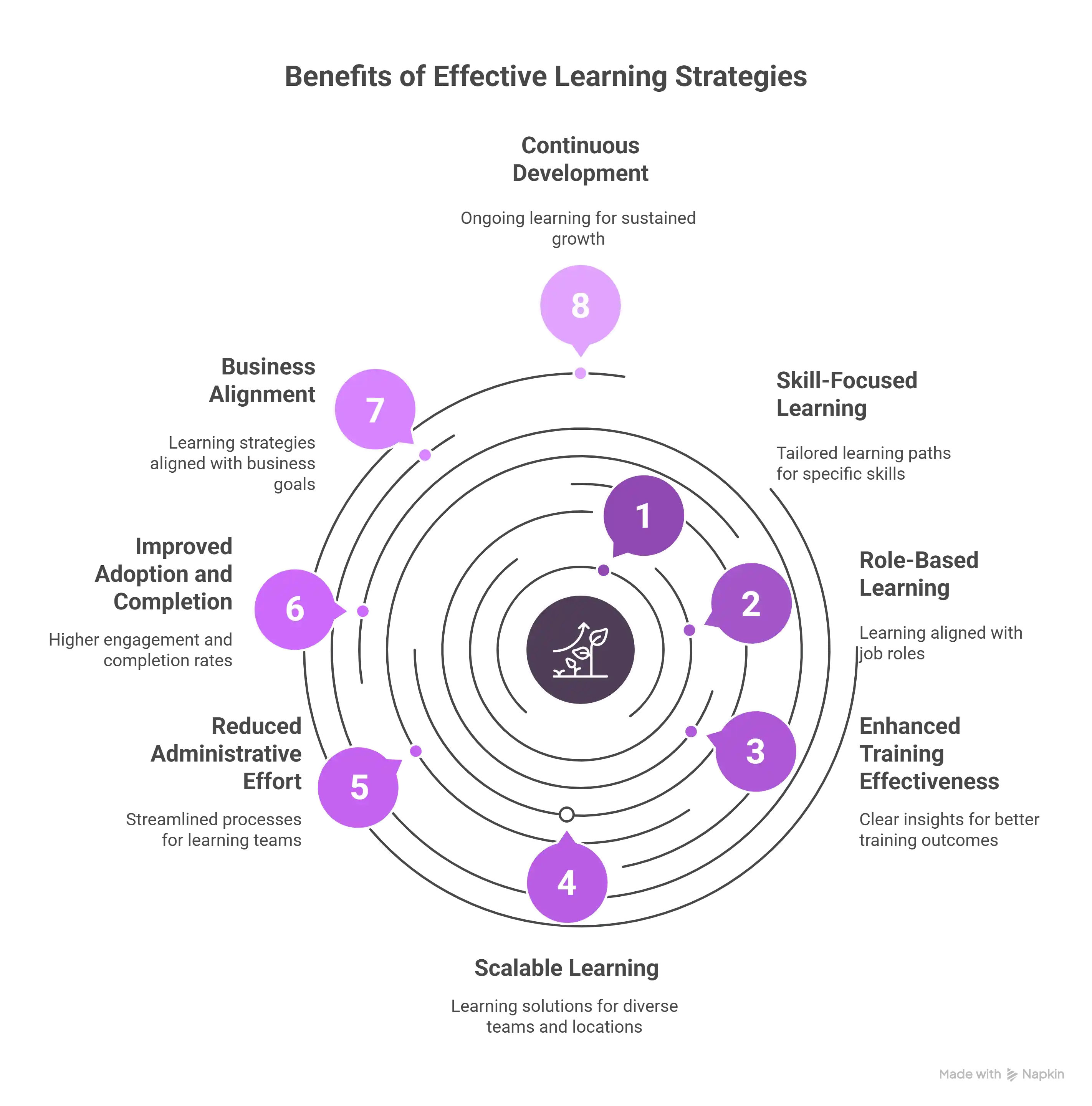
An AI Powered LMS strengthens learning programs by turning training into a continuous, insight-driven process. It supports learners, managers, and administrators with clarity, relevance, and scalability, making learning easier to manage and more impactful.
Improves Learner Engagement and Participation
An AI Powered LMS keeps learners engaged by delivering content that aligns with their role, progress, and development needs. Personalized learning paths and relevant recommendations reduce fatigue caused by repetitive or irrelevant training.
When learning feels purposeful, participation improves naturally.
Supports Skill-Focused and Role-Based Learning
AI identifies the skills that influence performance the most and aligns training accordingly. An AI-Based LMS ensures employees focus on capabilities that matter for their role rather than generic learning programs.
This results in clearer skill development and better role readiness.
Enhances Training Effectiveness with Clear Insights
Built-in analytics provide visibility into learning progress, participation trends, and skill development. Learning teams can assess what is working and where adjustments are needed using data rather than assumptions.
This supports better planning and continuous improvement of training programs.
Scales Learning Across Teams and Locations
An AI-Based LMS supports consistent learning experiences across departments, teams, and geographies. Automated administration, role-based learning paths, and centralized reporting make it easier to manage learning at scale without added complexity.
This consistency helps maintain quality while supporting growth.
Reduces Administrative Effort for Learning Teams
Routine tasks such as course assignment, reminders, and progress tracking are handled automatically. This allows L&D and HR teams to spend more time improving learning strategy instead of managing operational tasks.
Efficiency improves without compromising oversight.
Improves Learning Adoption and Completion Rates
AI-guided recommendations and timely notifications help learners stay on track. An AI Powered LMS supports steady progress by guiding learners step by step rather than overwhelming them with large content libraries.
This leads to better completion rates and sustained learning momentum.
Aligns Learning with Business Priorities
Learning programs remain aligned with organizational needs by linking skill development to business goals. An AI-Based LMS helps ensure training supports current priorities and adapts as roles and expectations evolve.
This alignment strengthens the connection between learning efforts and workforce capability.
Supports Continuous Learning and Development
An AI Powered LMS is designed to evolve with learners. As usage patterns change, the system refines learning paths and recommendations, supporting ongoing development rather than one-time training cycles.
This creates a learning environment that grows alongside the organization.
Key Future Trends in AI-Powered LMS
AI-powered learning management systems continue to evolve as organizations place greater emphasis on skill readiness, learning relevance, and data-backed decision-making. The following trends highlight how AI-Powered LMS platforms are shaping the future of organizational learning.
Greater Focus on Skills-Based Learning
Future AI-Powered LMS platforms will place stronger emphasis on skills rather than course completion. Learning paths will increasingly be designed around competencies, helping organizations map training directly to role requirements and workforce capabilities. This shift supports better workforce planning and clearer visibility into skill readiness.
Deeper Personalization Across Learning Journeys
Personalization will extend beyond content recommendations. AI-Powered LMS platforms will adapt learning experiences based on individual performance trends, learning preferences, and progression speed, creating learning journeys that evolve continuously. This approach helps maintain engagement while supporting consistent development.
Predictive Learning and Proactive Skill Planning
AI will play a larger role in predicting future skill gaps before they impact performance. By analyzing learning behavior and organizational trends, AI-Powered LMS platforms will support proactive training planning rather than reactive interventions. This enables learning teams to prepare the workforce for upcoming changes more effectively.
Increased Integration with Workplace Ecosystems
AI-Powered LMS platforms will integrate more closely with tools employees already use, such as Microsoft 365. Learning will become embedded into daily workflows, allowing employees to engage with training without switching platforms. This integration supports higher adoption and consistent participation.
Smarter Analytics for Learning Decisions
Advanced analytics will move beyond basic reporting to provide actionable insights. AI-Powered LMS platforms will help learning teams understand which programs create impact, where learners face challenges, and how training aligns with business priorities. These insights will support continuous optimization of learning strategies.
Continuous Learning Optimization
AI systems will continue refining learning paths and recommendations based on real-time usage patterns. As roles and skill needs evolve, AI-Powered LMS platforms will automatically adjust learning programs to remain relevant. This ensures learning remains dynamic and aligned with organizational goals.
How to Measure the Success of an AI Powered LMS
Measuring the success of an AI Powered LMS requires looking beyond basic course completion. A well-implemented system shows its value through learning progress, skill development, engagement, and its impact on performance. The following indicators provide a clear and practical way to evaluate effectiveness.
Learning Completion and Progress Trends
Tracking how learners move through courses and learning paths helps assess whether content is relevant and structured effectively. Consistent progress and timely completion indicate that learning programs are aligned with learner needs, while delays or drop-offs highlight areas that require improvement.
Skill Improvement Over Time
An important measure of success is whether learning leads to measurable skill development. An AI Powered LMS allows organizations to observe growth across defined competencies, helping confirm that training efforts support role-specific capabilities.
Learner Engagement Levels
Engagement metrics show how learners interact with the platform. Regular participation, repeat usage, and responsiveness to recommendations indicate that learning experiences are meaningful and easy to follow. Strong engagement often reflects clear guidance and relevant content.
Alignment Between Learning and Performance Outcomes
The most meaningful insight comes from understanding how learning influences performance. When training progress aligns with improved job outcomes, it confirms that the AI Powered LMS is supporting organizational priorities.
Consistency of Learning Adoption Across Teams
Evaluating participation trends across departments helps identify whether learning programs are being adopted evenly. Consistent adoption signals relevance and accessibility, while gaps point to areas needing targeted attention.
Responsiveness to AI-Driven Recommendations
A successful AI Powered LMS delivers recommendations that learners act on. High adoption of suggested content reflects accuracy, relevance, and trust in the system’s guidance.
Reduction in Manual Learning Administration
One clear indicator of success is reduced administrative effort. When course assignments, reminders, and tracking require fewer manual interventions, it shows that automation is working effectively.
Improvement in Learning Completion Timelines
Faster completion of learning paths suggests that content sequencing and learner guidance are effective. An AI Powered LMS supports steady progress by removing friction and keeping learners focused.
Conclusion
An AI-Based LMS changes how organizations approach learning by making it more adaptive, relevant, and data-driven. By using artificial intelligence, an AI Powered LMS supports focused skill development, improves learner engagement, and helps organizations build a future-ready workforce.
If you want to see how an AI-driven learning platform can support your learning strategy, book a demo or get a 14-day free trial to experience intelligent learning management in action.
Join Our Creative Community
Frequently Asked Questions
What is an AI-Based LMS Platform?
An AI-Based LMS Platform uses artificial intelligence to personalize learning experiences, recommend relevant content, and generate insights based on learner behavior and progress. An AI-Based LMS focuses on learning outcomes rather than static course delivery.
How does an AI Powered LMS improve learning effectiveness?
An AI Powered LMS improves learning effectiveness by adapting learning paths automatically, guiding learners with relevant recommendations, and reducing manual intervention. This helps learners focus on skills that matter while keeping training aligned with organizational needs.
How is an AI-Based LMS different from a traditional LMS?
A traditional LMS relies on fixed learning paths and manual configuration. In contrast, an AI-Based LMS Platform adjusts learning experiences based on real-time data, learner engagement, and skill requirements, making training more responsive and relevant.
Can an AI Powered LMS support continuous employee upskilling?
Yes. An AI Powered LMS identifies skill gaps over time and recommends targeted learning to support continuous development. This allows organizations to build capabilities gradually rather than relying on one-time training programs.
Is an AI-Based LMS suitable for organizations of all sizes?
An AI-Based LMS is designed to scale across teams, departments, and locations. With automated administration and adaptive learning paths, an AI-Based LMS Platform supports consistent learning experiences without increasing operational complexity.
What are the benefits of using AI LMS platforms for businesses?
AI LMS platforms help businesses turn training into a strategic growth driver instead of a routine task. By personalizing learning for each employee, they increase engagement and keep learners motivated. Automation reduces repetitive administrative work, while built-in analytics highlight skill gaps before they impact performance. With real-time insights and adaptive learning paths, businesses improve training completion rates, build stronger teams, and support long-term productivity and growth.


_JiluXJRGNl.svg)